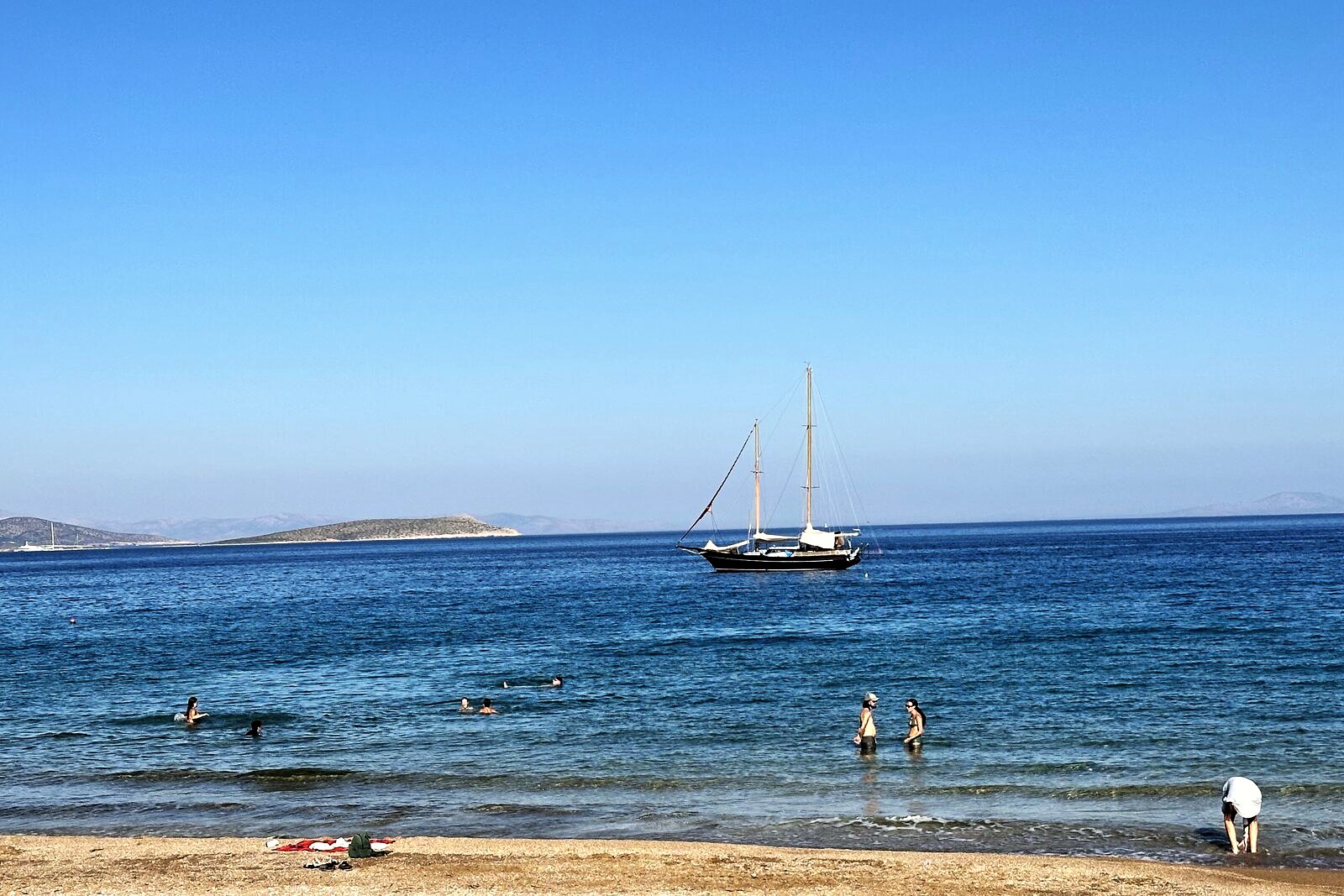
Paros and Antiparos between them face every point of the compass, which is the secret to beach life here: when the meltemi flattens the north coast, the south and west are glass. The sand runs from golden to fine white, the water is as clear as anywhere in the Cyclades, and the beaches come with proper tavernas rather than DJs. Here are the ten we’d cross the island for, grouped roughly north to south on Paros and then on Antiparos, with two land-based bonuses for the day the wind wins. Sunbed prices are approximate and seasonal; most organised beaches charge €10 – €25 for a pair with umbrella, and more for the front row in August.
Kolymbithres: Granite Sculptures Across the Bay from Naoussa
Boulders worn smooth, coves worn small, water like gin.
Kolymbithres is the beach you’ve seen on the postcards: a run of tiny sandy coves separated by granite boulders that the sea has worn into whales and loaves and armchairs, on the western arm of Naoussa bay. Each cove holds a dozen people; find your own and the rock does the rest. Sunbeds and a couple of bar-tavernas cover the main bays; the water is shallow and sheltered from the north wind by the headland. Come early. By 11am in August the water-taxis from Naoussa harbour are landing people every twenty minutes, and the morning stillness is gone. Parilio sits on the hill behind.
Good to knowWater-taxi from Naoussa harbour or a ten-minute drive; partly organised.
WhereNaoussa bay, Paros
Santa Maria: The Watersports Beach
Long white sand, dunes behind, a diving school at one end.
Santa Maria is the big, bright beach on the north-east coast, about five kilometres from Naoussa, a long curve of fine pale sand with dunes and cedar scrub behind and water that shelves slowly out. It is the island’s most organised beach: sunbeds in rows, a beach bar, a watersports centre renting everything from pedalos to wakeboards, and a diving club working the clear water off the point. Families like the shallows; windsurfers like the afternoon breeze. The smaller cove of Mikri Santa Maria round the corner is quieter. Siparos, the island’s best sunset table, is a few minutes away at Xifara.
Good to knowExposed to the meltemi; choppy fun in July and August, serene in June and September.
WhereNorth-east coast, near Naoussa, Paros
Golden Beach: Where the World Learned to Windsurf
Seven hundred metres of sand and a wind that blows side-shore.
Chrysi Akti, Golden Beach, is the long tawny strand on the south-east coast, about 20 kilometres from Parikia, and it is one of the great windsurfing beaches of Europe. The meltemi blows side-shore here, which keeps the water flat close in and lets beginners launch and get back; the professional circuit held its world cup rounds here through the 1990s and the surf clubs along the back of the beach still teach from dawn to dusk in summer. Non-sailors get a wide, clean beach with sunbeds, tavernas, a hotel or two and reliably warm water. Logaras and Piso Livadi’s harbour are a few minutes north for dinner.
Good to knowLessons and rentals from the clubs on the beach; book ahead in August. Wheelchair-accessible stretches.
WhereChrysi Akti, south-east coast, Paros
Lageri: Dunes and Nothing Else
Shallow water, white sand, no one selling anything.
Lageri is a short walk through the dunes from the Santa Maria road, on the eastern shore of Naoussa bay, looking back across the water towards the town, and it has stayed as it was: a long, pale beach with low dunes behind, shallow turquoise water in front and no sunbeds, bar or music of any kind. Bring water, an umbrella and lunch from a bakery in Naoussa. The far end has long been quietly naturist. When the wind is down it is the loveliest swimming on the north coast; when the meltemi is up it is a beach for walking rather than lying on. The track in is rough; park on the road and carry your things.
Good to knowUnorganised; no shade; naturist-friendly at one end.
WhereNorth coast, near Santa Maria, Paros
Monastiri: The Sheltered Cove in Paros Park
A monastery on the rock, a beach beneath it, trails to the lighthouse.
Monastiri is the small, deep cove at the tip of the Agios Ioannis Detis peninsula, on the western side of Naoussa bay beyond Kolymbithres, with the monastery of the same name on the rock above. It is inside the Environmental and Cultural Park of Paros, an 80-hectare peninsula of marked trails, a botanical garden and an open-air cinema, which is what makes it more than a beach. Sunbeds and a café-restaurant handle the practicalities; the water is calm in almost any wind. Swim in the morning, walk the trail out to the Korakas lighthouse in the late afternoon, and stay for a film under the stars at Ciné Enastron in summer.
Good to knowOrganised; cinema and events in July and August; about ten minutes’ drive from Naoussa.
WhereParos Park, Agios Ioannis Detis, Paros
Faragas: Three Coves on the South Coast
Pines, tamarisks and a beach bar that knows when to turn the music down.
Faragas is the south coast’s answer to the meltemi: three small sandy coves below Aliki, around 16 kilometres from Parikia, tucked under low cliffs so that the north wind passes overhead. The first cove has sunbeds, a beach bar and a restaurant; the second and third, reached on foot along the rocks, are quieter and partly unorganised. The water is clear and deepens quickly, good for swimming rather than wading. It is rarely crowded, even in August, because the road in is long and most visitors stop at Aliki. Lunch at Thalassamou on Aliki’s harbour afterwards completes a very good day.
Good to knowPartly organised; sheltered from the north wind.
WhereSouth coast, near Aliki, Paros
Soros: Antiparos’s Favourite
Tamarisk shade, water you can see your toes in, a taverna at the back.
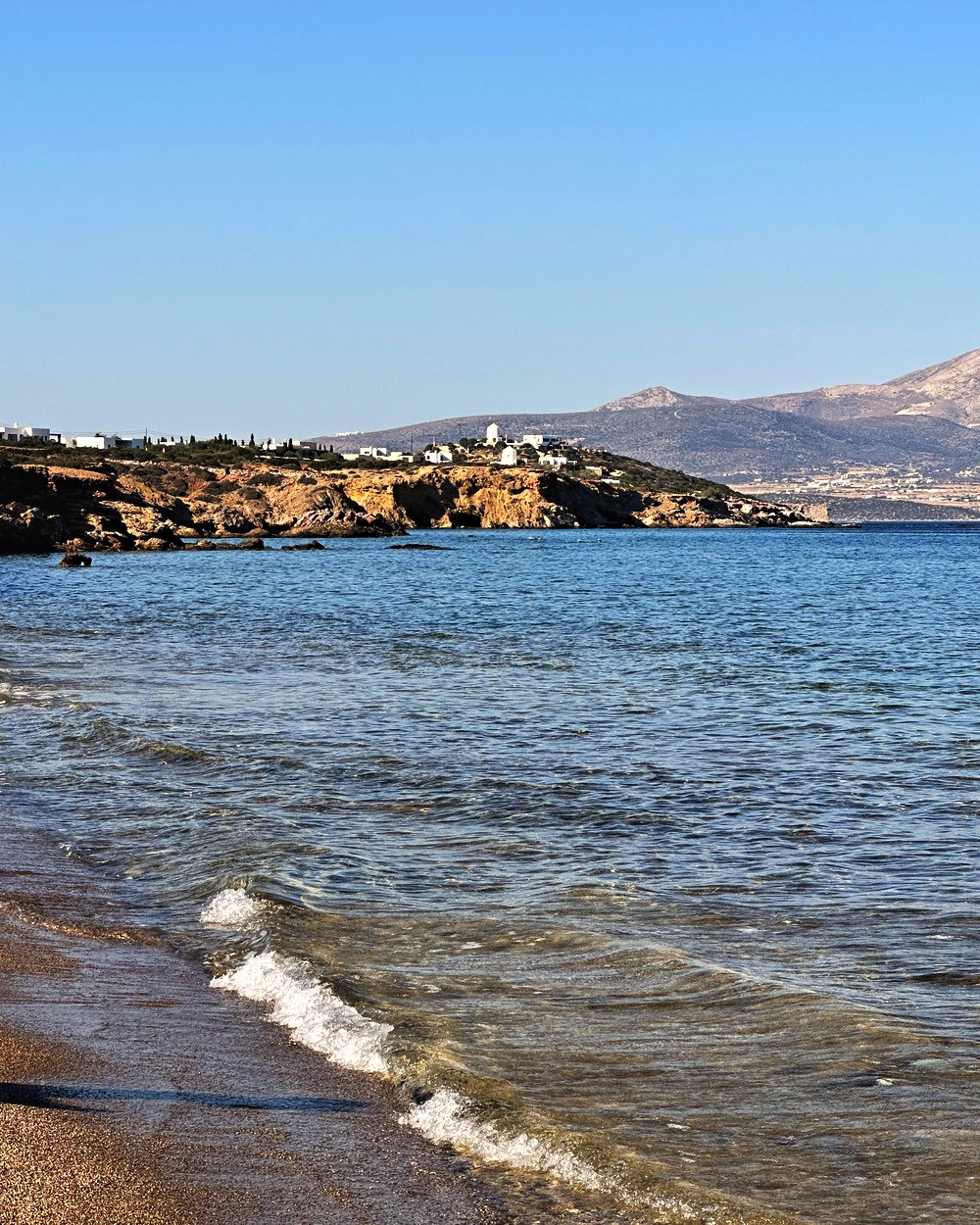
Soros is the beach Antiparos locals name first. About eight kilometres south of the town on the east coast, it is a wide bay of sand and fine pebbles with a line of tamarisk trees for shade, clear water that deepens quickly, and a taverna behind for grilled fish at lunch. There are a few sunbeds but most people bring a towel and lie under the trees. It fills on August afternoons with families from the villas, so arrive before noon or after four. The road south from town is flat enough to cycle in the cool of the morning, and the bus stops here in summer.
Good to knowOrganised at one end; the sea deepens quickly, so stay close to small children.
WhereEast coast, Antiparos
Psaraliki: The Town Beaches
Two bays, one kilometre from your morning coffee.
Psaraliki is really two beaches, Psaraliki 1 and 2, sharing a long sandy shore on the east side of Antiparos town, a kilometre from the harbour and an easy walk or cycle. The first has sunbeds, tamarisks and a beach bar; the second is a little wilder, with rocks at the end for snorkelling and Time Marine, an all-day beach bar-restaurant that does brunch and lunch by the water and DJ parties on Friday and Saturday nights. The water shelves out slowly over sand, which makes it the natural family beach, and the watersports operators work from here in summer. Being so close to town, it is where you go for a morning swim before the ferry or a last one before dinner on the main street.
Good to knowOrganised; east-facing and sheltered from the north wind, so a good bet when the meltemi blows.
WhereAntiparos town, Antiparos
Livadia: Dunes Below The Rooster
A wide, quiet bay on the wild side of the island.
Livadia is on Antiparos’s western side, a short drive from town, a broad bay backed by dunes and low hills where The Rooster’s earth-coloured houses hide among the scrub. The beach itself is unorganised and uncrowded, with soft sand, clear water that is at its best when the wind drops and the kind of silence that makes you lower your voice. Bring everything you need. It faces west, so it is also one of the island’s best places to see the sun go down if Sifneikos Gialos in town feels too sociable. For a sheltered cove with sunbeds, cross to Apantima on the east coast, just past the turning for the cave.
Good to knowUnorganised; no facilities on the sand.
WhereWest coast, Antiparos
Agios Georgios: The End of the Road
Fishing boats, two tavernas and Despotiko across the strait.
Antiparos runs out at Agios Georgios, a fishing hamlet on the south-west tip about 11 kilometres from town, with a sandy beach, a few small coves, a jetty and a couple of tavernas on the water, Captain Pipinos the big, busy one with the blue chairs. Across a narrow strait lies Despotiko, uninhabited, where archaeologists have been excavating a sanctuary of Apollo since the late 1990s; boats from the jetty will run you across and wait while you walk the site. The water is calm and clear, the mood is end-of-the-world, and the sunset over the islet is the one you’ll remember. Lunch after the boat is non-negotiable.
Good to knowPartly organised; boat trips to Despotiko in season; bus from town in summer.
WhereSouth-west tip, Antiparos
Bonus: The Lefkes–Prodromos Byzantine Trail
Marble underfoot for an hour, downhill all the way.
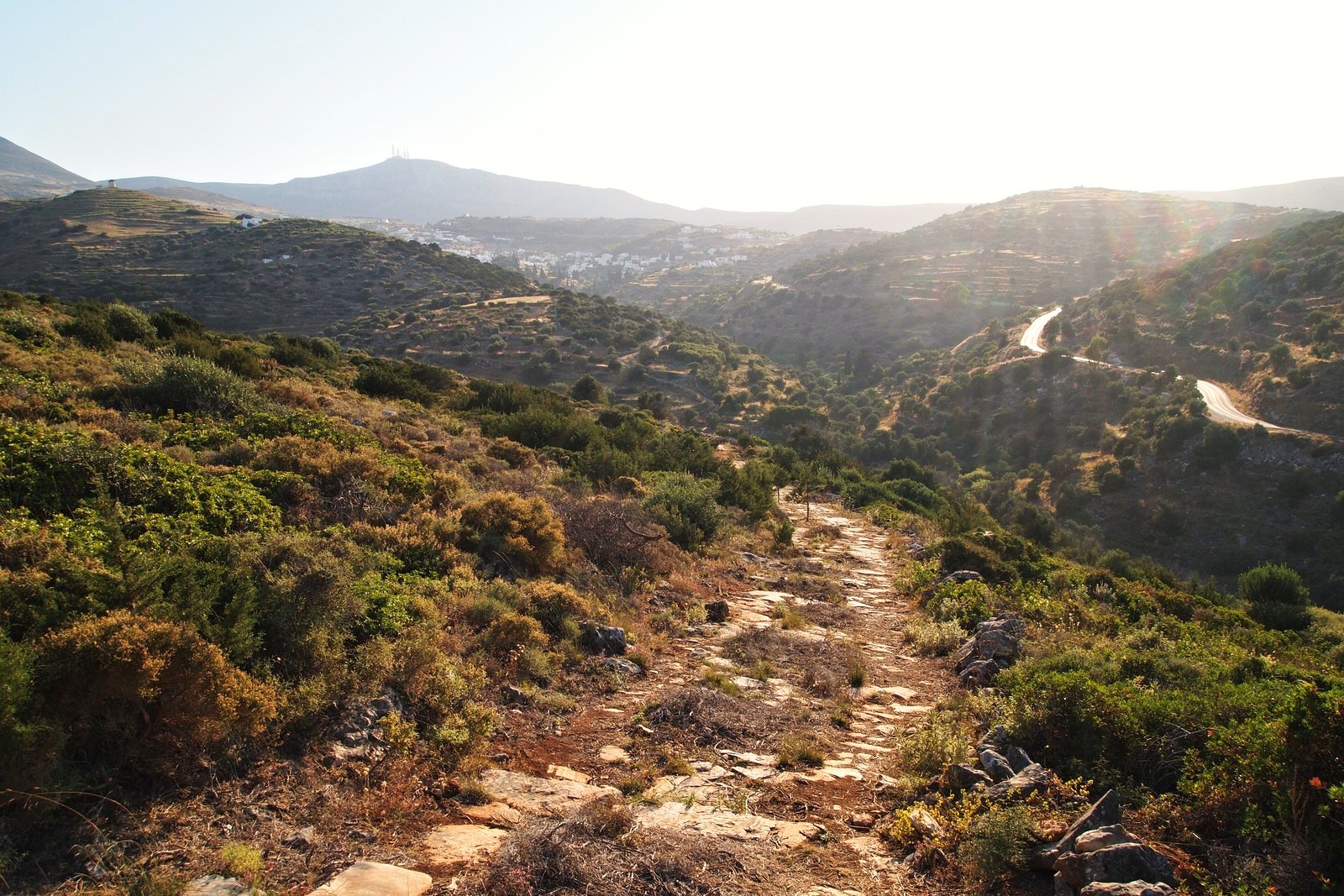
For the day the wind wins, walk the Byzantine road. It runs from the hill village of Lefkes, 250 metres up among the pines, down to Prodromos on the eastern plain, about 3.5 kilometres of paved track that is at least a thousand years old, still laid with marble slabs that have been polished by centuries of mules and sandals. It takes about an hour at a stroll, with the Aegean and Naxos ahead of you the whole way, dry-stone walls, olive terraces and chapels either side. Do it in the morning, have a coffee in Prodromos’s square, and take the bus or a taxi back up to Lefkes for lunch at Klarinos.
Good to knowEasy, mostly downhill; wear shoes with grip, as marble is slippery; carry water.
WhereLefkes to Prodromos, Paros
Bonus: The Antiparos Cave
Four hundred steps down into the island’s cathedral.
The cave at Agios Ioannis, on a hill in the south-east of Antiparos about eight kilometres from town, is the island’s grand gesture. Just over 400 steps lead down about 85 metres into chambers of stalactites and stalagmites, some of them, locals say, among the oldest in Europe. People have been coming for a very long time: the inscriptions include one from 1673, when the French ambassador to the Ottoman court had Christmas Mass said on a stalagmite still called the Holy Table. A white chapel to Agios Ioannis Spiliotis marks the entrance. It is cool inside, slippery underfoot and genuinely impressive. Allow an hour, and bring cash for the small entrance fee.
Good to knowOpen daily in season, roughly spring to October; bus from Antiparos town in summer.
WhereAgios Ioannis, Antiparos
You might also like
- Antiparos: Paros’s Laid-back Little Sister
- The 12 Best Restaurants in Paros and Antiparos
- The 20 Best Beaches in the Cyclades
Prices and opening times are approximate and change with the season. If something has changed, let us know.