Quick answers
- Is Naxos good for families?
- Yes: the west coast has kilometre after kilometre of pale sand and knee-deep water, prices are sane and the island absorbs August crowds better than Paros or Mykonos.
- Where are the best beaches on Naxos?
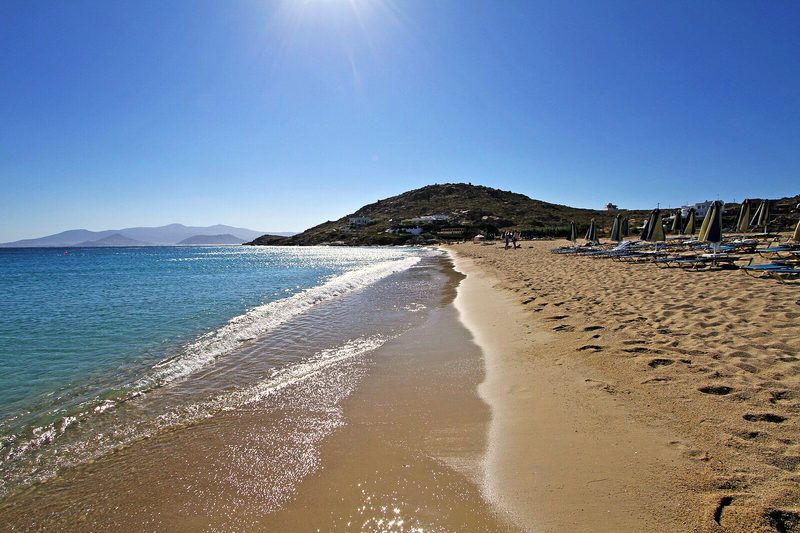
- The west coast: Agios Prokopios, Agia Anna, Plaka, Mikri Vigla and the cedar dunes at Alyko.
- How do I get to Naxos?
- Blue Star's conventional ferries from Piraeus take about five and a half to six hours; high-speed boats about three and a half to four in season. Flights from Athens take about 40 minutes.
- Should I choose Naxos or Paros?
- Naxos for more sand, mountain villages and lower prices; Paros for Naoussa's harbour, a more polished feel and the best ferry links in the group.
Marble dust, potato fields and a mountain named after Zeus.
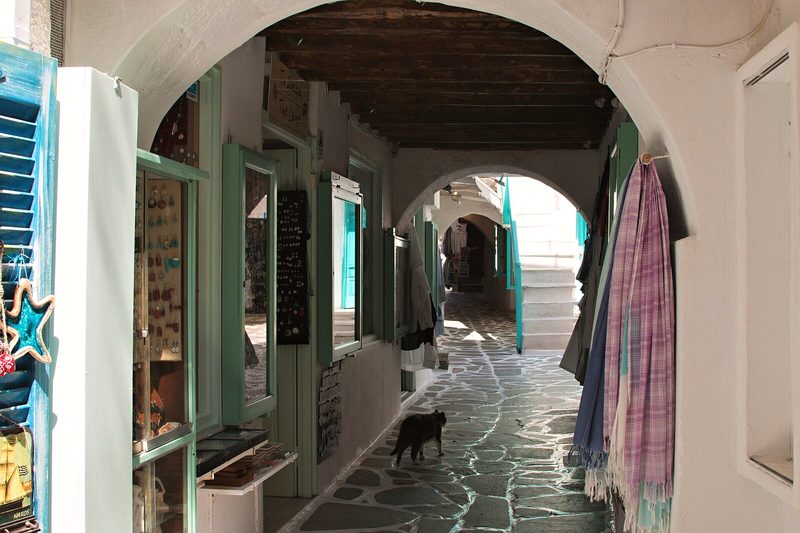
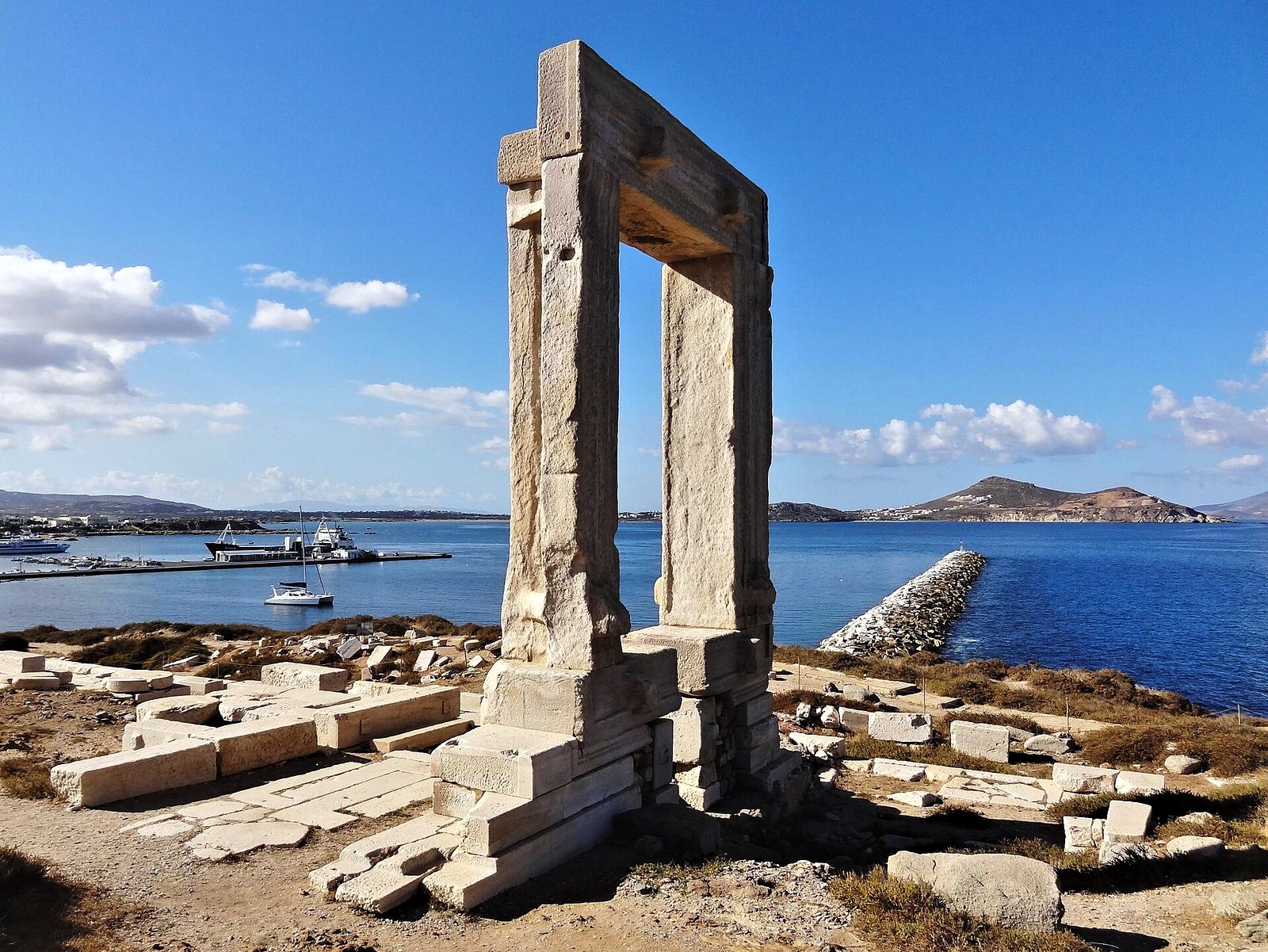
Step off the ferry and the Portara is already there: a marble doorframe to nothing, standing on its islet across the harbour. Behind it climbs Chora, a knot of lanes rising to a Venetian castle, and behind that the interior opens out into terraced valleys, olive groves, marble villages and Mount Zas, at just over 1,000 metres the highest point in the Cyclades. Naxos is the biggest island in the group and the most self-sufficient. It grows its own potatoes, makes its own cheese, distils its own liqueur and keeps going long after the last charter flight has left. You’ll eat better here than almost anywhere in the Aegean, and pay less for the privilege.
Why go
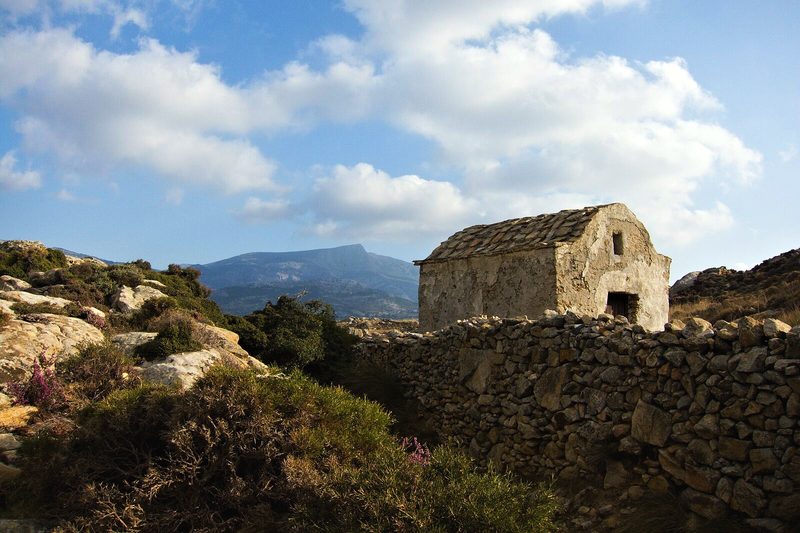
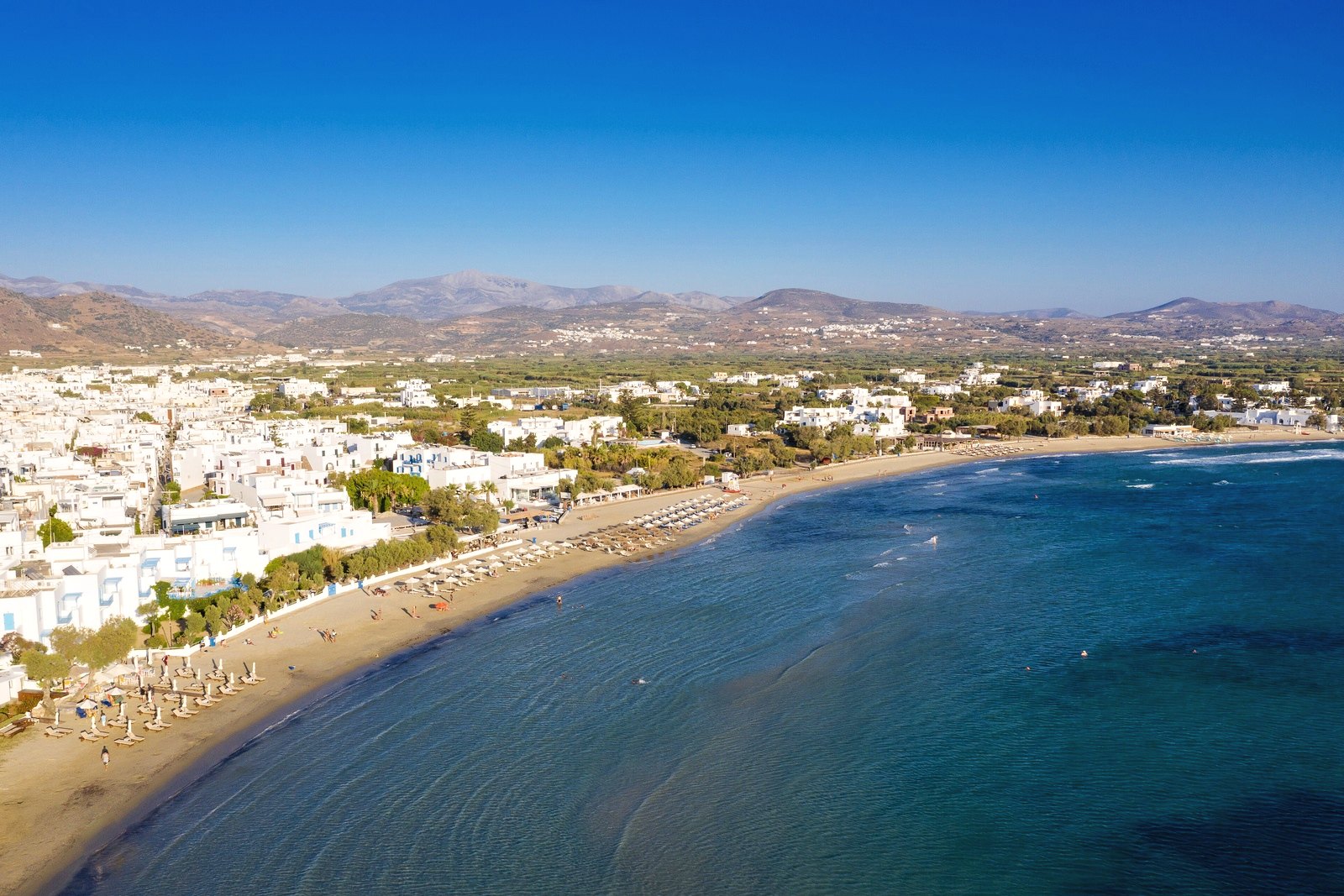
For the beaches first. The west coast runs from Agios Georgios in town through Agios Prokopios, Agia Anna and Plaka to Mikri Vigla and the cedar dunes at Alyko: kilometre after kilometre of pale sand and knee-deep water. For the villages second. Chalki, Filoti and Apeiranthos sit in the mountains among Venetian towers and Byzantine chapels, with kafeneia on their squares and tavernas cooking whatever came off the farm that morning. And for the balance: enough to fill a fortnight, enough space to absorb August, and a real population that keeps prices sane and the welcome warm. Families, hikers, kitesurfers and people who simply want to eat well all find their island here.
The lie of the land
Chora, the port town, faces west across the bay to Paros. Its old quarter stacks up from the waterfront through the Bourgos market lanes to the Kastro, the hilltop citadel Marco Sanudo built in 1207, still lived in and still Catholic at its core. North of the harbour the Portara stands on the islet of Palatia; south, the town runs straight on to Agios Georgios beach. The road then turns down the coast, past the Stelida headland and the airport, to the resort strip of Agios Prokopios and Agia Anna and the long sweep of Plaka, before thinning out at Mikri Vigla, Kastraki, Alyko and Pyrgaki, where the dunes begin and the tavernas stop.
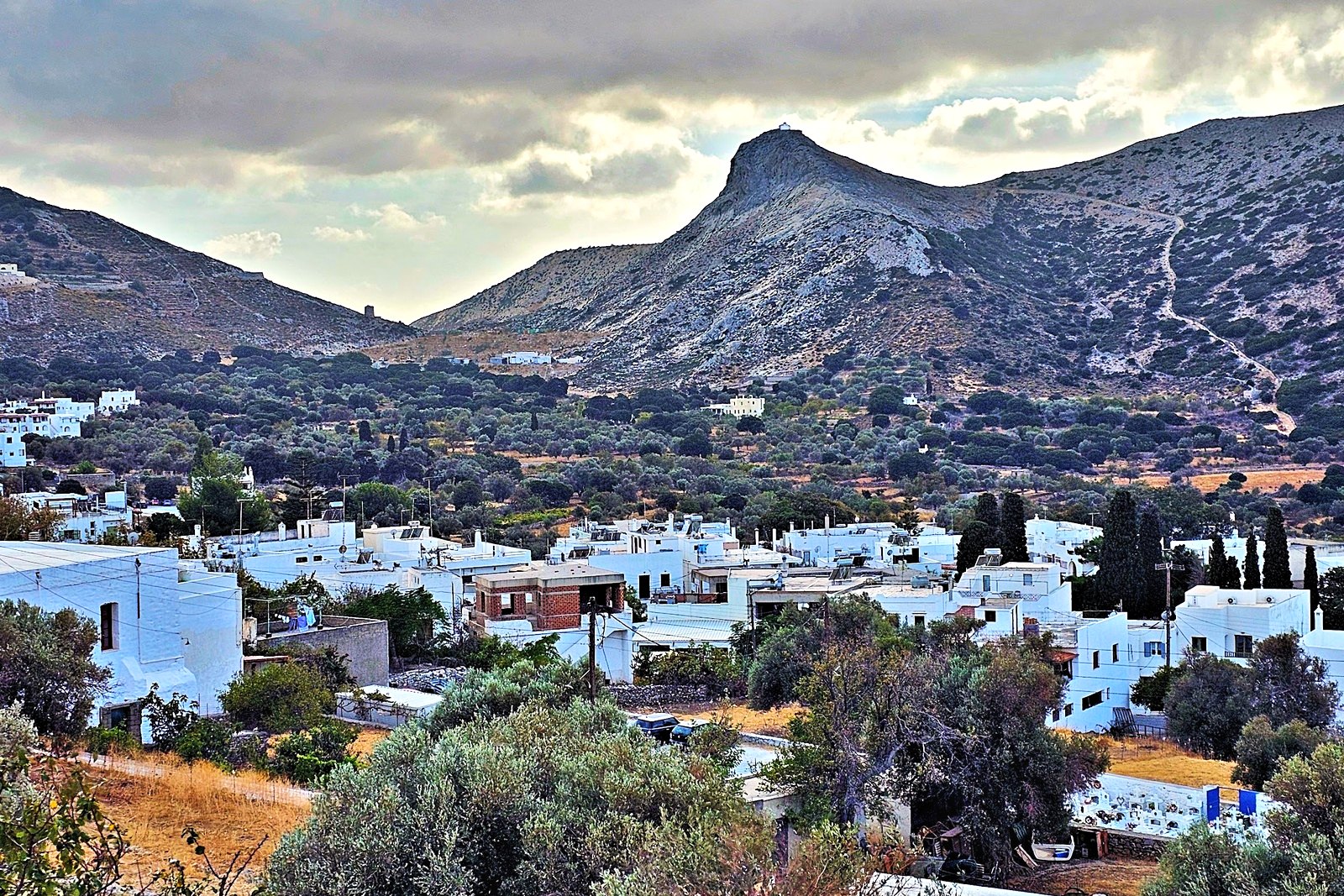
Inland, the main road climbs through Galanado and Sangri, where the Temple of Demeter sits among fields, to the Tragaia plateau: an upland of olives and Byzantine chapels with Chalki at its centre and Filoti at the foot of Zas. Beyond Filoti the road winds up to Apeiranthos, the marble-paved village with Cretan roots, then on through Koronos and the emery country to Apollonas on the far north coast. The east side is wilder and emptier: the old emery port of Moutsouna, the pebble cove at Lionas, the long sand at Psili Ammos. Between the mountains and the sea lies the Melanes valley, with its unfinished kouroi lying in the gardens where they were carved.
Eat & drink
- Axiotissa, Kastraki – the island’s best-known farm taverna, busy and a notch pricier than village tavernas: slow-cooked lamb, rooster with makarounes pasta, a leafy courtyard. Book ahead; closed Tuesdays.
- Amorginos, Apeiranthos – slow-cooked pork rosto and aged arseniko on a shaded balcony, from noon.
- O Giorgis, Melanes – family farm cooking on a balcony over the valley; rooster in tomato sauce in the week, roast pig at weekends.
- Meze2, Chora waterfront – the harbour ouzeri for grilled sardines, octopus and a carafe as the Paros ferry comes in.
- Doukato, Chora – a walled garden in the old market, with lamb chops and octopus giouvetsi.
- Vallindras Distillery, Chalki – the oldest kitron distillery on the island, open since 1896: a short look at the old stills and a cheap (sometimes free) tasting of the three colours; ten minutes, not a tour.
Stay
- 18 Grapes Hotel, Agios Prokopios – a wine family’s 18-room boutique hotel: plunge-pool rooms, two-level pools, a rooftop sunset bar, a few minutes’ walk from the beach; luxury.
- Naxos Island Escape, Plaka – six suites with sea-view balconies and jacuzzis, homemade breakfast, 100 metres from the beach; upper-mid.
- Lagos Mare, Agios Prokopios – a family-run four-star with a garden pool and the 1924 restaurant, 350 metres from the beach; upper-mid.
- Hotel Grotta, Chora – the Lianos family’s hotel up a hill, a ten-minute climb from the harbour, with a small indoor spa pool (booked by time slot), a famous breakfast and Portara views; mid-range.
- Naxos Resort Beach Hotel, Agios Georgios – the big beachfront hotel that has absorbed the old Galaxy next door: pool bar, small spa, free parking and the town beach a few steps away; rooms are being renovated in stages, so ask for a refurbished one; mid-range.
- Kalergis Studios, Agios Georgios – 18 kitchenette studios on the beach, a 15-minute walk to town; budget-friendly, from about €115.
Things to do
- Walk out to the Portara at sunset and watch the light go down behind Paros.
- Climb Mount Zas from the chapel of Agia Marina above Filoti: about two hours up through thyme and goat bells, with the whole Aegean at the top.
- Spend a slow morning in Chalki: kitron at Vallindras, ceramics at Fish & Olive, coffee on the square.
- Drive on to Apeiranthos for marble lanes, four small museums and lunch at Amorginos.
- Lie on Agios Prokopios in the morning and walk south along Plaka until the sunbeds run out.
- Learn to kitesurf at Mikri Vigla, where the meltemi funnels through the headland on most summer days.
- Visit the Temple of Demeter at Sangri, partly rebuilt in its own white marble, with a small museum beside it (€5 for both, closed Tuesdays).
- Lose yourself in the Kastro’s lanes, then take the lift up to the Avaton 1739 café for the view.
- Find the unfinished kouroi at Melanes and the Jesuit ruin of Kalamitsia a couple of kilometres on.
- See the 10-metre Kouros of Apollonas lying in its quarry on the north coast.
- Swim between the cedars at Alyko and wander through the graffiti-covered shell of the hotel that was never finished.
- Catch an evening concert at the Bazeos Tower during the summer Naxos Festival.
Getting there & around
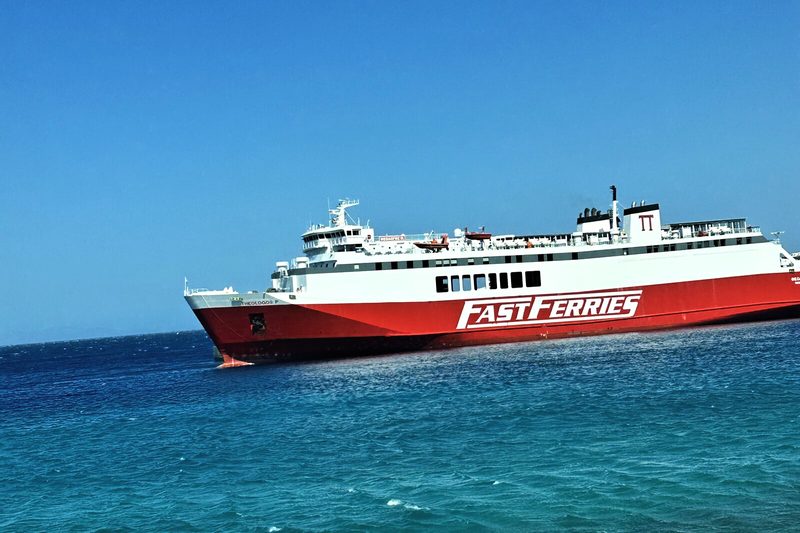
Blue Star’s conventional ferries from Piraeus take about five and a half to six hours and run year-round; high-speed boats cut that to about three and a half to four hours in season. From Rafina, the Fast Ferries and Golden Star routes take about four to six hours and suit arrivals at Athens airport. Naxos airport, three kilometres from town, has Athens flights of about 40 minutes all year and a few seasonal domestic routes. Paros is about 30 to 45 minutes away by ferry, Mykonos about 45 minutes to an hour and a half, Santorini a little over an hour by fast ferry, about two on Blue Star. For Koufonisia and the Small Cyclades, the Express Skopelitis leaves about six days a week and takes two to three hours; summer fast ferries do it in about an hour.
The KTEL bus runs frequently from the port to Agios Prokopios, Agia Anna and Plaka in summer and several times a day to Chalki, Filoti, Apeiranthos and Apollonas. Hire a car for the mountain villages and the east coast; the roads are good and distances are real – Apollonas is about an hour from Chora. A scooter or ATV is fine for the beach strip, less so for the Zas hairpins.
When to go
May, June, September and early October are the island at its best: warm sea, open tavernas, room on the sand and a wind that mostly behaves. July and August are hot, busy and breezy, though Naxos absorbs crowds better than Paros or Mykonos and the mountain villages stay calm. Swimming is comfortable into October. Greek Easter in the villages, with roast lamb on the squares, is worth building a trip around. In winter the beach resorts close but Chora, Chalki and Filoti carry on, and the hiking is at its greenest.
Good to know
Water Naxos has its own springs and a reservoir, so water is less precious than on neighbouring islands; most visitors still drink bottled. ATMs Plenty in Chora and Agios Prokopios, one or two in Chalki, Filoti and Apeiranthos; the far north and east run on cash. Meltemi The west-coast beaches get an afternoon wind from July to early September; Agios Prokopios is sheltered by the Stelida headland, Mikri Vigla is where the kites go, and the east-coast coves at Moutsouna and Lionas sit in the lee. Crowds Chora and the beach strip fill in August; Apeiranthos, Apollonas and the east coast rarely do. Prices are approximate and seasonal.
Big enough to get lost in, generous enough to feed you when you’re found.