Quick answers
- Which Cyclades island has the best beaches?
- Milos for variety, with volcanic rock and some seventy beaches; Naxos for long golden sand and shallow water; Koufonisia for Caribbean-blue water.
- Which Cyclades beaches stay calm in the meltemi?
- South- and west-facing ones. On our list, Firiplaka on Milos, Perivolos and Vlychada on Santorini and Vathi on Sifnos sit on sheltered coasts.
- When are beach facilities open in the Cyclades?
- Through the summer season; most sunbed operators pack up by mid-October.
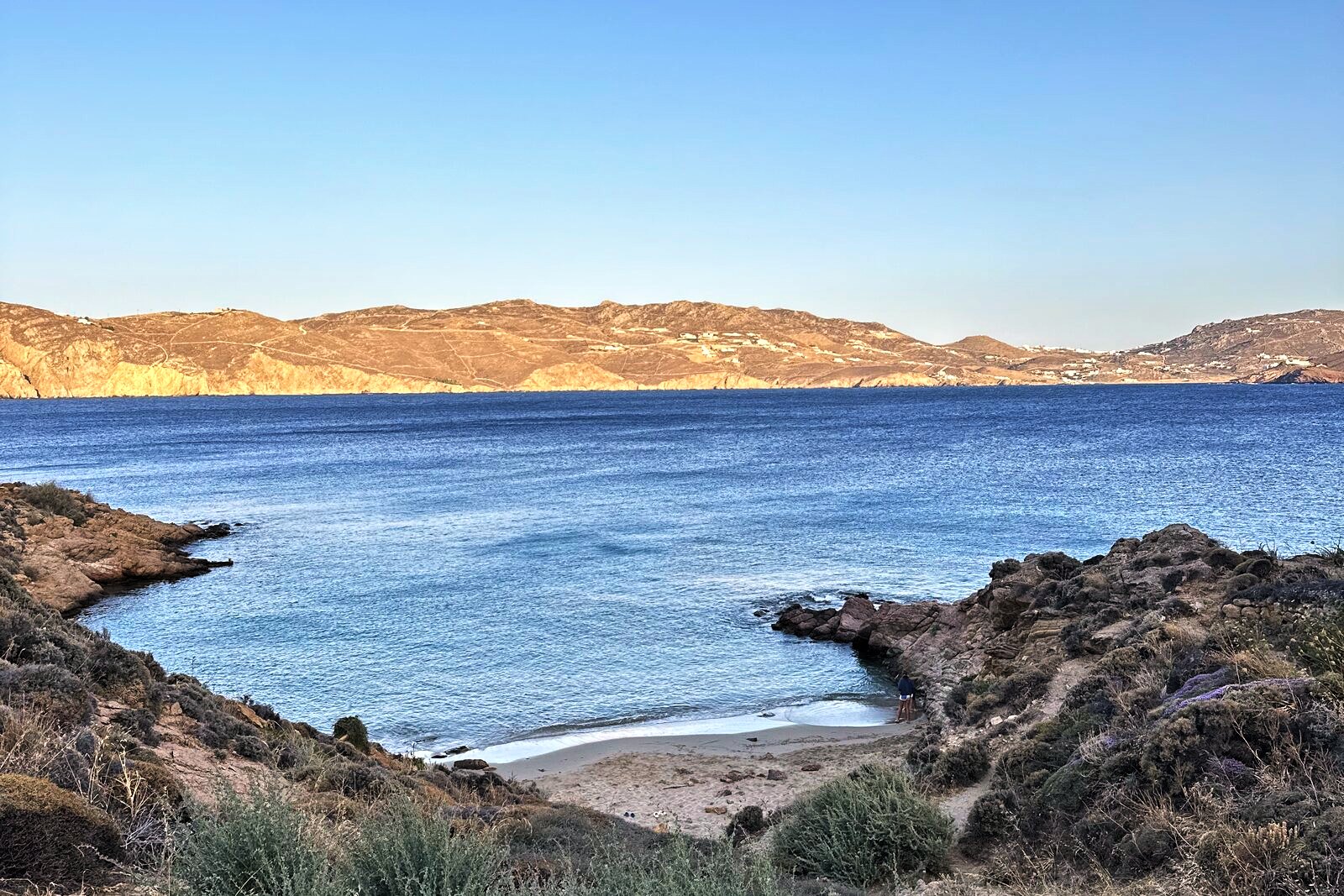
Turquoise water. Hot stone. The smell of thyme on the path down. The Cyclades have hundreds of beaches and no two are alike: Milos does volcanic drama, Naxos does endless golden sand, Koufonisia does Caribbean blues, Serifos does tamarisk shade and nobody around. We have chosen twenty across fourteen islands, ranked by nothing except how badly we want to go back. The meltemi matters here: it blows from the north from July to September, so a south- or west-facing beach is the safe bet on a windy day, and we say which is which. Facilities change with the season; most sunbed operators pack up by mid-October.
Sarakiniko
Moonscape in white, water in ink.
Sarakiniko is not so much a beach as a sculpture: bone-white volcanic rock eroded into waves, bowls and ledges, dropping into a narrow inlet of impossibly dark blue water. The small sandy cove at the head of the inlet is where families settle; the rest of the shore is for lying on warm rock and jumping off it. There is no shade, no sunbeds and a canteen only in high season, so bring an umbrella and go early or late – at eight in the morning you may have it to yourself, and at sunset the rock turns pink. The rusting wreck of the cargo ship Africa lies just off the rocks a short walk along the top to the east; go and look rather than swim out to it.
Good to knowNo shade; exposed to the meltemi, so pick a calm morning. The sea here is more dangerous than it looks: lifeguards have been on duty from 10am to 6pm in summer since June 2026, and you should keep out of the water and off the ledges when there is any swell.
WhereSarakiniko, Milos
Kleftiko
Pirate caves, reached only by sea.
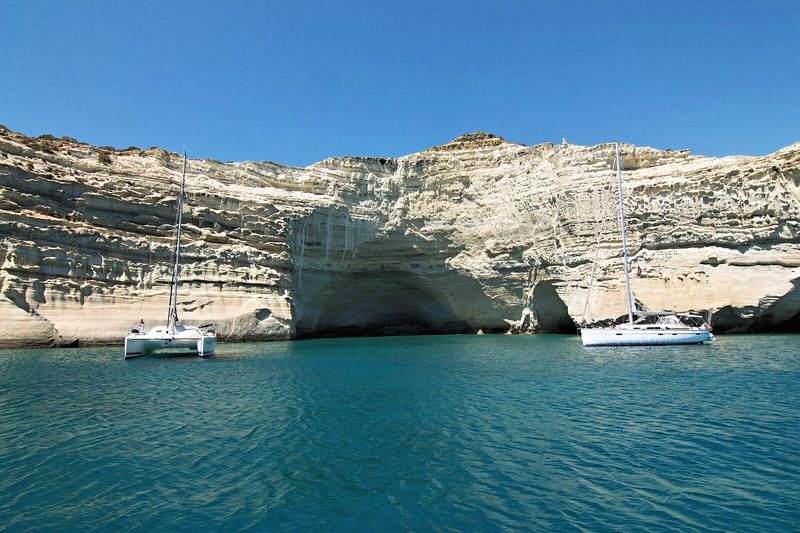
Kleftiko is the reason every Milos boat trip exists: a cluster of white rock stacks, arches and sea caves on the island’s inaccessible south-west corner, where pirates once hid their ships. There is no road and no beach to speak of, only ladders off the boat into water so clear the anchor chain seems to hang in air. Day boats from Adamas and Pollonia stop here for an hour or two of swimming among the stacks and arches. Since late 2023 a port-authority order has kept boats and swimmers 25 metres off the foot of the cliffs in a marked part of the bay while the rock is surveyed, so follow your skipper on where to swim. Take a mask. Afternoons are calmer and the light in the caves is better.
Good to knowBoat trips run roughly May to October, weather permitting; book a day ahead in August.
WhereSouth-west coast, Milos (by boat from Adamas)
Firiplaka
A long curve of colour below striped cliffs.
Milos’s southern beaches face away from the meltemi, and Firiplaka is the pick: a long, wide strand of fine sand and tiny pebbles under cliffs streaked in yellow, pink and rust, with a lone rock standing in the shallows like a monument. There are sunbeds and a canteen at one end and nothing at all at the other, so you can choose your style. The water shelves gently and stays warm into October. Firiplaka is also the beach to swap in when the north coast is blowing a gale – the cliffs behind it do the work.
Good to knowSouth-facing and sheltered; the dirt track down is fine for a hire car.
WhereFiriplaka, Milos
Vlychada
Lunar cliffs and grey-black sand.
Santorini’s beaches are volcanic, and Vlychada on the south coast is the most dramatic: a long run of dark sand backed by pale pumice cliffs the wind has carved into pleats, pinnacles and cathedral folds. The far end is quiet, the near end has a few loungers, and the little marina next door has the island’s best fish tavernas and the Tomato Industrial Museum in an old cannery. The water is deep and clean; the cliffs look as if they should give shade but give very little, so bring an umbrella. For the postcard black-sand beach, Perivolos is a short drive east with full beach-club service.
Good to knowSand gets scorching by noon; wear sandals to the water.
WhereVlychada, Santorini
Perivolos
Black sand, full service, the party and the peace.
Perivolos continues from Perissa along Santorini’s south-east shore, a long strip of black volcanic sand with the island’s most polished beach clubs, loungers you book, and the warmest water on the island by August. It is the Santorini beach for people who actually want a beach day rather than a caldera view: sunbeds, cocktails, and tavernas doing white aubergine and fava. The water can get deep close to shore, so keep small children within reach. Walk south-west and the clubs thin out into quieter sand at Agios Georgios, with the pale Vlychada cliffs beyond the headland. Hire a car or take the bus from Fira; the drive is twenty minutes.
Good to knowSheltered from the meltemi by Mesa Vouno; the sand is dark and holds the heat.
WherePerivolos, Santorini
Fokos
A wild north-coast bay with one taverna.
Fokos is the Mykonos beach that gets left off the beach-club map, and it is better for it: a wide sandy bay on the rocky north coast, reached by a dirt road past the Marathi reservoir, with no umbrellas, no music and one excellent taverna in the dunes. The water is clear and cold, the bay is wild, and on a still day it is the most beautiful stretch of coast on the island. On a meltemi day it is not, so check the forecast. Bring your own shade and an appetite for the taverna’s grilled lamb chops.
Good to knowNorth-facing; a calm-day beach. Dirt road, fine for a car or quad.
WhereFokos, Mykonos
Agios Sostis
No sunbeds, no signs, no fuss.
A little further west along the same north coast, Agios Sostis is the beach Mykonians keep for themselves: a long, unorganised sweep of sand below a tiny chapel, reached by parking on the road and walking down. There is nothing here – no loungers, no bar, no music – which in Mykonos is a luxury. The water is clean, the far end is clothing-optional, and Kiki’s Tavern, with its charcoal grill and no electricity, is up the path for lunch. On a calm day it is perfect; when the wind is up, go south to Agrari or Elia.
Good to knowNo facilities; bring water and an umbrella.
WhereAgios Sostis, Mykonos
Kolymbithres
Granite boulders and pocket coves.
On the west side of Naoussa bay, Kolymbithres is a string of tiny sandy coves separated by huge smooth granite boulders, carved by wind and sea into shapes that look sculpted. Each cove holds a dozen towels, the water is shallow and warm, and small children love the rock pools. There are loungers at the main stretches and a couple of tavernas; the smaller coves further round are quieter and free. Take the little boat from Naoussa harbour across the bay rather than driving; parking is tight in August and the approach is the best view.
Good to knowSheltered inside Naoussa bay; good on windy days. Boat from Naoussa in summer.
WhereKolymbithres, Naoussa, Paros
Santa Maria
Fine sand, clear water, a kitesurfer’s horizon.
North-east of Naoussa, Santa Maria is two long beaches of pale, fine sand with a dive centre, a few lounger operators and a beach bar at one end, and plenty of free sand at the other. The water is shallow, bright and clear, and in the afternoon the wind picks up enough to put kitesurfers on the water beyond the swimmers. Siparos, one of our favourite seaside tables in the Cyclades, is at Xifara a few minutes away for lunch. If you are staying in Naoussa and have one beach day, this is it.
Good to knowExposed to the afternoon meltemi; mornings are calmest.
WhereSanta Maria, Paros
Soros
Antiparos’s quiet south-facing sweep.
Antiparos is a ten-minute ferry from Pounda on Paros, and Soros, on its south-east coast, is the beach that rewards the trip: a long arc of sand and small pebbles facing south and sheltered from the meltemi, with clear water and a couple of tavernas doing fish at the back of the beach. There are loungers at one end and open sand at the other, and the view across the strait to Paros’s empty south-west coast gives a sense of how quiet this corner of the Cyclades still is. For Despotiko itself, go round to Agios Georgios. Hire a bike or a scooter from the town; the road is good.
Good to knowSouth-facing and reliably calm; good when the north coasts are blowing.
WhereSoros, Antiparos
Plaka
Four kilometres of golden sand and cedar dunes.
Naxos’s west coast is one of the great beach runs in Greece, and Plaka is its heart: a four-kilometre stretch of fine golden sand, backed by dunes and cedar scrub, with the sea shelving gently and the Zas mountains behind. The north end, near Agia Anna, has loungers, beach bars and tavernas; walk south and it empties out into dunes and clothing-optional stretches. The sunsets fall straight into the sea. Buses run from Naxos town in summer; a bike along the coast road is the better way.
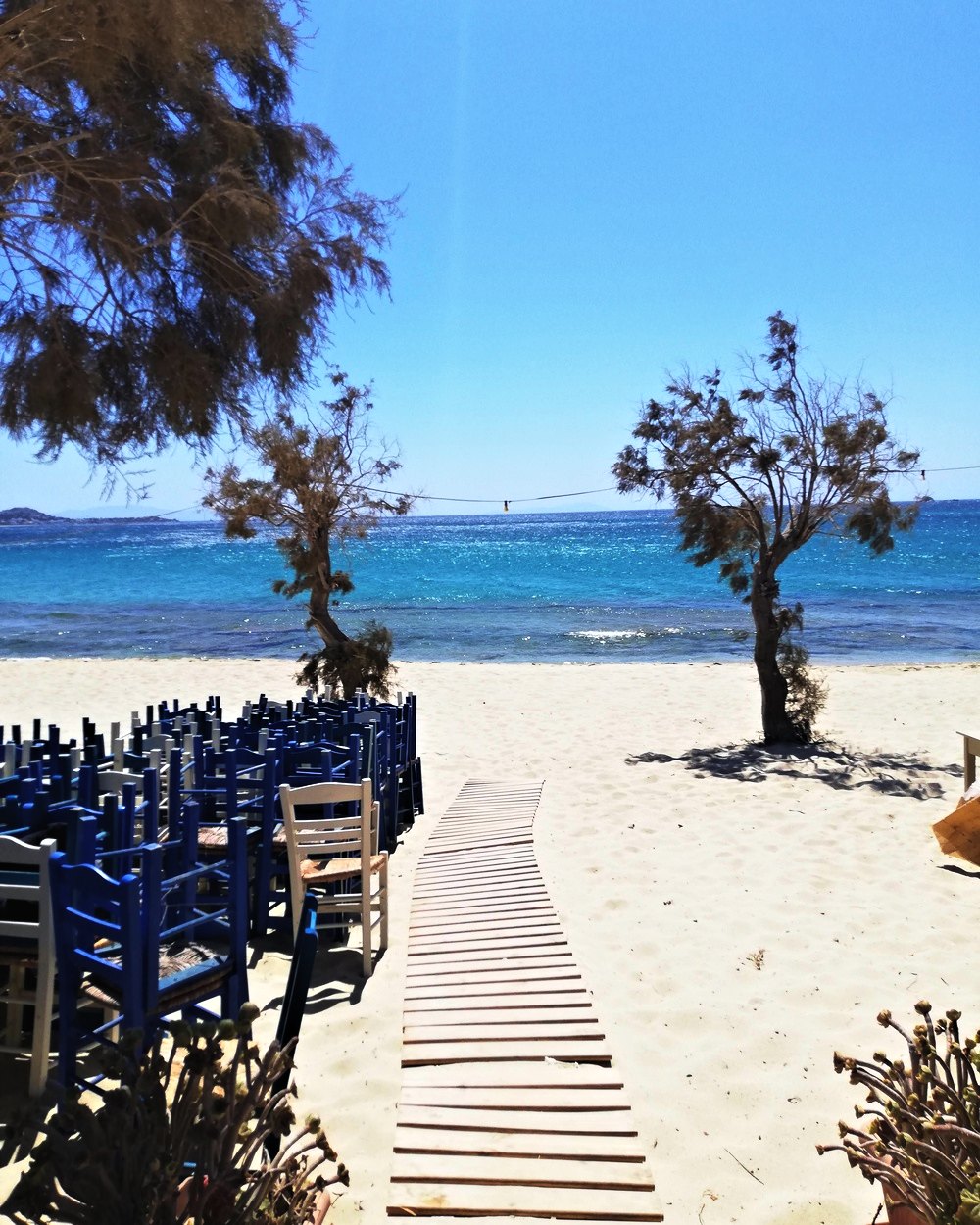
Good to knowAfternoon wind can be strong; the south end has natural shade in the cedars.
WherePlaka, Naxos
Mikri Vigla
Two beaches, one headland, every wind.
Mikri Vigla is a granite headland south of Plaka with a beach on each side. The north beach, Parthena, is the kitesurfing capital of the Cyclades, with schools on the sand and dozens of kites in the air by two o’clock. The south beach, Sahara, is sheltered behind the rock, calm and sandy, with a taverna in the shade. On a meltemi day you watch the kites from Sahara’s flat water; on a still day you have both. The headland walk between them takes ten minutes and the view back along the whole west coast is the best on Naxos.
Good to knowPick a side by the wind; kite schools run roughly May to October.
WhereMikri Vigla, Naxos
Pori
Caribbean blue at the end of the path.
Koufonisia is an island of improbable water, and Pori, at its northern tip, is where that water is most improbable: a deep bay of white sand and a shelf of pale turquoise shading to navy. Reach it by the coastal path from Chora – about 50 minutes, past sea caves and the swimming hole known as the Devil’s Eye – or by the summer boat from the harbour. There are no sunbeds, a taverna, Kalofego, above the sand, and no shade to speak of. Swim first, eat second, walk back in the late afternoon when the light is gold.
Good to knowNo shade on the path; carry water and start early.
WherePori, Koufonisia
Vathi
A sheltered bay, a monastery and lunch on the sand.
Vathi is a deep, almost enclosed bay on the south-west of Sifnos, with a crescent of fine sand, a whitewashed monastery on the water’s edge, and tavernas whose tables stand on the sand itself. The water is calm and shallow, which makes it the island’s family beach and its safest on a windy day. Pottery studios in the village keep the Sifnos tradition going – you can buy a clay pot and have it carried to lunch. Buses come from Apollonia; the drive down the valley passes olive groves and dry-stone walls that frame the bay below.
Good to knowVery sheltered; the pick on meltemi days. Tavernas on the sand serve all day.
WhereVathi, Sifnos
Psili Ammos
Fine sand and tamarisk shade on Serifos.
Serifos is a bare, dramatic island with a chora stacked on a crag, and Psili Ammos – “fine sand” – is its gentlest moment: a sheltered bay on the east coast with sand like flour, water in three shades of blue and a line of tamarisk trees giving natural shade. A couple of tavernas sit at the back of the beach; there are a few loungers in summer, but the point is the sand. It is a short drive or a longish walk from Livadi, the port. Bring a book; nothing much will happen, which is the Serifos promise.
Good to knowEast-facing; lovely in light winds, but a strong meltemi can make it choppy. Tamarisk shade is free.
WherePsili Ammos, Serifos
Katergo
The beach you earn.
Folegandros’s best beach has no road. Katergo is a long cove of pebbles and coarse sand at the island’s southern end, enclosed by dark cliffs, with water that is deep, cold and startlingly clear. Reach it by the summer boat from Karavostasi, the port, or by the footpath from the hamlet of Livadi, where the road ends – about 30 minutes, rough underfoot, no shade. There are no facilities at all. The reward is a beach that even in August holds a few dozen people, and a swim you will describe to others for years.
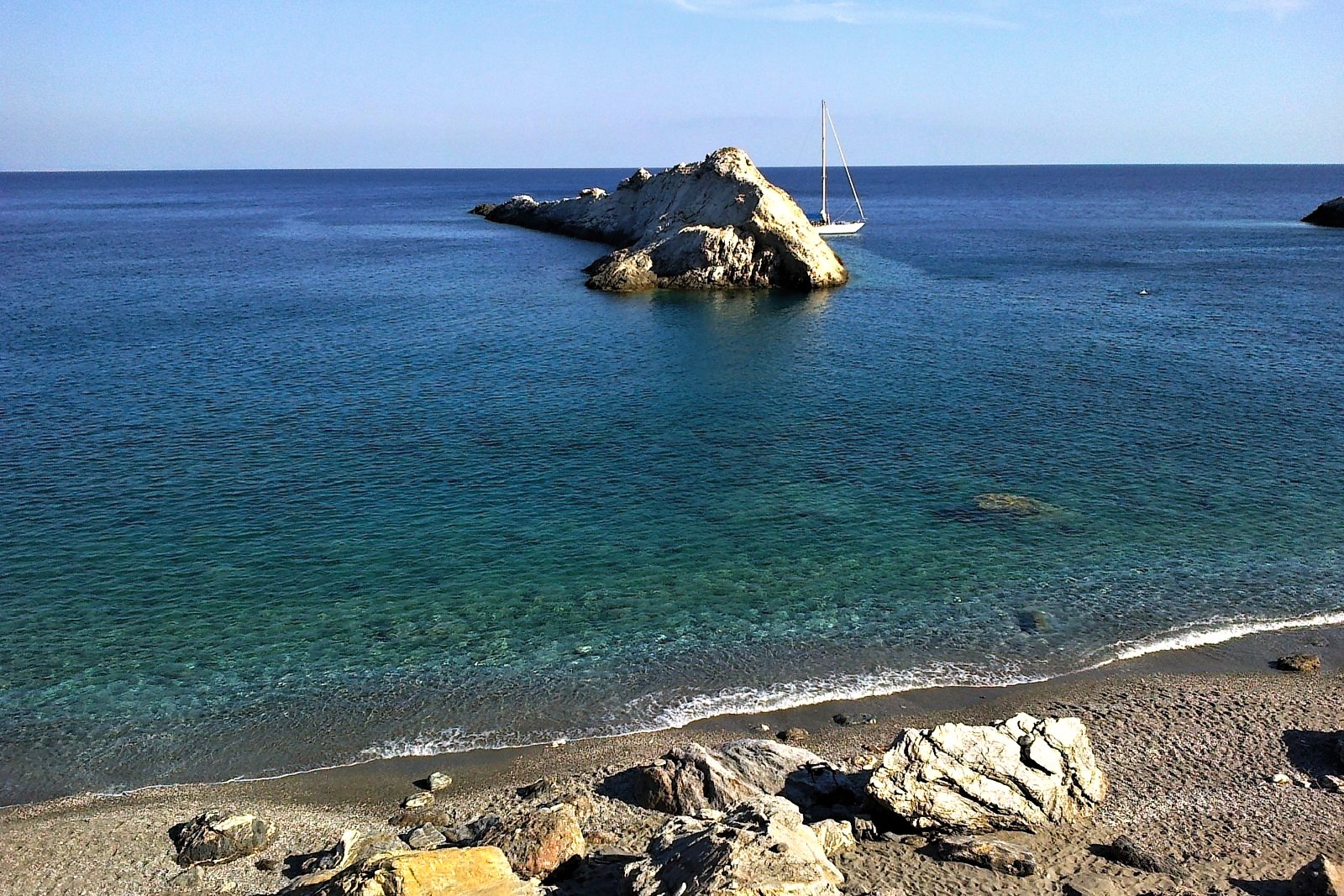
Good to knowBoat from Karavostasis in summer; carry water, shoes for the path and your own shade.
WhereKatergo, Folegandros
Manganari
Ios’s far south, where the sand is finest.
Manganari is a set of linked sandy bays at the southern tip of Ios, 24 kilometres from Chora on a road that twists down through bare hills to a different island altogether: quiet, shallow, sheltered from the north wind, with white sand and a few tavernas and loungers. Luc Besson filmed parts of The Big Blue here. The water is warm, the bays are family-friendly, and the drive back at dusk, with the Aegean going violet below, is part of the day. In summer there is usually a bus or a boat from the port for anyone without a car; check times locally.
Good to knowSouth-facing and sheltered; allow 40 minutes each way by car.
WhereManganari, Ios
Agia Anna
Pebbles under the cliff, the monastery above.
On Amorgos, Agia Anna is less a beach than a baptism: a scatter of small pebble coves at the foot of a 300-metre cliff, below the Hozoviotissa monastery that clings to its face, with water of a blue that gave the island its film. There is a tiny chapel, a few metres of shingle, no facilities and no shade; the drive down is short and the swim is deep and cold. Visit the monastery in the morning, when it is open, then come down to swim off the rocks and look up at where you have just been. It is the most photographed spot on Amorgos and still feels secret.
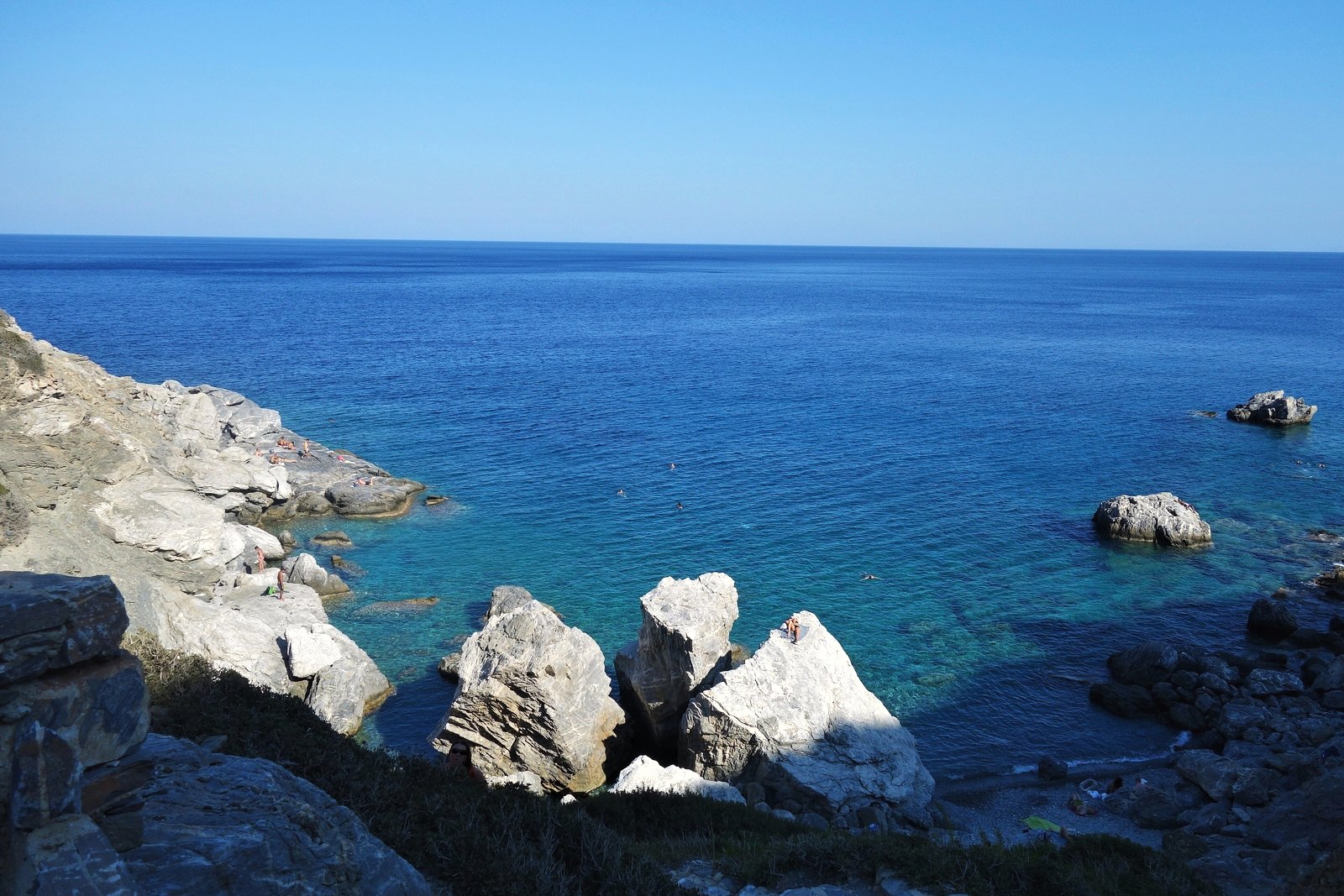
Good to knowNo facilities; swim shoes help on the pebbles. Monastery dress code is strict.
WhereAgia Anna, Amorgos
Kolymbithra
Two bays, surf on one side, calm on the other.
Tinos’s north coast is wild, and Kolymbithra is where it opens into two sandy bays divided by a rocky point. The big bay catches the swell and has a surf school in summer; the small bay is sheltered, with a canteen, a few umbrellas and water as calm as a pool. Behind both is marsh and reed bed, with birdlife and a sense of space that most Cycladic beaches lost years ago. Drive the twenty-five minutes from Tinos town through the island’s inland villages, or make a longer loop of it and drive on west for lunch at Maistros on Panormos bay, below Pyrgos.
Good to knowBig bay for surf, small bay for swimming; 15 km from town, so make a day of it with a village or two on the way.
WhereKolymbithra, Tinos
Kolona
A double-sided sandbar to an islet.
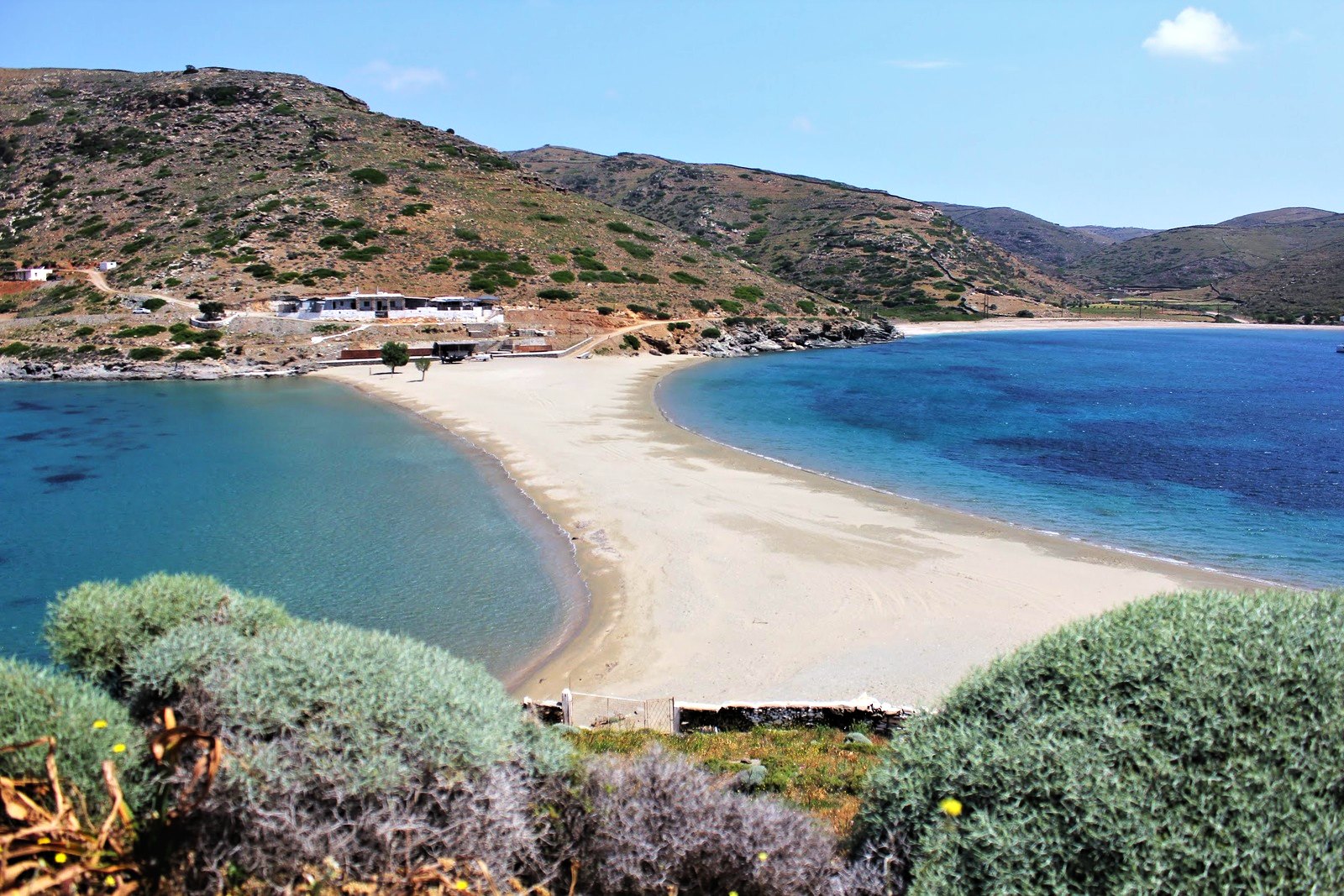
Kythnos’s signature is a beach you can swim off both sides of: Kolona is a narrow spit of golden sand joining the island to the islet of Agios Loukas, with calm water to the south and open sea to the north, six kilometres west of Chora. A beach bar puts out a few sunbeds in summer and there is a taverna at one end, but there is no shade to speak of, and the dirt road is rough enough that many people arrive by boat from Merichas, the port. It is worth every bump. Combine it with the thermal springs at Loutra on the opposite coast and you have Kythnos’s two reasons to exist in one day.
Good to knowRough track; boat from Merichas in summer is easier. Bring your own shade.
WhereKolona, Kythnos
You might also like
- The 15 Best Seaside Tavernas in the Cyclades
- The Meltemi: The Wind That Runs the Cyclades
- The Best Beaches in Milos
Prices and opening times are approximate and change with the season. If something has changed, let us know.