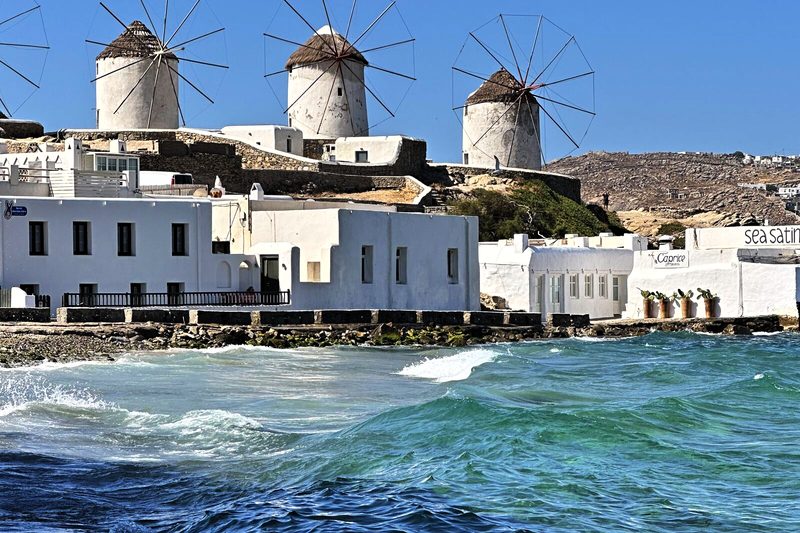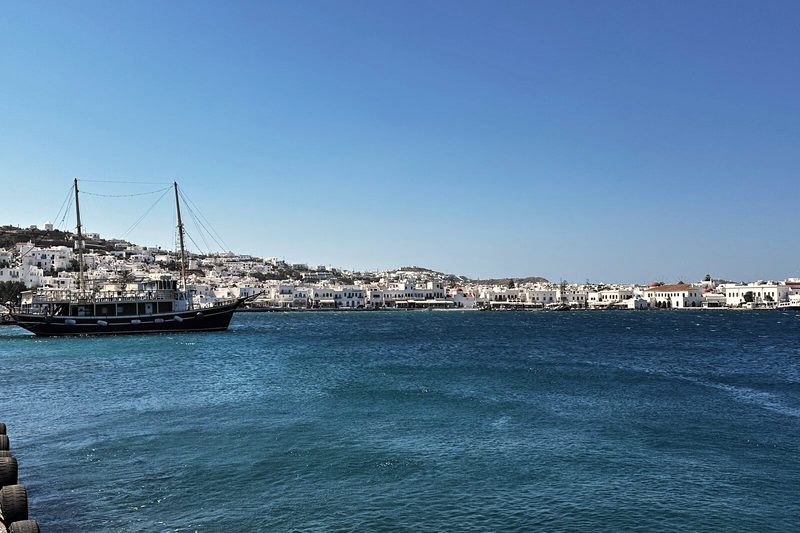
Wind in the fig trees. Marble dust on a sculptor’s apron. A dovecote in every valley. Tinos sits twenty minutes from Mykonos and belongs to a different century. For most Greeks it means one thing, the church of Panagia Evangelistria, where pilgrims crawl up from the port on their knees every August. For the rest of us it means fifty villages strung across granite ridges, a marble-carving tradition that produced half the sculptors in Athens, and a food culture built on artichokes, cured pork, raw-milk cheese and whatever the longliners bring in. It is the island the Athenian cognoscenti kept to themselves. They are not pleased you are reading this.
Why go
For the villages, first. Pyrgos is a town of marble: marble fountains, marble fanlights over the doors, marble benches in the square, and a museum that explains how it all came out of the hill. Volax sits in a field of granite boulders the size of houses, where old men still weave baskets. Kardiani hangs off a cliff above the sea with water running through its lanes. Then for the food. Tinos has more good restaurants per head than any island in the Cyclades, from a fisherman’s taverna on Panormos bay to a taverna on a church square in Chora. Then for the walking, on a network of old mule paths between the villages. And finally for Panagia Evangelistria itself, whatever your beliefs, because an island whose main street is carpeted for people on their knees has something to teach you about devotion.
The lie of the land
Tinos is long and mountainous, about 30 kilometres end to end, with the granite dome of Exomvourgo (about 640 metres) in the middle and the ruins of the Venetian capital on its summit. Chora, the port town, sits on the south coast facing Syros. Pilgrims walk straight up the hill from the harbour to the church; everyone else turns left into the old lanes of Pallada for a drink.
The south coast is the sheltered coast. East of Chora you find the beaches of Agios Fokas, Agios Ioannis Porto and Pachia Ammos; west of it, Kionia with its ancient sanctuary of Poseidon and the cliff villages of Kardiani and Ysternia, each with a bay below. The north coast is wilder and catches the meltemi: the twin bays of Kolymbithra, the marble port of Panormos beneath Pyrgos, and lonely Livada in the east.
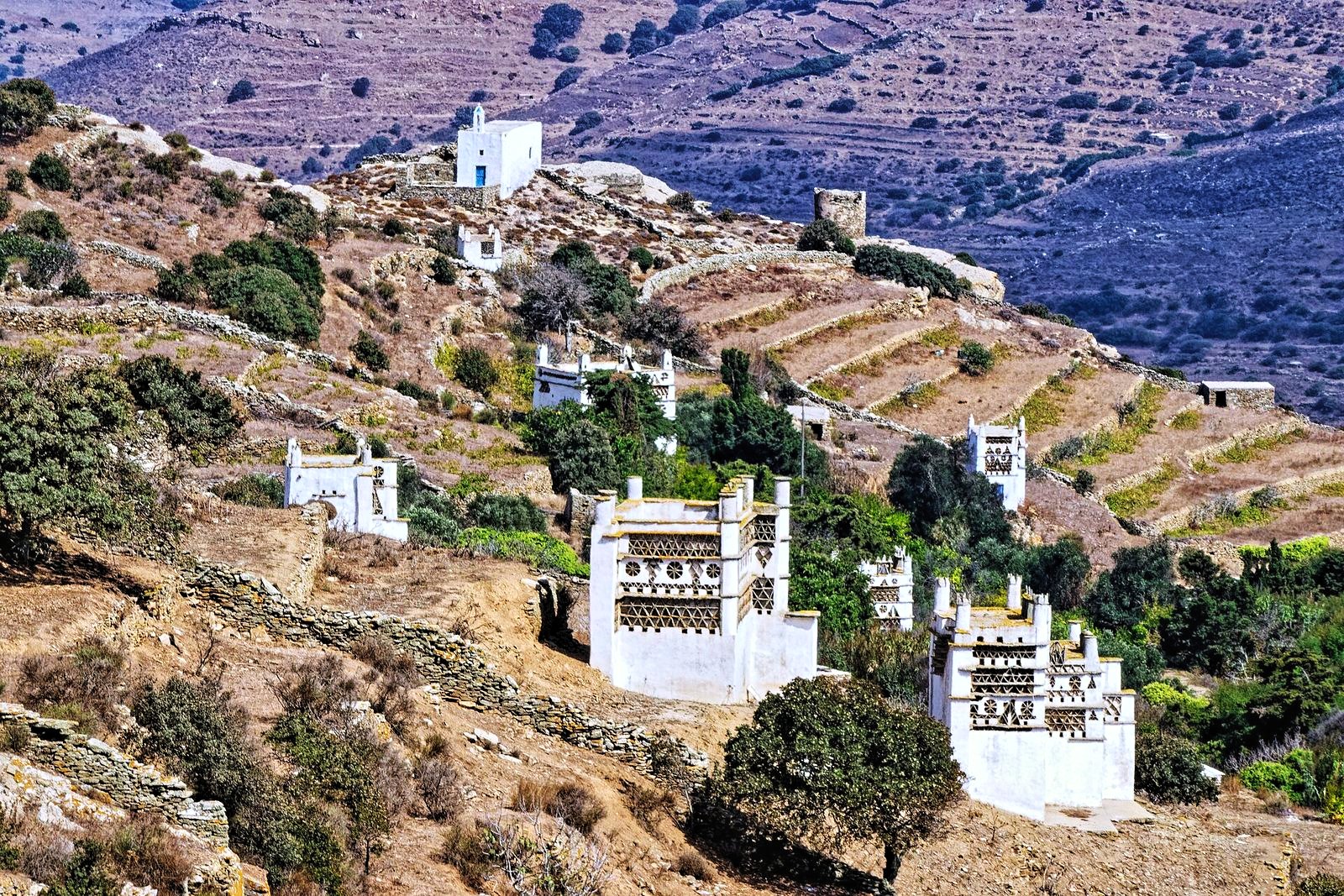
The interior is where Tinos lives. Catholic villages such as Loutra, Volax and Tarampados cluster around Exomvourgo; Orthodox ones, Falatados, Steni and Triantaros, climb the slopes to the east. Between them lie the terraced valleys of dovecotes, among the thousand or so on the island, with their lacework of slate triangles and diamonds. The island’s vineyards are around Falatados, its artichokes around Komi.
Eat & drink
- Maistros, Panormos bay: a fisherman’s fish taverna at the water’s edge below Pyrgos, for grilled sardines, whole calamari and shrimp pasta; book ahead.
- Marathia, Agios Fokas: the island’s most ambitious (and priciest) fish table, known for dry-aged fish and a serious wine list; order the aged fish and keep the rest simple.
- Itan Ena Mikro Karavi, Chora: a bougainvillea garden on the site of the old open-air cinema, with cuttlefish risotto and more than twenty Tinian wine labels.
- San to Alati, Agios Fokas: a fish taverna that takes salt seriously, from marinated anchovies to kariki cheese.
- Ntinos, Giannaki bay below Kardiani: complimentary meze to start, then caramelised octopus and the day’s catch, on the rocks above the sea.
- Malamatenia, Chora: a taverna on a church square in the old lanes, for slow-cooked kleftiko, grilled octopus and fried anchovies; arrive before eight in summer.
Stay
Price bands are approximate high-season rates per night: € under €100, €€ €100 – €200, €€€ €200 – €400, €€€€ above €400.
- Diles & Rinies, Lagades (€€€ – €€€€): eight sea-view villas sharing an infinity pool on a hillside above Agios Fokas, minutes from Chora, good for groups.
- Infinity View, Chora (€€€): contemporary rooms and suites, some with private plunge pools, and a saltwater pool, a short walk from the centre.
- Aeolis Tinos Suites, Triantaros (€€ – €€€): hillside stone suites, some with (not fully secluded) private pools, and sea views to Mykonos; a steep site, so you need a car; book the renovated suites.
- Under the Sun, Ysternia (€€ – €€€): modern suites with small jetted pools on terraces between Kardiani and Ysternia, ten minutes from Ysternia bay.
- Mr & Mrs White, Agios Ioannis Porto (€€ – €€€): a bright, spotless hotel of about 60 rooms with a big pool, 350 metres from Agios Ioannis beach; quiet and secluded, so hire a car or use the bus for Chora.
- Galini, Kionia (€€): traditional bungalows in a garden by the sea, renovated in 2025; a simple base a ten-minute drive or bus ride from Chora.
Things to do
- Walk up Leoforos Megalocharis to Panagia Evangelistria and watch the pilgrims arrive, especially around 15 August and 25 March.
- Spend a morning in Pyrgos: the Museum of Marble Crafts, the Chalepas house, the marble square and the sculptors’ workshops.
- Wander the granite boulder-field at Volax and buy a basket from a weaver.
- Count the dovecotes in the valley below Tarampados, where about twenty have been restored.
- Swim at Kolymbithra, choosing the big bay for surf and the small one for calm.
- Climb Exomvourgo for the castle ruins and the view over the whole island.
- Follow the old paths between Kardiani, Ysternia and Pyrgos, with lunch at the bottom.
- Taste Volacus and other Falatados wines, and the island’s Nissos beer.
- Visit the cheese-makers for kariki, and a butcher for louza, the island’s cured pork.
- Explore the Catholic villages of Loutra and Agapi, and the Jesuit monastery at Loutra.
- Come for the artichoke festival in Komi in late spring or early summer; the date moves, so check before you travel.
Getting there & around
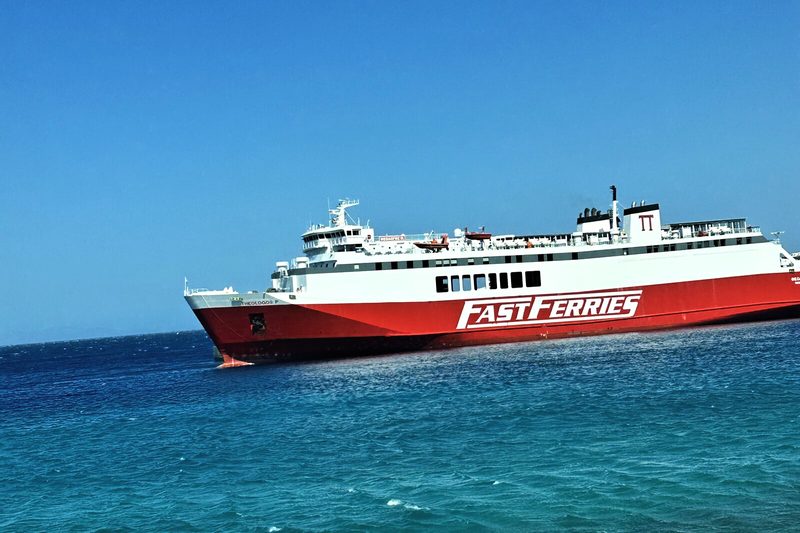
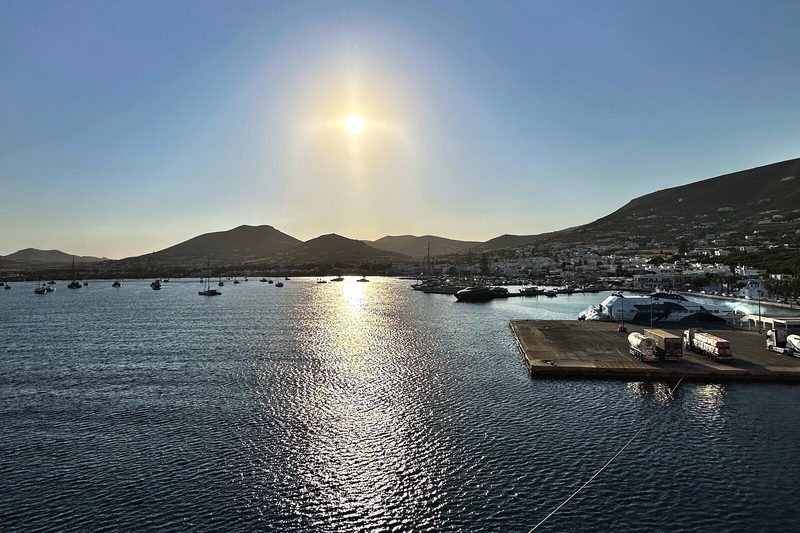
There is no airport on Tinos. From Athens, the easiest route is Rafina, close to the airport: fast ferries take about 2 hours and conventional ones about 3 and a half to 4 hours. From Piraeus allow 4 and a half to 5 hours on Blue Star, or about 2 and a half on a SeaJets fast ferry. Mykonos is 20 to 40 minutes away by ferry, Syros about 30 to 45 minutes, Andros about 1 and a half hours, so Tinos slots easily into a northern-Cyclades loop. On the island, buses run from Chora to Pyrgos and Panormos, to Kionia, to Agios Ioannis Porto and to the eastern villages, but a hire car is the honest answer. Roads are good, distances short, and the villages are the point.
When to go
May, June and September are ideal: warm enough to swim, cool enough to walk, and the restaurants are open and unhurried. Easter and 15 August are the great pilgrim festivals, moving to witness but booked solid, so plan months ahead. July and August bring the meltemi, which Tinos feels more than most islands; go to the south-coast beaches in the afternoon. Many restaurants in the villages close from November to Easter, though Chora keeps going.
Good to know
The meltemi is the thing to plan around; Kolymbithra and Panormos are morning beaches in high summer. Tap water is safe in Chora but tastes better bottled. ATMs are in Chora and Pyrgos. Catholic and Orthodox communities share the island amicably; many interior villages have both churches. Prices are approximate and seasonal.
Lunch under a pergola, marble dust in the air, and a road winding on to the next village: Tinos asks nothing of you but time.