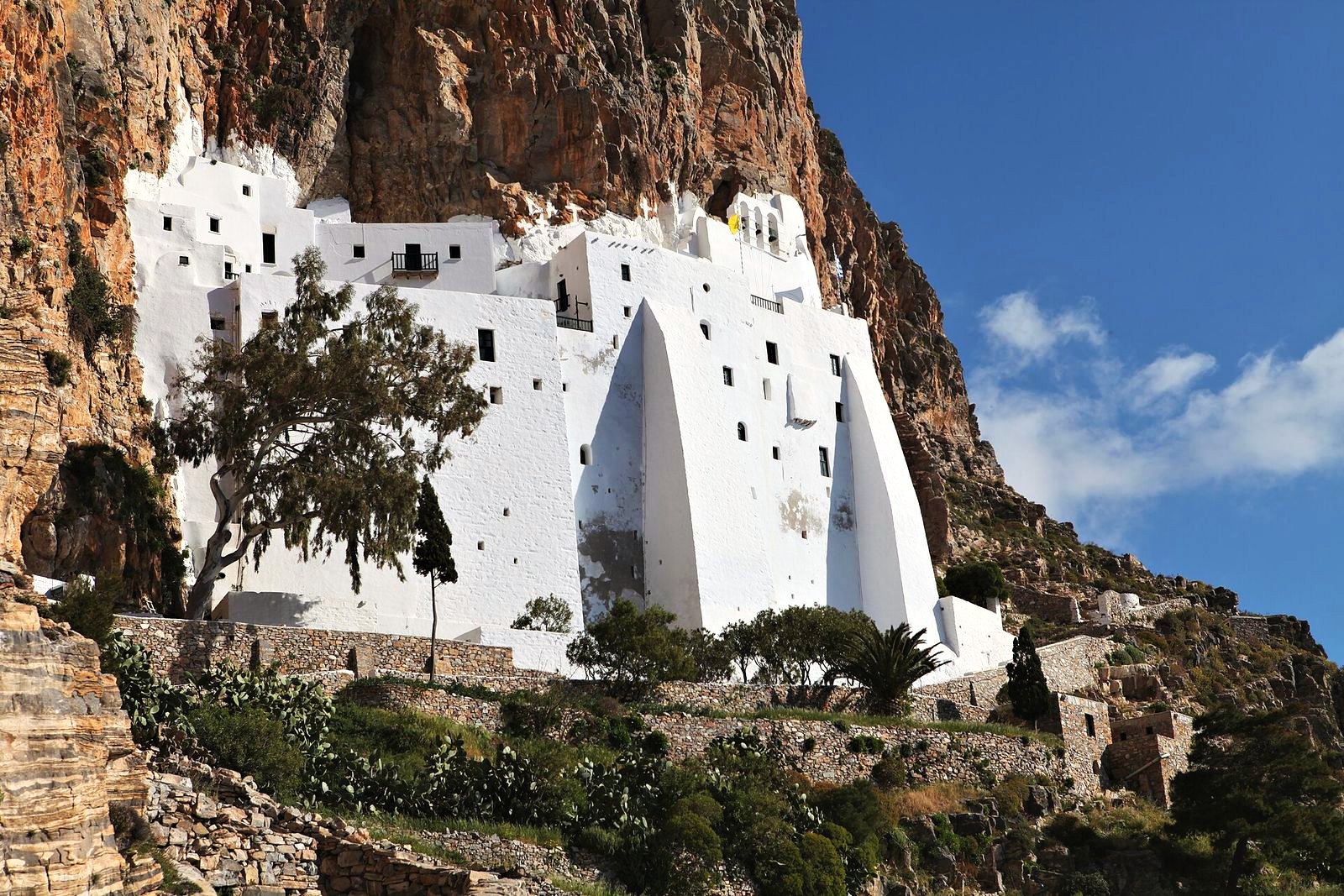
Sheer cliff. White monastery. Water so clear the boat seems to float on air.
Amorgos is the easternmost of the Cyclades, a long, mountainous ridge of an island 33 kilometres end to end and rarely more than six across. Luc Besson shot The Big Blue here in 1987 and the island has lived with the name ever since, though it has never traded on it. What you find is a place of serious walking, two very different harbours, a Chora that is one of the best preserved in the Aegean and, bolted into a cliff 300 metres above the sea, the monastery of Hozoviotissa, which a monk will show you in exchange for a modest dress code and a glass of honeyed raki.
Why go
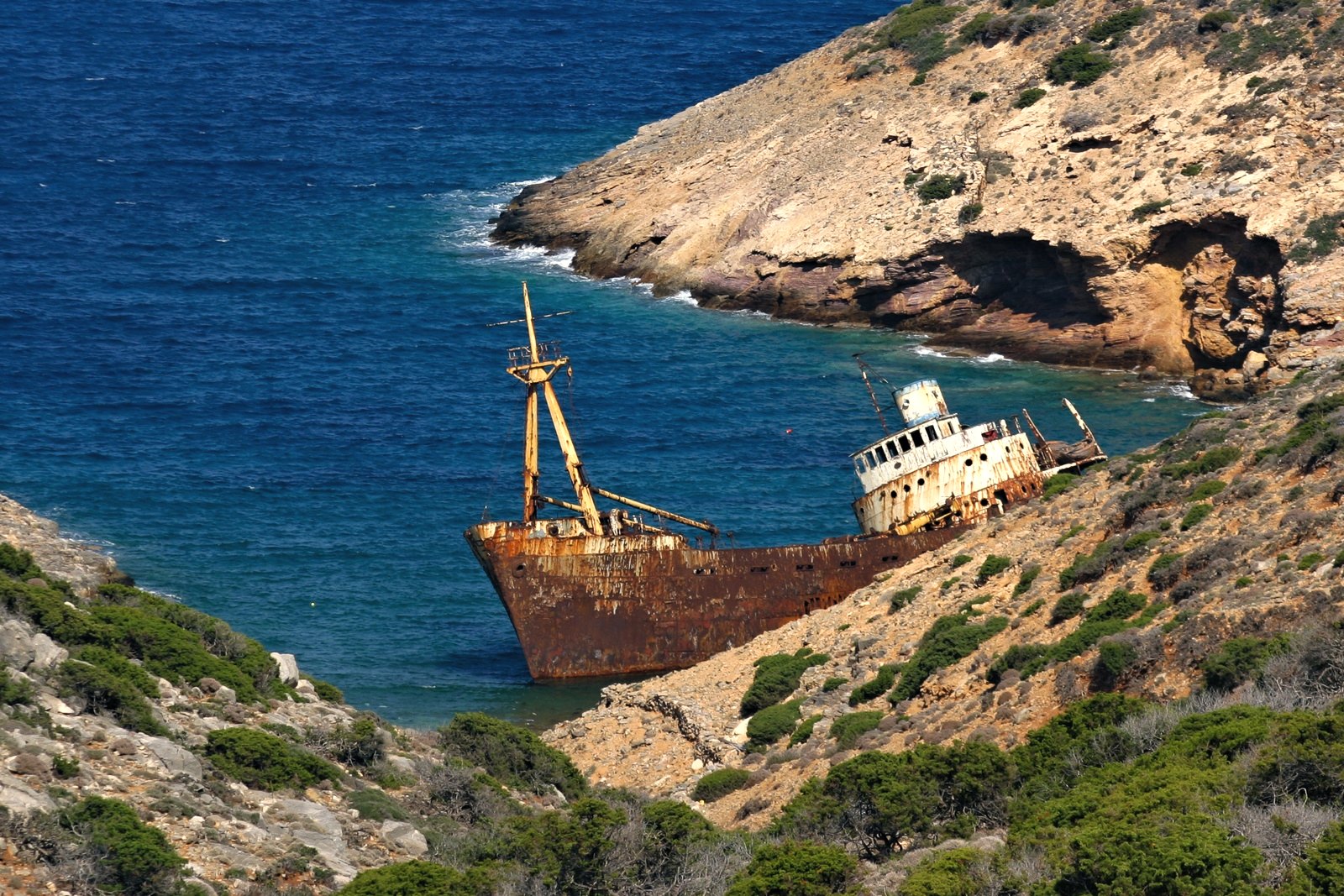
For Hozoviotissa, first: an eight-storey sliver of whitewash that has clung to the rock since the 11th century, reached by 300 steps from the road. For the walking, on an island whose villages were linked by mule paths long before tarmac, so that you can still cross from Chora to Aegiali on the old Palia Strata in five hours with the sea on both sides. For Agia Anna, the cove beneath the monastery where Jacques Mayol dived in the film, and Mouros, and the wreck of the Olympia rusting in a bay at the island’s far end. And for the food: patatato, goat stewed with potatoes, fava, local cheeses and xerotigana pastries, washed down with psimeni raki, the island’s honey-and-spice spirit. You’ll leave fitter and fuller.
The lie of the land
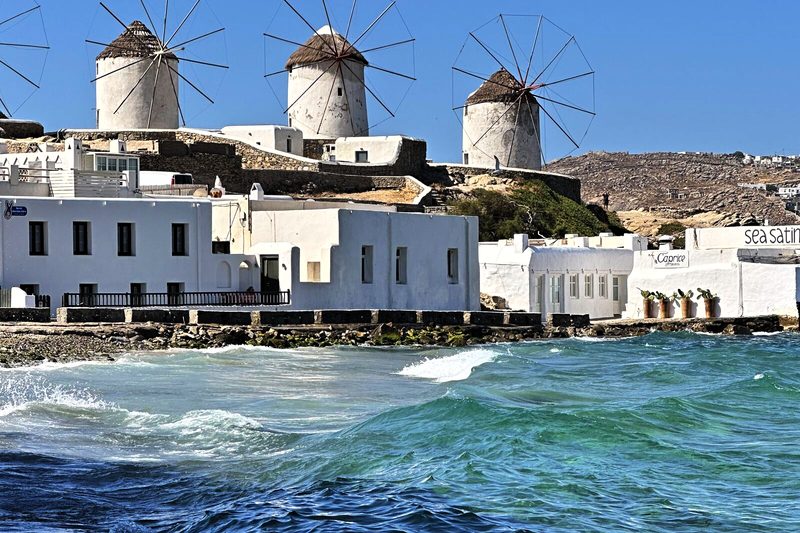
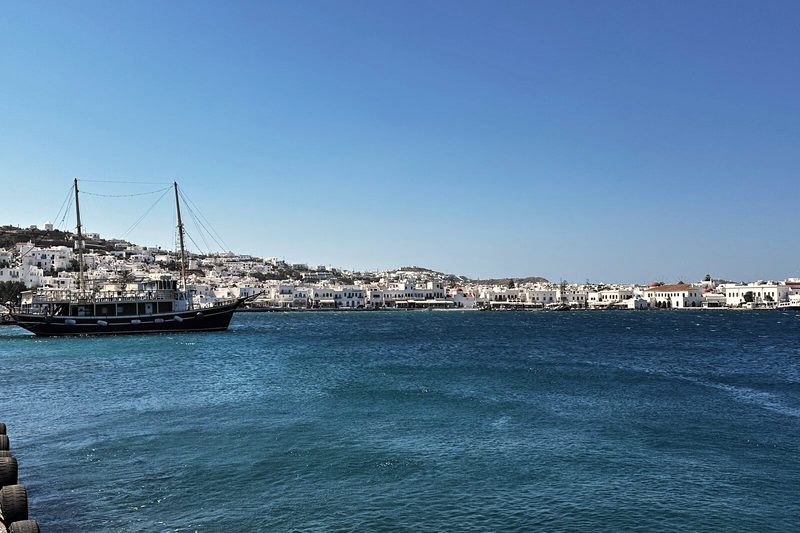
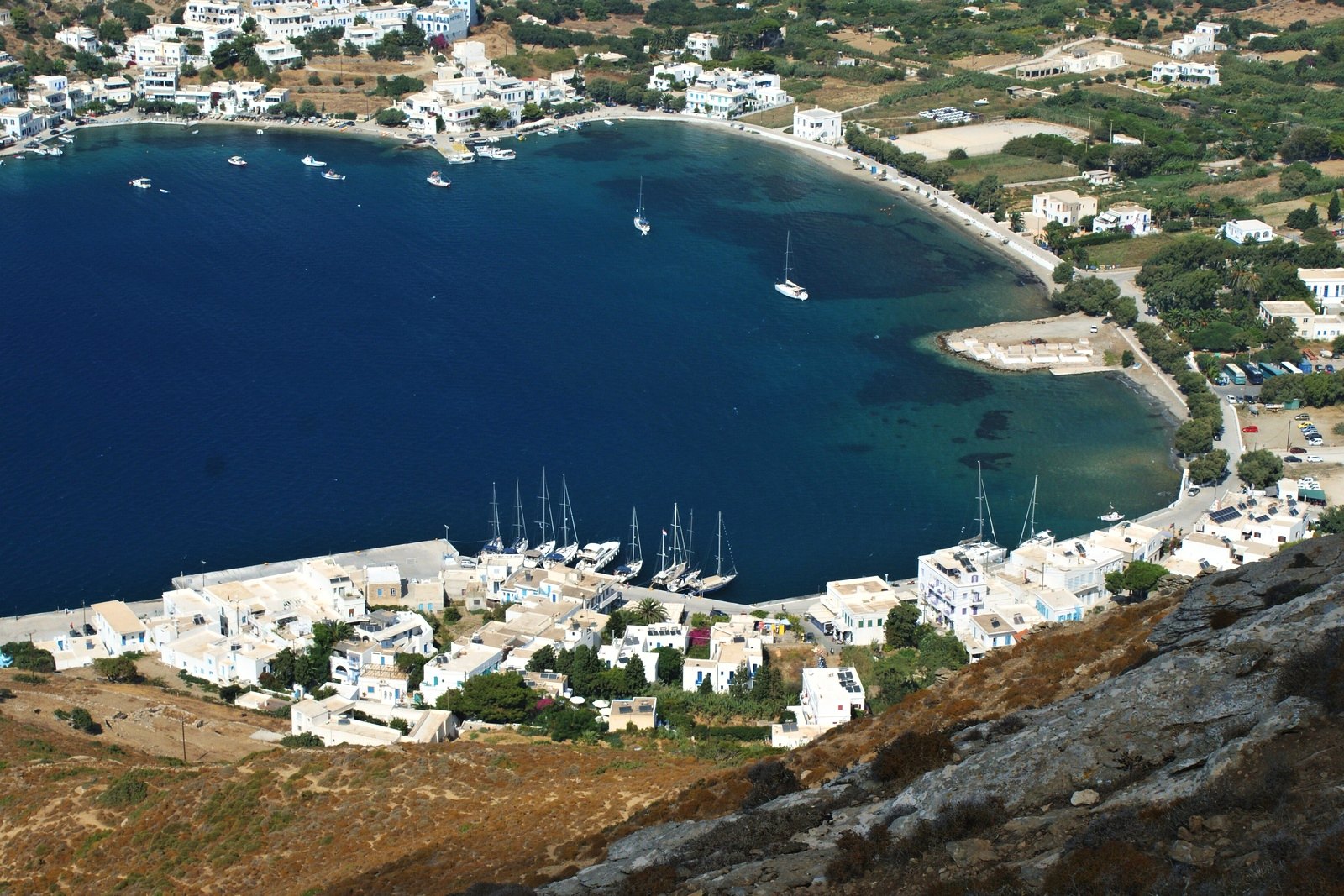
Think of Amorgos as two islands joined by a mountain road. In the south-west, Katapola is the main port, three villages round a deep bay: Katapola itself, with the ferry quay and tavernas; Rachidi, the quiet middle; and Xylokeratidi on the far shore, with the best fish restaurants and a beach. A 15-minute drive uphill is Chora, the capital, a 13th-century village of white houses, dozens of chapels and a row of windmills on the ridge, built round a rock crowned by a Venetian castle. Below Chora the road drops to Hozoviotissa and the beach of Agia Anna, and continues south-west past Mouros beach to Arkesini and the empty southern tip at Kalotaritissa, with the Olympia wreck in the bay beside it.
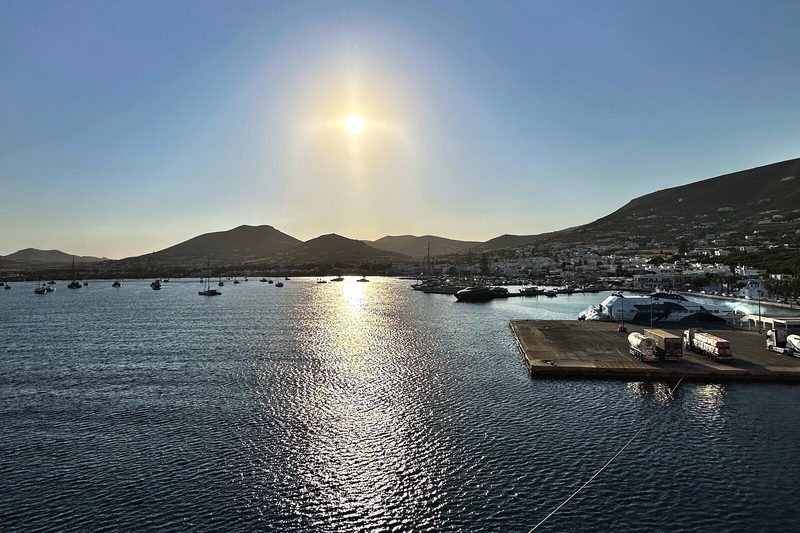
The road north from Chora runs some 15 kilometres along the spine, past the monastery turn-off, to Aegiali, the second port: a wide bay with the island’s best sandy beach and a strip of tavernas and rooms. Above it, in an amphitheatre of terraces beneath Krikellos, the island’s highest ground at a little over 820 metres, sit three hill villages: Tholaria and Langada, both with tavernas and a strong panigiri tradition, and tiny Potamos. Five kilometres or so before Aegiali, on the road from Chora, is Agios Pavlos, a pebble beach facing the islet of Nikouria, with a boat across in summer.
Eat & drink
- Liotrivi, Chora – traditional Amorgian cooking in a stone-built old olive press at the edge of the village; patatato if it’s on.
- Youkali, Xylokeratidi – the modern kitchen across the bay from the quay: smoked mackerel, beetroot orzo and a mille-feuille worth the wait.
- To Limani tis Kyra Katinas, Aegiali – a family restaurant by the port cooking with the island’s own produce.
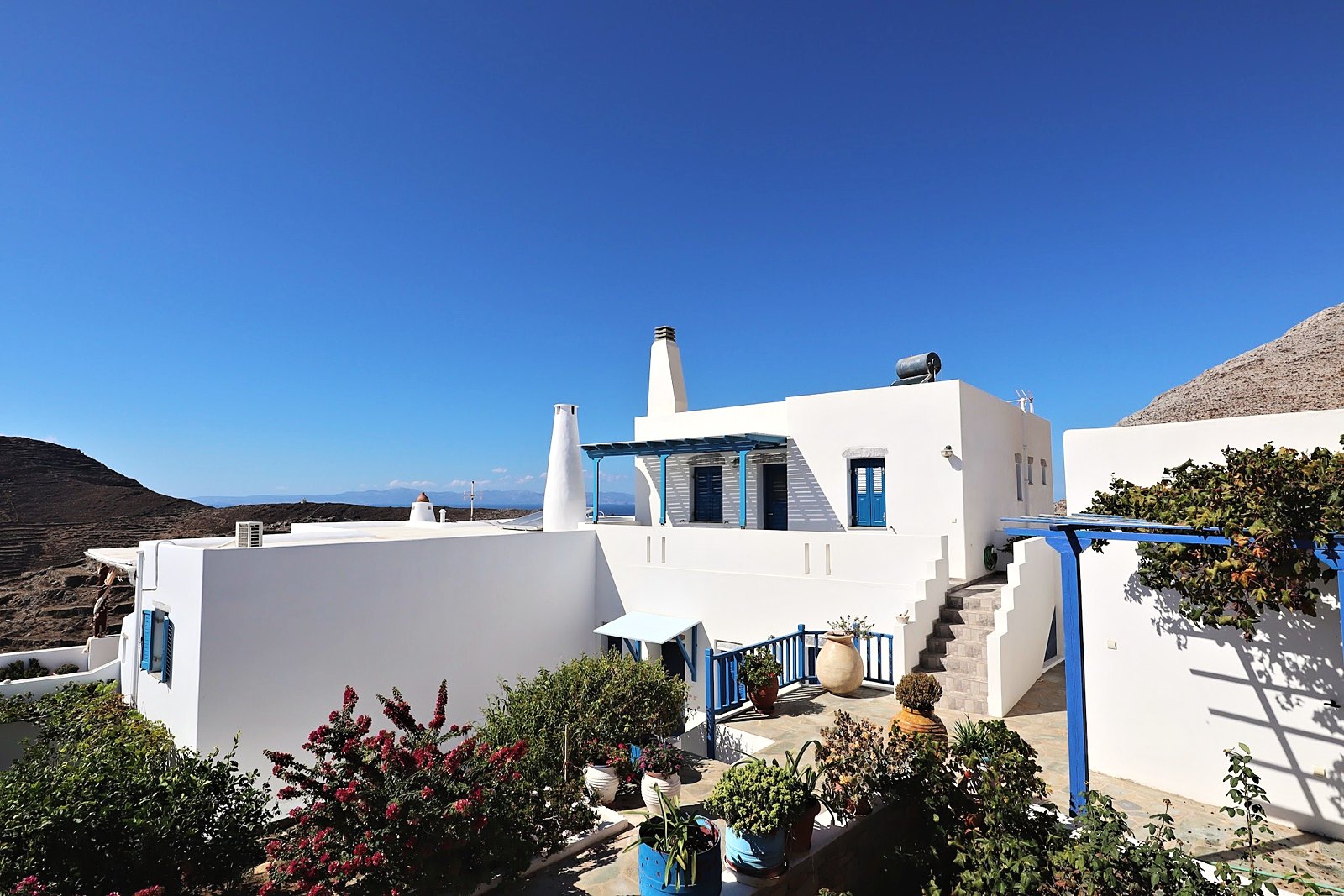
- Kamara, Potamos – a taverna in a 200-year-old house on the hill above Aegiali, open May to October; oven-baked goat with island potatoes, and the roof terrace for the sunset.
- Jazzmin, Chora – the village’s café-bar for a late drink in the lanes.
Stay
Price bands are for a double in high season: € under €100, €€ €100 – €200, €€€ €200 – €400.
- Aegialis Hotel & Spa, Aegiali – the island’s five-star, run since 1992, with a seawater thalasso pool, the Lalon Idor spa and yoga studios above the bay. €€€
- Vorina Ktismata, Chora – a small luxury hotel in the Vorina quarter of the old village, all stone, simplicity and sea views. €€€
- Yperia Hotel, Aegiali – a three-star with a pool and pool bar, rooms from pool view to sea-view suites, 200 metres from the beach. €€
- Aquapetra Hotel, Agios Pavlos – simple, family-run rooms and a good fish taverna in a remote cove looking across to Nikouria islet, for the end-of-the-road feeling; come for the setting and the rooms rather than the breakfast or the polish of the common areas. €€
- Levrossos Beach Apartments, Aegiali – self-catering studios and apartments in a garden a few steps from the long sandy beach of Levrossos, near Aegiali, reached on foot along a 250-metre path with stone steps from the public car park; open May to the start of October. €€
Things to do
- Climb the 300 steps to Hozoviotissa in the morning, before the heat; the monks expect long trousers on men, a long skirt on women and covered shoulders, so pack a wrap rather than rely on borrowing one at the door.
- Swim at Agia Anna below the monastery, then walk the path round to the next cove.
- Hike the Palia Strata from Chora to Aegiali, five hours along the old mule road, and take the bus back.
- Walk the loop from Aegiali through Tholaria, Langada and Potamos, stopping at Kamara for lunch.
- Take the boat from Agios Pavlos to Nikouria for an afternoon on an uninhabited islet.
- Drive to Kalotaritissa and swim out to the wreck of the Olympia in the bay beside it.
- Swim at Mouros, a pebble cove with sea caves and water that goes from turquoise to navy in a stride.
- Taste psimeni raki and rakomelo, and buy a bottle of Amorgion to take home.
- Wander Chora at dusk, from the castle rock to the windmills, and find a table in the Loza square.
- Come for a panigiri in Langada or Tholaria in August, when the whole village eats together and the violins go on past dawn.
Getting there & around
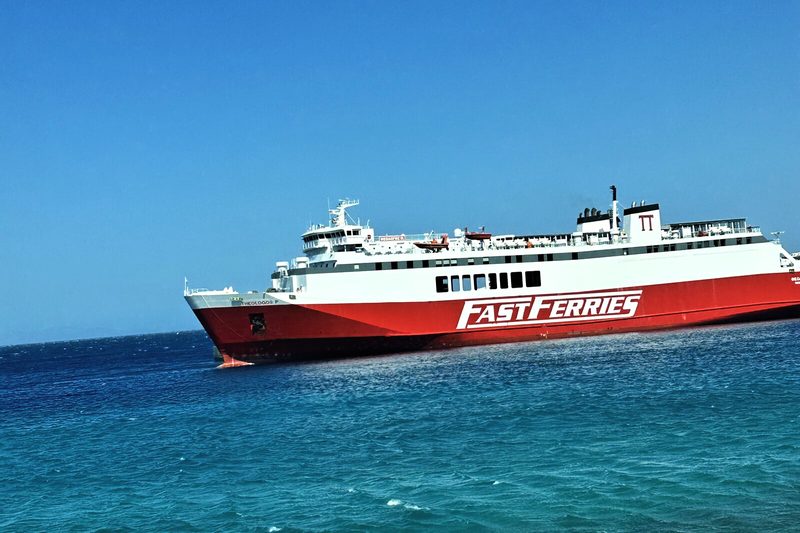
There is no airport. Amorgos is a long ferry ride: Blue Star’s conventional boats from Piraeus take seven and a half to nine and a half hours and serve the two ports on alternate sailings, the Katapola boat by way of the Small Cyclades and the Aegiali boat, about four a week, by way of Donoussa; from June to September a fast SeaJets boat also runs daily to Katapola in four and a half to five and a half hours, at about twice the fare. The easier way in is from Naxos, where the small Express Skopelitis threads through the Small Cyclades to Katapola and Aegiali most days, a slow and lovely four to five hours, and where there is a domestic airport. There are also boats from Paros several times a week all year, and from Mykonos and Santorini most days in summer. Check which port your ferry uses; Katapola and Aegiali are about 40 minutes apart by road.
Buses link Katapola, Chora, Hozoviotissa, Agia Anna and Aegiali several times a day, with services from Aegiali up to Tholaria and Langada. For Mouros, Kalotaritissa and Agios Pavlos you’ll want a hired car or scooter; the main road is good but long, and the island’s scale surprises people.
When to go
May, June, September and early October are the months for walking, with the sea warm from June. July and August fill the two harbours with Greek and French holidaymakers and bring the panigiria, which are worth planning round. Most hotels close from November to Easter, though Aegialis stays open for retreats.
Good to know
Tap water is not for drinking in most of the island; buy bottled. There are ATMs in Katapola, Chora and Aegiali. The meltemi blows hard here in July and August; Aegiali bay faces north and gets choppy, while Agia Anna, Mouros and the south-west coves stay calmer. Take the monastery dress code seriously, and carry water on the paths, where there is no shade and no kiosk. Prices are approximate and seasonal.
Climb, swim, eat, repeat; Amorgos asks for a week and gives it back double.