Quick answers
- How many beaches does Milos have?
- Islanders say seventy. The best known are Sarakiniko, Kleftiko (by boat), Paliochori, Firiplaka and Tsigrado.
- Do I need a car on Milos?
- Yes, hire one: the best beaches are at the ends of dirt tracks. Seasonal buses run from Adamas to Plaka, Pollonia and the main southern beaches.
- How do I get to Milos?
- Fast ferries from Piraeus take about 2.5–3.5 hours and conventional boats about 4–7 hours. Flights from Athens take about 45 minutes.
- Which Milos beaches are calm in the meltemi?
- The south coast: Paliochori, Firiplaka and Agia Kyriaki.
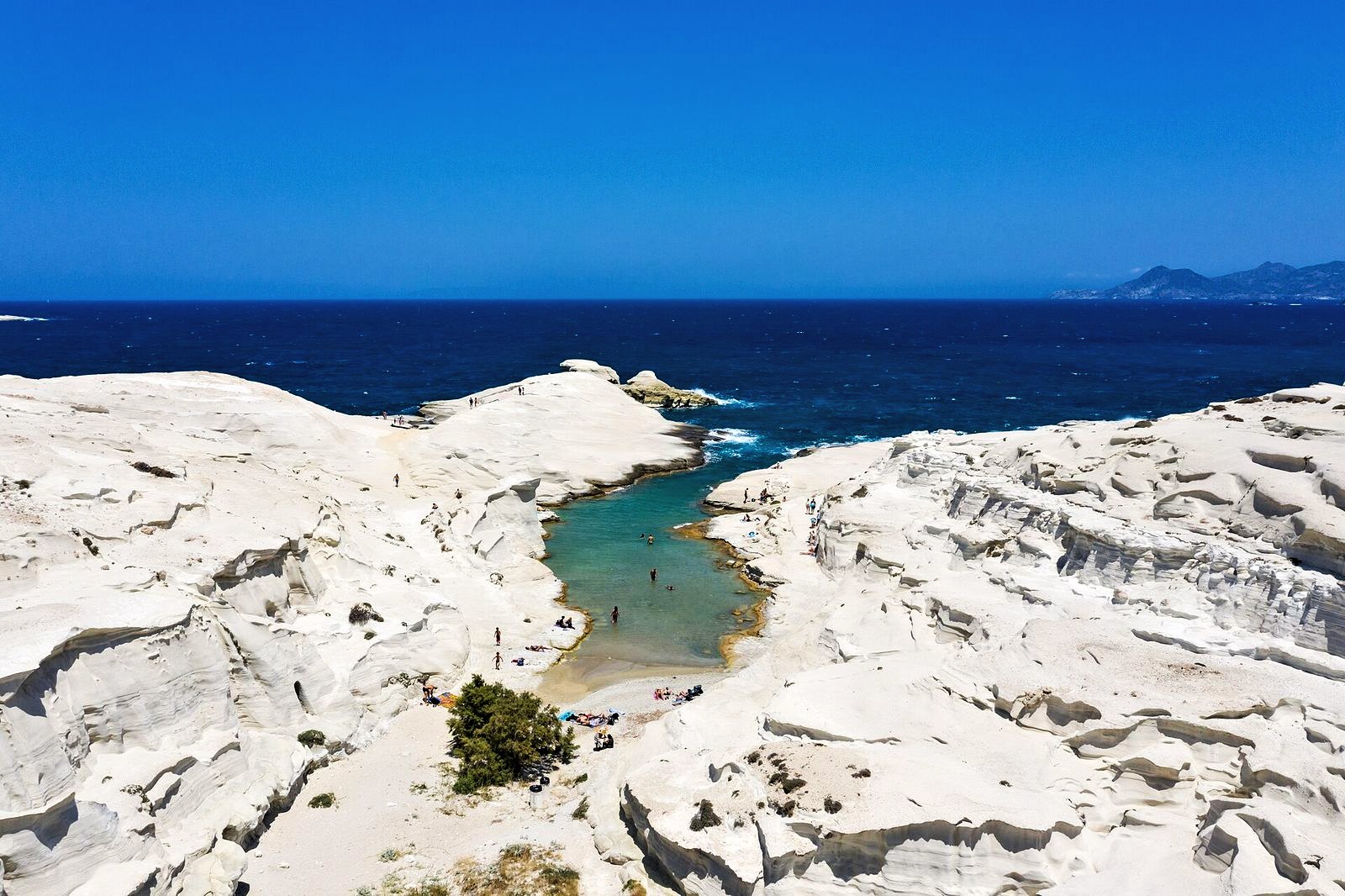
White rock. Warm sand. A sea the colour of bottle glass. Milos is a horseshoe of old volcano wrapped around one of the largest natural harbours in the Mediterranean, and the fire that made it is still close to the surface: in rust-and-ochre cliffs, in sand that stays warm underfoot at Paliochori, in the bone-white moonscape of Sarakiniko. Islanders say there are seventy beaches. You’ll stop counting around the fifteenth, somewhere between a rope ladder and a fisherman’s painted door, and realise the number is beside the point. This is the island for people who want to swim somewhere different every day.
Why go
Because no other Cycladic island changes shape so often. Drive twenty minutes and the rock turns from chalk to rust to charcoal; walk down a track and find a cove that looks like it belongs in the Caribbean. The Venus de Milo was dug out of a field below Tripiti in 1820, and the island still rewards people who poke about. Add fishing hamlets of boat-houses with doors painted the colours of sweets, Roman catacombs, a sailing day out to Kleftiko, and tavernas that cook goat in the oven and octopus on the grill with equal seriousness. Milos has grown busy in August, but it is big enough, and wild enough at the edges, to absorb it.
The lie of the land
Milos is a rough oval with a great bay bitten out of its north side. Nearly everything you need sits around that bay and along the north coast; the western third is a roadless wilderness of goats, monastery and dirt track, best seen from the sea.
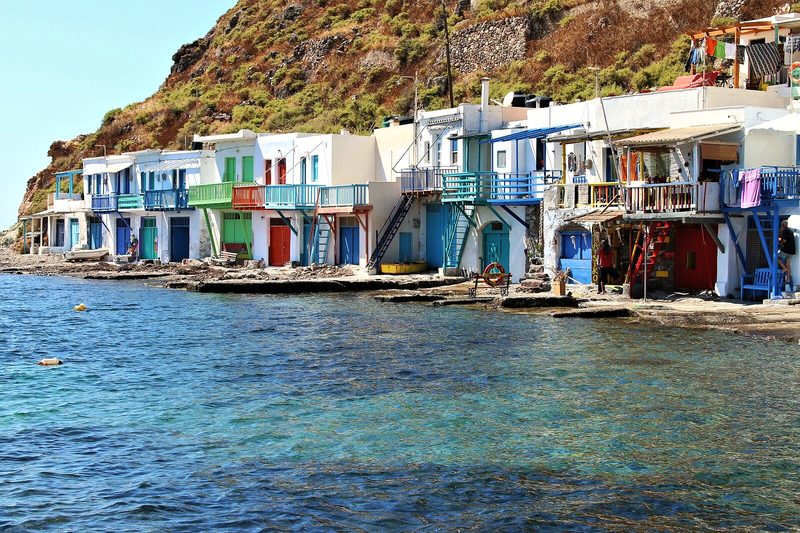
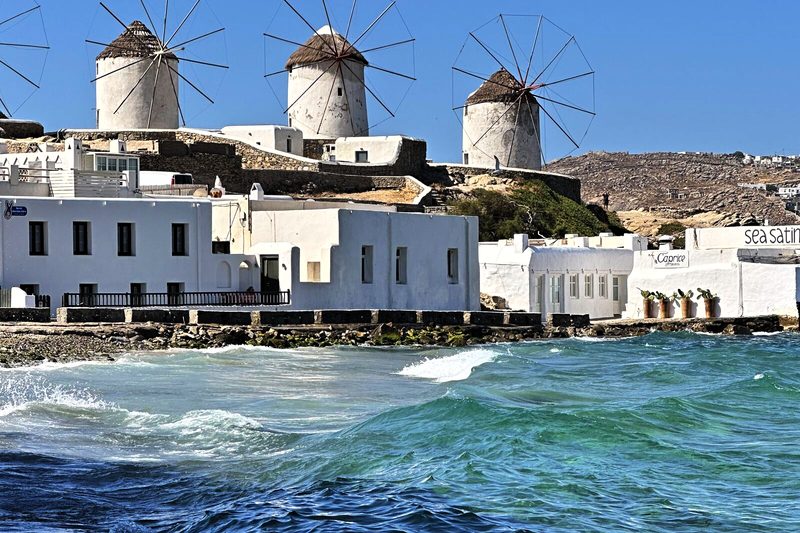
Adamas is the port and the practical capital: ferries, car hire, chemists, the Mining Museum, a seafront of cafés. Plaka, the real capital, sits on the hill above with its Kastro, sunset churches and lanes too narrow for cars; Tripiti and Plakes run into it, with windmills, the ancient theatre and the catacombs below. Down the cliff path from Tripiti is Klima, a single row of syrmata, the boat-houses with the painted doors, their ground floors lapped by the sea. Round the north coast, Mandrakia and Firopotamos are smaller versions of the same idea, each with a chapel and a swimming hole.
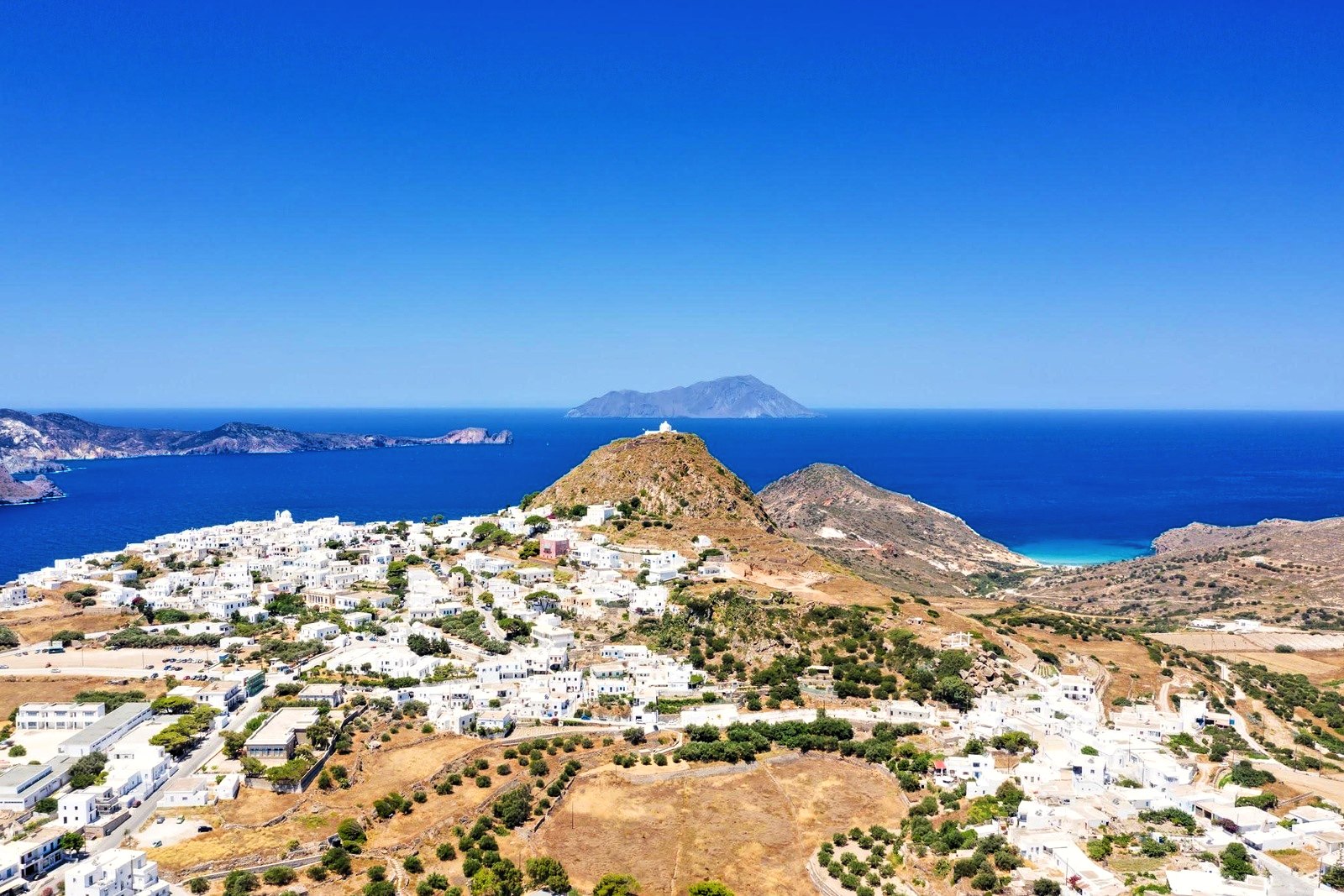
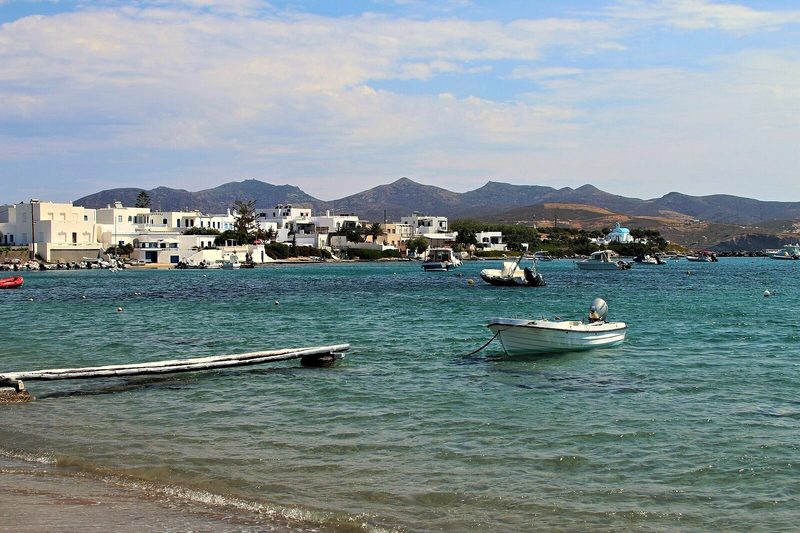
Pollonia, on the north-east tip, is the island’s second centre: a tamarisk-shaded beach, the best cluster of restaurants, and the little ferry to Kimolos. The south coast is beach country: Paliochori, Agia Kyriaki, Firiplaka, Tsigrado and Provatas, all strung along a road that climbs over a saddle from Adamas and drops to the sea between painted cliffs.
Eat & drink
- O! Hamos!, Papikinou beach, Adamas – handwritten notebook menus, farm goat and cheese from the family’s own animals; expect a queue.
- Medusa, Mandrakia – octopus drying on the line, tables over the fishing harbour.
- Enalion, Pollonia – seafood taverna fed by its own seven-acre farm; shrimp saganaki and the daily catch.
- Yialos, Pollonia – polished contemporary Greek on the harbour wall; tuna tataki, cuttlefish barley.
- Barriello, Tripiti – modern Greek from an old stone house in the village, with a list of Greek wines.
- Psaravolada, Agia Kyriaki – stone veranda above the bay; octopus carpaccio, ceviche and the day’s catch.
Stay
- Milos Cove, Agkali, near Komia – secluded suites and villas with private pools above a private cove, at the end of a dirt track; from about €550 per night.
- Skinopi Lodge, Skinopi – seven stone villas down a cliff on the bay, a private deck and nothing else; luxury, from about €450.
- Salt Suites by Mr & Mrs White, Pelekouda, Pollonia – ten sea-facing suites, some with outdoor jacuzzis; upper-mid, from about €350.
- Melian Boutique Hotel & Spa, Pollonia – fifteen rooms, a spa and the sunset terrace of its restaurant, Mama Melian; upper-mid, from about €400.
- Milos Breeze, Pollonia – pool, a hammam villa and a terrace above the bay; mid to upper, from about €300.
- Nefeli Sunset Studios, Pollonia – family-run studios on the beach, run by Roula and Makis; the value pick.
Things to do
- Walk Sarakiniko at sunrise, before the coaches, and swim the inlet only if the sea is flat; in a northerly swell it is dangerous, and the lifeguards are on duty only from ten to six.
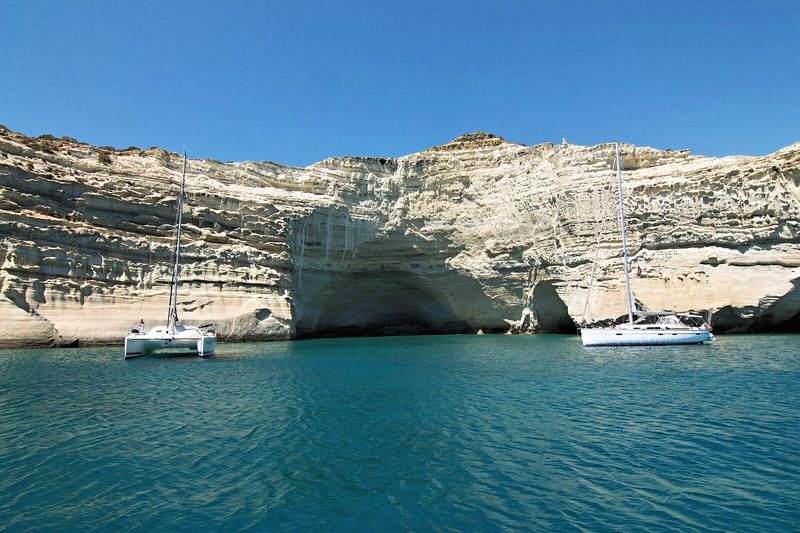
- Take a full-day sailing trip from Adamas to the Sykia cave and Kleftiko.
- Lower yourself down the rope and ladder into Tsigrado (fit, shod people only).
- Eat lunch at Klima with the sea lapping the boat-house doors.
- Visit the catacombs (8.30am – 3.30pm, closed Tuesdays, about €10) and the ancient theatre at Tripiti, then stand where the Venus was found.
- Climb to the Kastro at Plaka for sunset over the bay.
- Cross to Kimolos on the little ferry from Pollonia for the day.
- Ride the bus to Paliochori and feel the warm sand underfoot.
- See the Mining Museum in Adamas: obsidian, bentonite, perlite and a lot of island history.
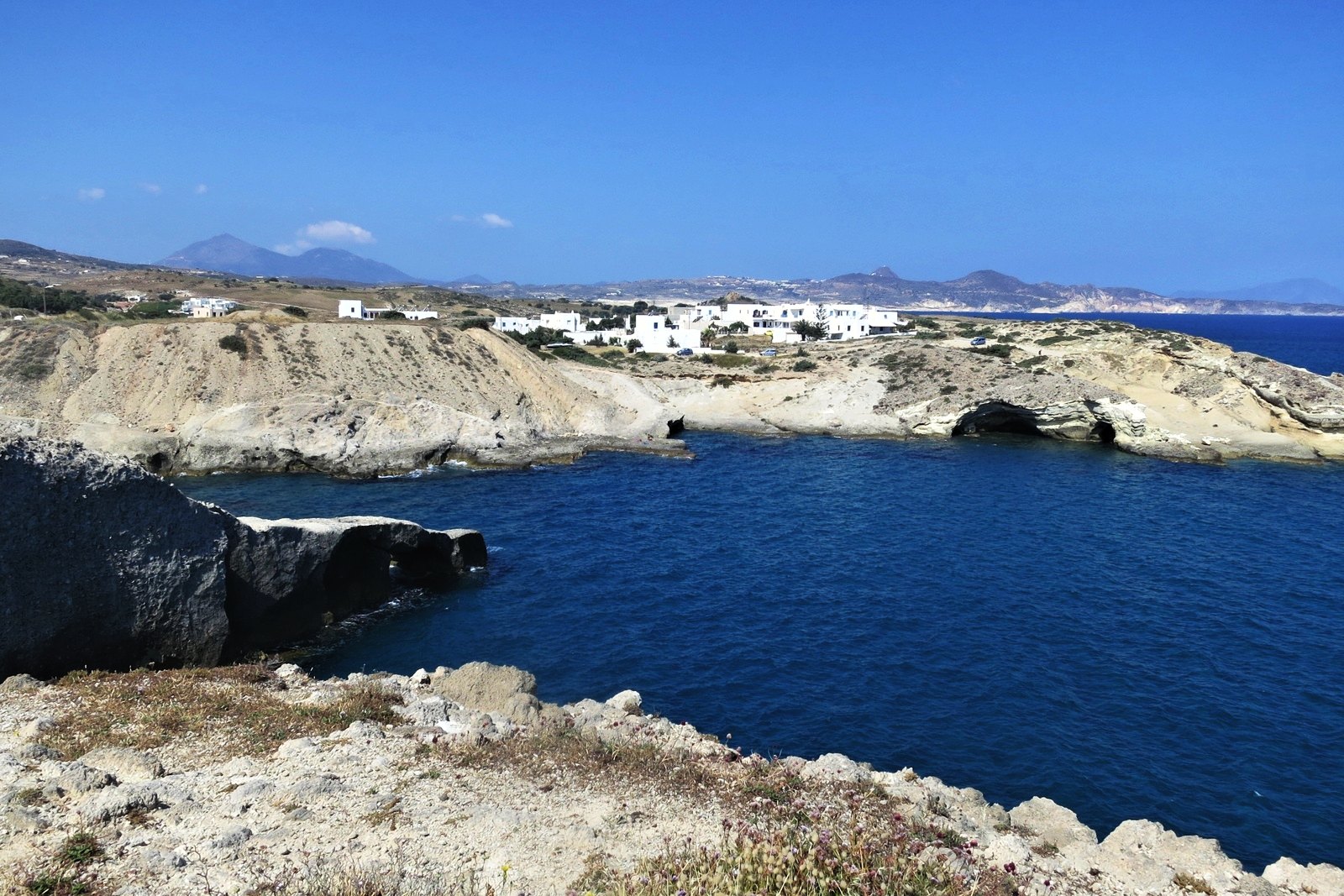
- Look down into the sea caves at Papafragas, and swim them on a flat day if the path is open.
- Drive the dirt track to Gerontas and swim through the arch.
- Watch the fishing boats come in at Mandrakia, then order the catch at Medusa.
Getting there & around
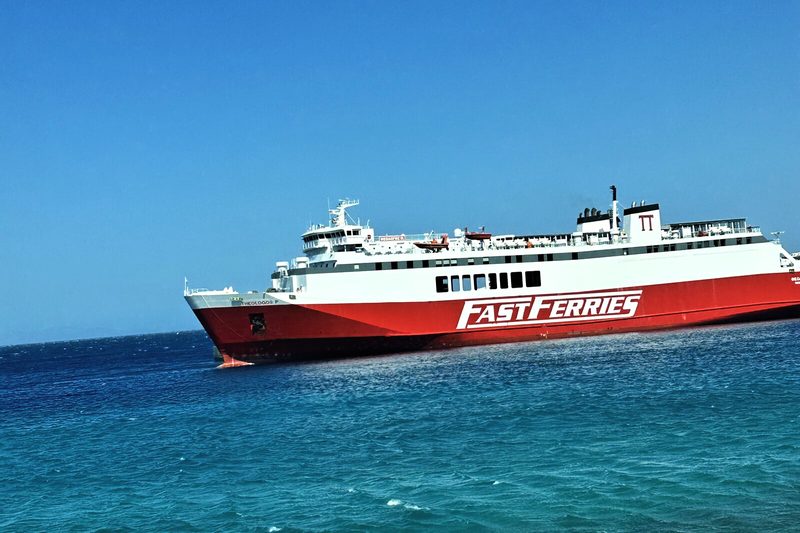
By sea. From Piraeus the fast ferries take about 2.5 – 3.5 hours; the conventional boats take about 4 – 7 hours, depending on how many islands they call at, and are cheaper and steadier in a blow. Sifnos is about an hour away, Serifos a little more, Folegandros about 1.5 hours and Santorini about two hours on a fast boat; Paros, Naxos and Mykonos are reachable in summer in roughly 2 – 3 hours. The port is Adamas. Kimolos is about 25 minutes from Pollonia on the little Osia Methodia, several times a day in summer.
By air. Milos airport, 5 km south-east of Adamas, has Sky Express turboprop flights from Athens, about 45 minutes in the air, and a seasonal Aegean link to Thessaloniki. No international flights.
Getting around. Hire a car. The island’s best beaches are at the ends of dirt tracks, and a small car with decent clearance will get you to most of them; ATVs are everywhere but hard on the back and the lungs. The bus network radiates from Adamas to Plaka, Pollonia, Paliochori and the main southern beaches on a seasonal timetable. Taxis are few. Book cars for July and August well ahead.
When to go
Late May to early July, and all of September, are the Milos months: the sea is warm, the boats to Kleftiko are sailing, the beach bars are open and you can still park. July and August bring the island’s full crowd and the full meltemi; the south coast beaches come into their own then, because the north wind blows over the top of them. May is green, flowery and quiet, with a bracing sea. By mid-October most of the island is packing up.
Good to know
- Water. Milos tap water is not for drinking; buy bottled or bring a filter bottle.
- ATMs. Adamas, Plaka and Pollonia have cash machines; the beaches and villages do not.
- Meltemi. The north coast (Sarakiniko, Papafragas, Plathiena, Mandrakia) is exposed; when it blows, head south to Paliochori, Firiplaka or Agia Kyriaki. A southerly does the reverse and cancels the Kleftiko boats.
- Crowds. August is busy at Sarakiniko and in Pollonia’s restaurants; book dinner and go to the famous places early or late.
- Shade. There is almost none at the wild beaches. Take an umbrella, water and proper shoes for the rock.
- Prices quoted on Delian are approximate and change with the season.
Seventy beaches, one island, and never quite enough days.