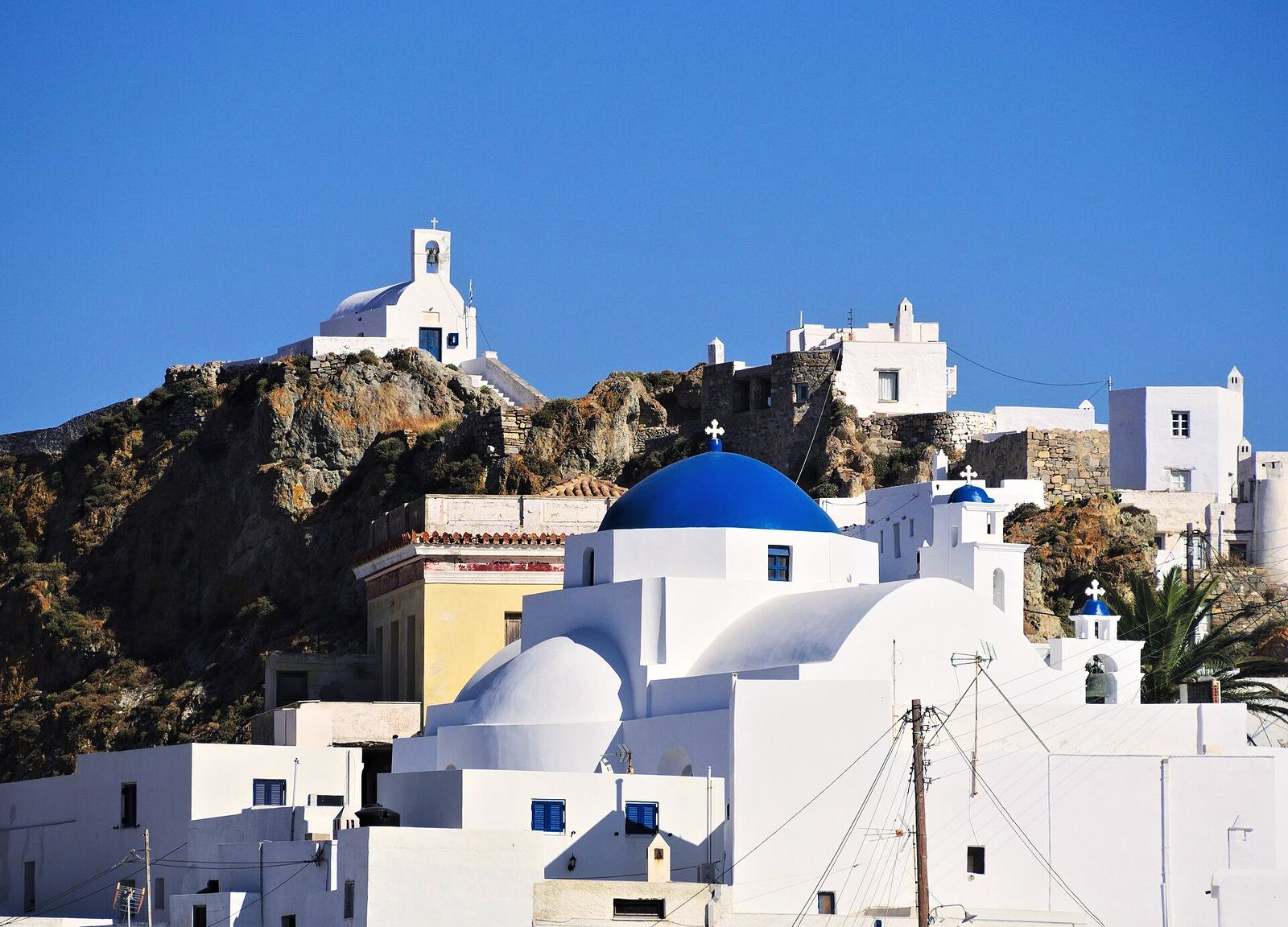
Granite, wind and white. Serifos rises out of the sea as a bare brown pyramid with a Chora poured down one flank like spilt sugar, and nothing about it tries to charm you. That is the charm. This is the Cyclades before infinity pools: a working port, one serious village, beaches reached on dirt tracks, and an evening ritual of climbing to the top of Chora to watch the sun go down. It sits one stop before Sifnos on the western ferry line and draws Athenians who like their islands plain.
Why go
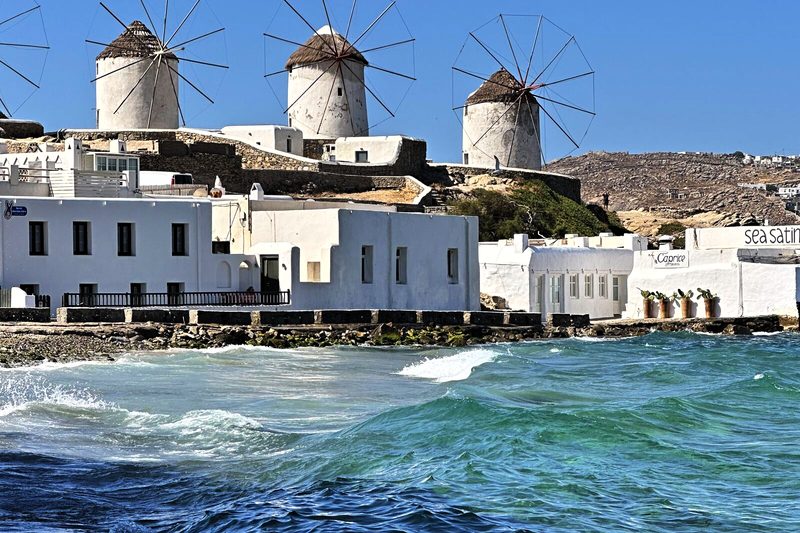
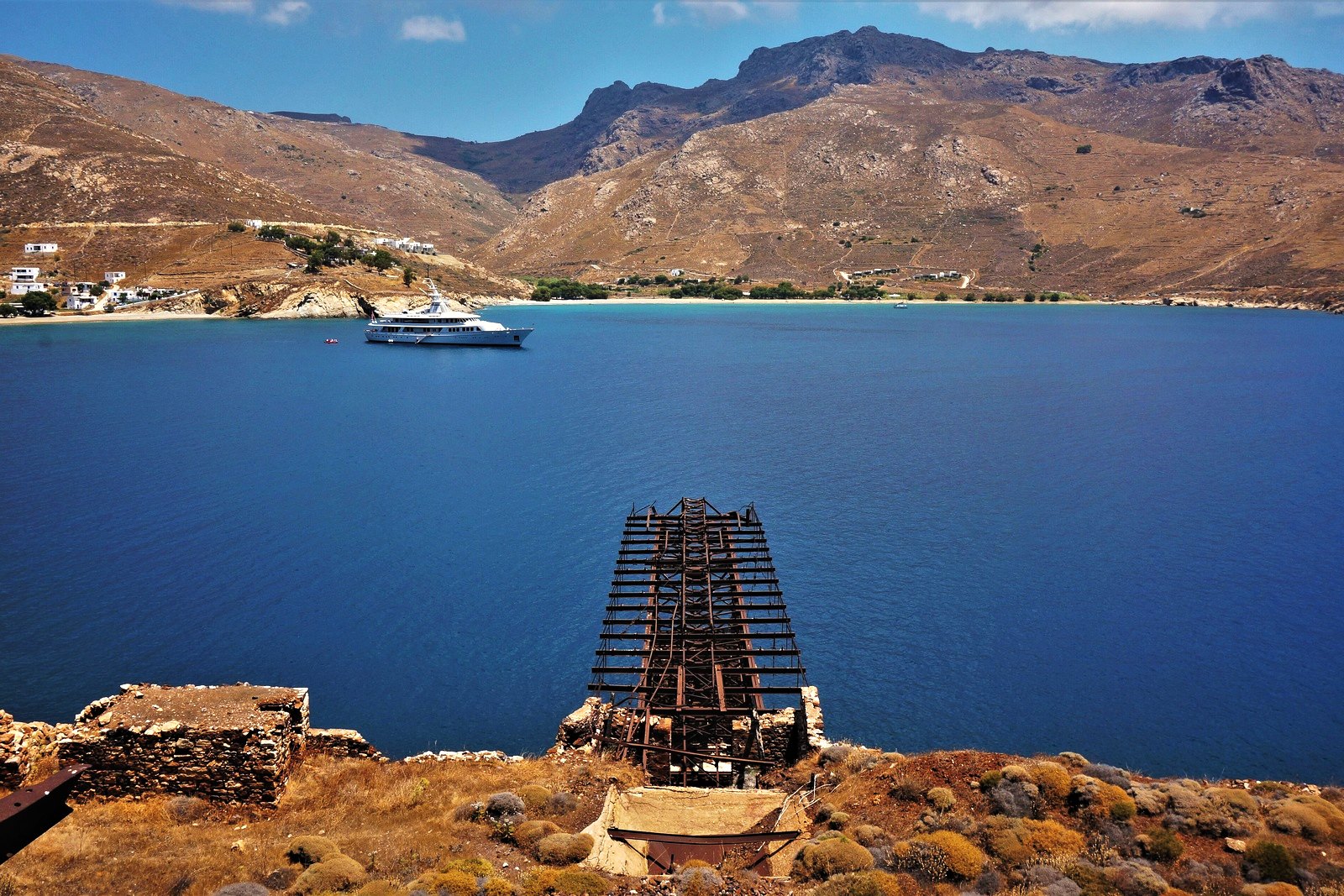
Because of Chora, first. The capital climbs from the old windmills at its entrance up a cone of rock to the chapel of Agios Konstantinos at 251 metres, where the last of the Venetian kastro crumbles into the view. Then the beaches: Psili Ammos on the east coast, fine sand and tamarisks, which the Sunday Times once ranked among the best in Europe; Agios Sostis, twin coves split by a chapel on a spit; Vagia and Ganema on the sheltered south. Then the strangeness: rusting iron-ore loading bridges at Megalo Livadi, a roofless neoclassical mining headquarters, and a monument to the miners shot during the 1916 strike. Perseus washed up here in a chest, the myth says, and later turned the king to stone. You believe it.
The lie of the land
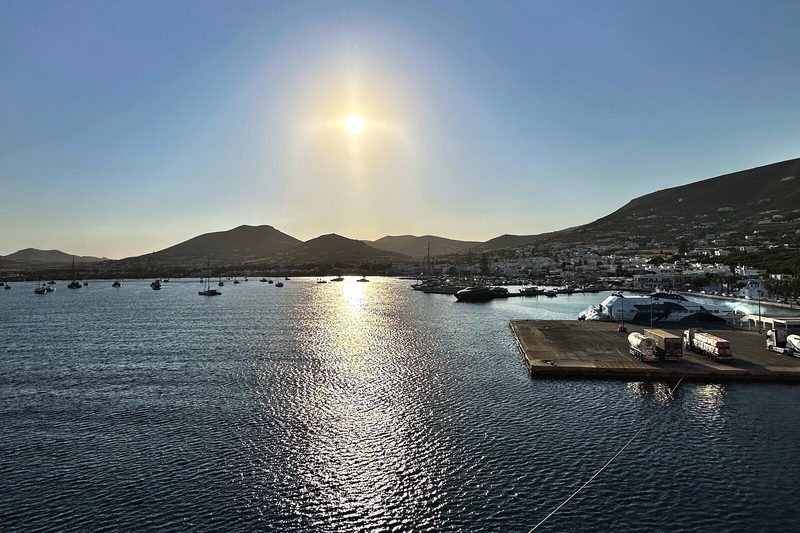
Serifos is small, about 75 square kilometres, and nearly everything happens on its south-east corner. Ferries arrive at Livadi, a deep south-facing bay with a yacht quay, the supermarkets, car hire and most of the restaurants. Next door is Livadakia, a sandy family beach under tamarisks where the better hotels sit, and beyond it Avlomonas, the long beach east of the port. Chora is 5 km uphill by road, or 40 minutes up the old cobbled path, and splits into Kato Chora below and Ano Chora above, where lanes become stairs, the Piatsa square opens in front of the neoclassical town hall, and the last stairs become rock.
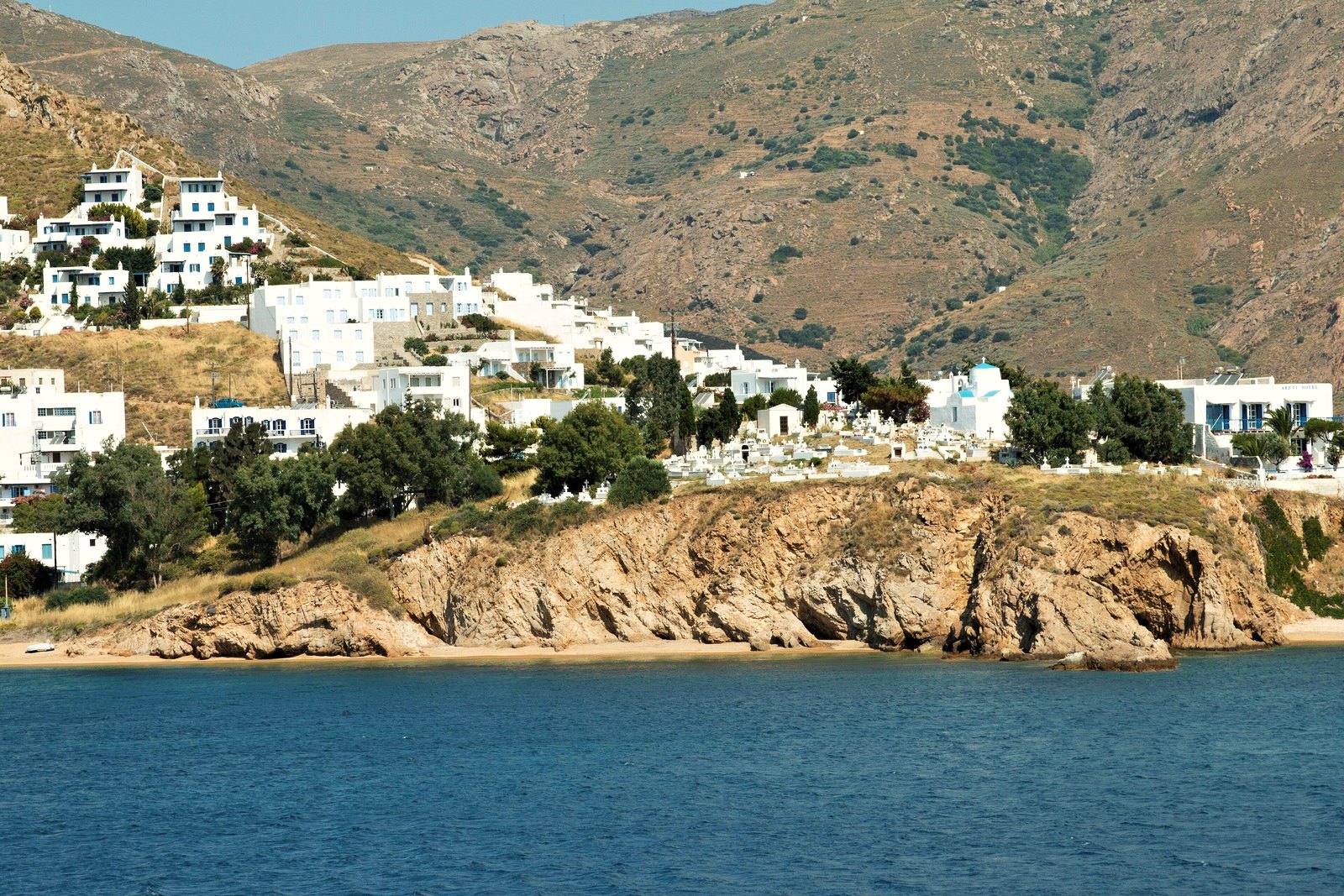
The rest is wild. The road west leads past the turning for Panagia, home of the island’s oldest church, to Megalo Livadi and the mines, then round to Koutalas bay, where the Cyclops cave opens just west of the beach beneath the ruined Castle of the Old Lady. The south coast, Ganema, Vagia and Kalo Ampeli, faces away from the meltemi and has the calmest water. The north is empty: Sykamia beach, the late-16th-century monastery of the Taxiarches, and Platis Gialos at the island’s tip. Everything is brown rock, dry-stone terraces and goats.
Eat & drink
- Marathoriza, Chora – home cooking in the upper village since 2013; handmade pasta, seafood and the owner’s own desserts.
- Metalleio, Livadi – a restaurant named for the mines, open year-round on the road behind the waterfront; a short menu built on local produce, with well-cooked meats, on the terrace.
- Lepi Lepi, Livadi – a seaside fish taverna with a proper Cycladic feel; order what came in that morning.
- Ydrolithos, Livadi – modern Greek cooking on a terrace above the port; ceviche, octopus carpaccio and lobster orzo, booked in timed sittings.
- Gaidaros, Chora – rooftop cocktails over the whole island; arrive before sunset.
- Batrachos, Chora – a young tiki-style cocktail bar at the top entrance to Chora, named for the frog on the island’s ancient coins.
Stay
- Rizes, Simpotama – fourteen stone-built apartments and two suites with a pool and terraces facing Chora; mid-to-upper band.
- Coco-Mat Eco Residences, Vagia – restored miners’ houses on a secluded cove; the setting is the point, and the rooms and prices are uneven; upper band.
- Alexandros by the Beach, Livadakia – seventeen simple rooms steps from the sand with its own restaurant; mid band.
- Pénde Natura, Kalo Ambeli – two adults-only traditional houses above a remote southern bay; upper band.
- Nature Eco Living, Lia – stone-and-wood apartments in a private valley on Lia, a naturist beach; adults-only, and you will want a car; upper-mid band.
Things to do
- Climb through Ano Chora to Agios Konstantinos for sunset.
- Walk the old stepped path between Livadi and Chora before the heat.
- Spend a day at Psili Ammos with lunch at one of its two tavernas.
- Swim both coves at Agios Sostis and picnic by the chapel.
- Explore the mining ruins and loading bridge at Megalo Livadi.
- Find the Cyclops cave just west of Koutalas beach.
- Drive the dirt road to Sykamia for an empty afternoon.
- Visit the fortified monastery of the Taxiarches in the north.
- Browse the Folklore Museum in Chora.
- Join the 15 August panigiri at Panagia, the island’s biggest feast.
Getting there & around
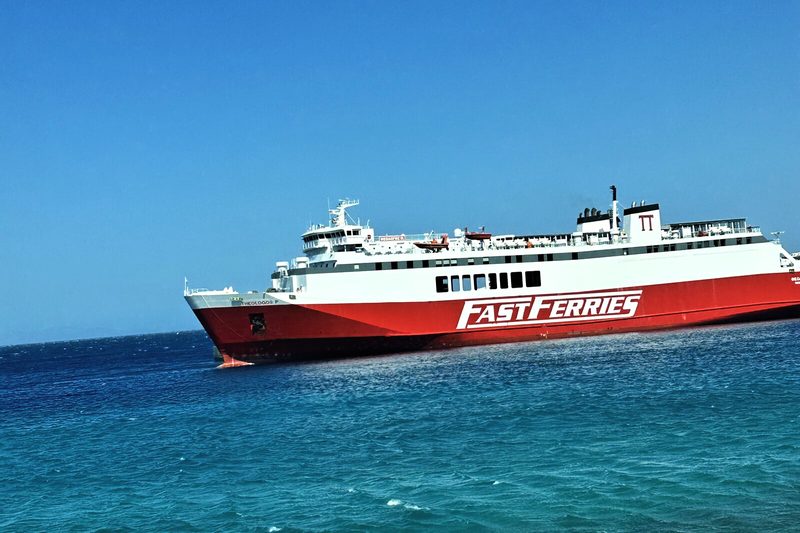
No airport. From Piraeus, high-speed ferries take about two to two and a half hours and conventional boats around four, with at least one sailing a day in summer; tickets run roughly €30 – €75. Serifos sits on the Piraeus – Kythnos – Serifos – Sifnos – Milos line, so Sifnos is 20 – 50 minutes away and Milos one to two hours. From May to September Magic Sea Ferries also sails from Lavrio most days, about two and a half hours. Buses link Livadi and Chora frequently and reach Psili Ammos, Megalo Livadi and Koutalas a few times a day. For the south-coast beaches and Sykamia you want a hire car or a sturdy scooter; the last stretches are unpaved.
When to go
June and September are ideal: warm sea, open tavernas, few people. July is pleasant but windy; August is when Athens arrives and Chora’s bars fill until late. Most places close from October to May; the port keeps a few tavernas open year-round.
Good to know
Bring cash for the beach tavernas; ATMs are only in Livadi and Chora. Tap water is desalinated and not for drinking. The meltemi is fierce from July to late August and the exposed north and east beaches, Sykamia, Platis Gialos and sometimes Psili Ammos, can be unswimmable; head for Livadakia, Ganema, Vagia or Koutalas instead. Shade is scarce, so pack an umbrella. Prices quoted in our Serifos guides are approximate and seasonal.
Climb the stairs, count the windmills and let the rock do the talking.