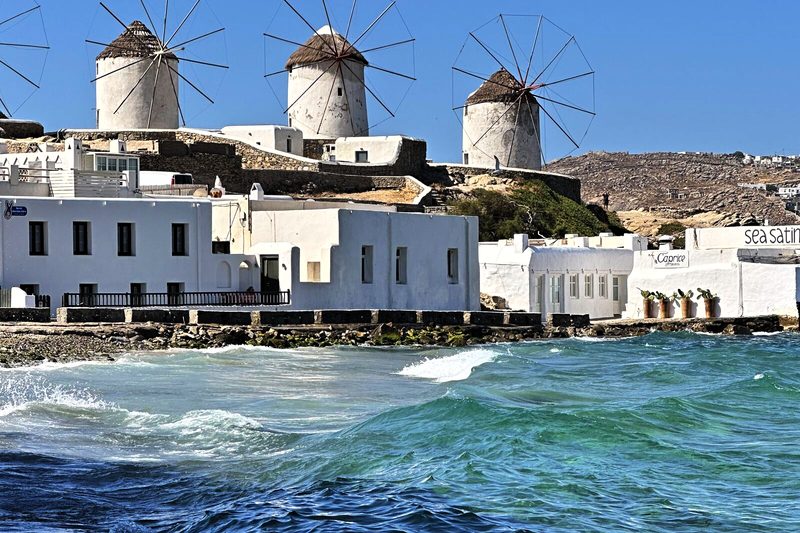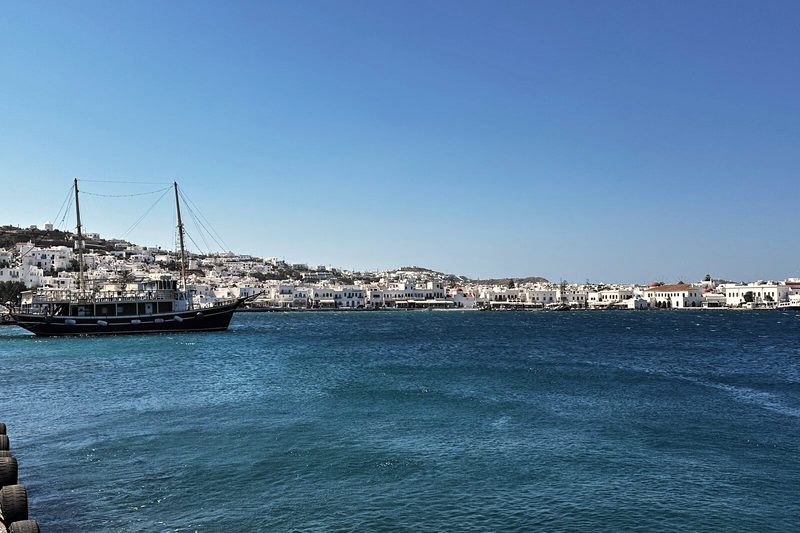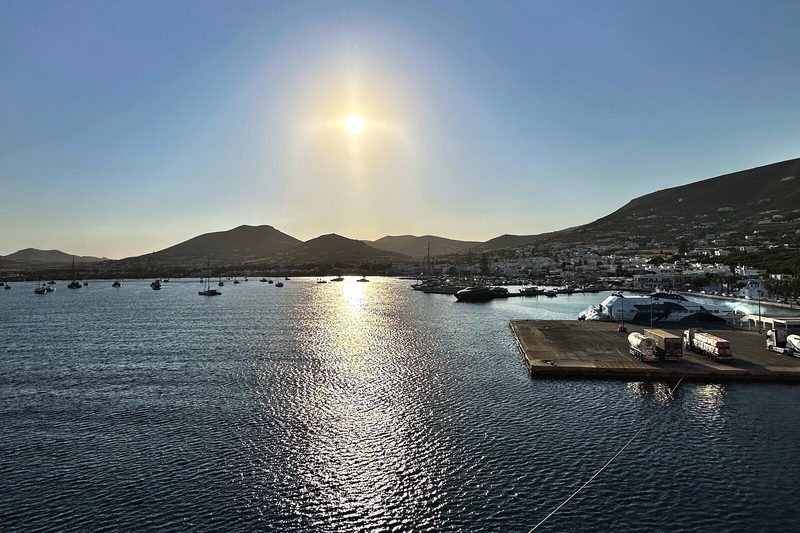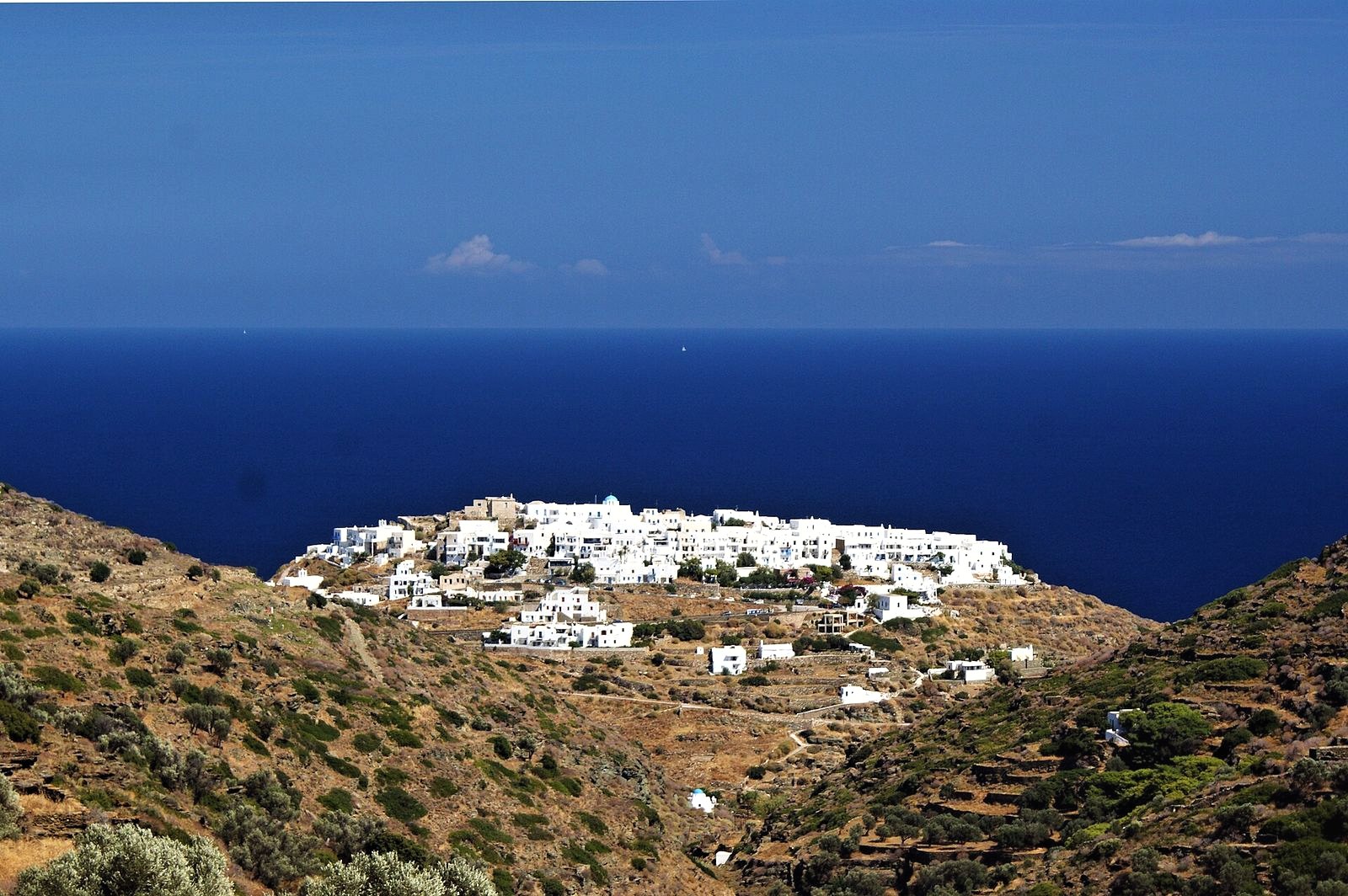
Clay, thyme and a long Sunday lunch. Sifnos sits in the western Cyclades between Serifos and Milos, about two and a half hours from Piraeus on a fast ferry, and it is the island Greeks themselves choose when they want to eat well. The whitewash and blue domes are all here, but so is something quieter: a culture of cooking slowly in locally thrown clay pots, a web of old donkey paths linking villages that still feel lived in, and beaches that face south and keep their calm when the meltemi is blowing everywhere else. You will arrive planning to swim. You will leave talking about chickpeas.
Why go
Because Sifnos was feeding people properly long before the rest of the Aegean learned to plate. Nikolaos Tselementes, the chef whose 1930s cookbook became so standard that “tselementes” is still Greek for “cookbook”, was born here, and the island keeps his name on a gastronomy festival every September. The food culture is domestic rather than showy: revithada, chickpeas sealed in a clay skepastaria and left overnight in a wood oven for Sunday; mastelo, lamb or kid with red wine and dill in a terracotta pot at Easter; manoura cheese aged in wine lees; caper salad; almond amygdalota. Around this sit the Cyclades’ best-preserved medieval capital, a trail network of more than 100 km and a dozen working potteries. It is a sociable island without being a loud one.
The lie of the land
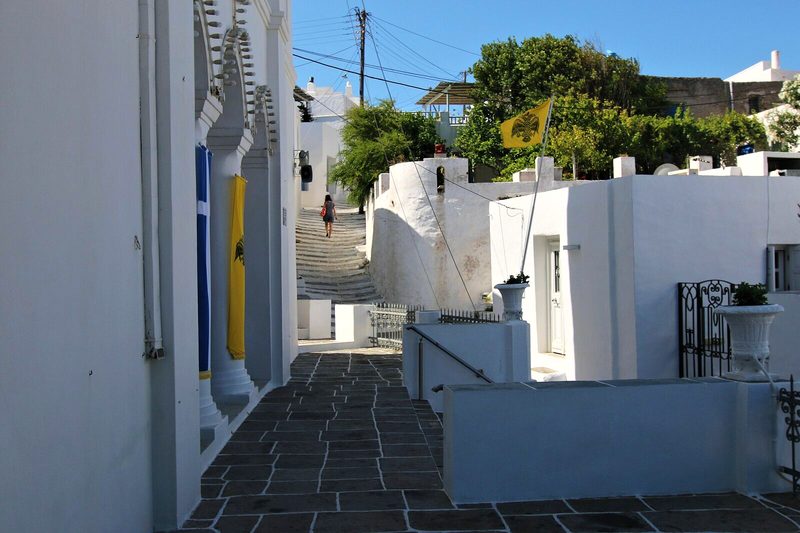
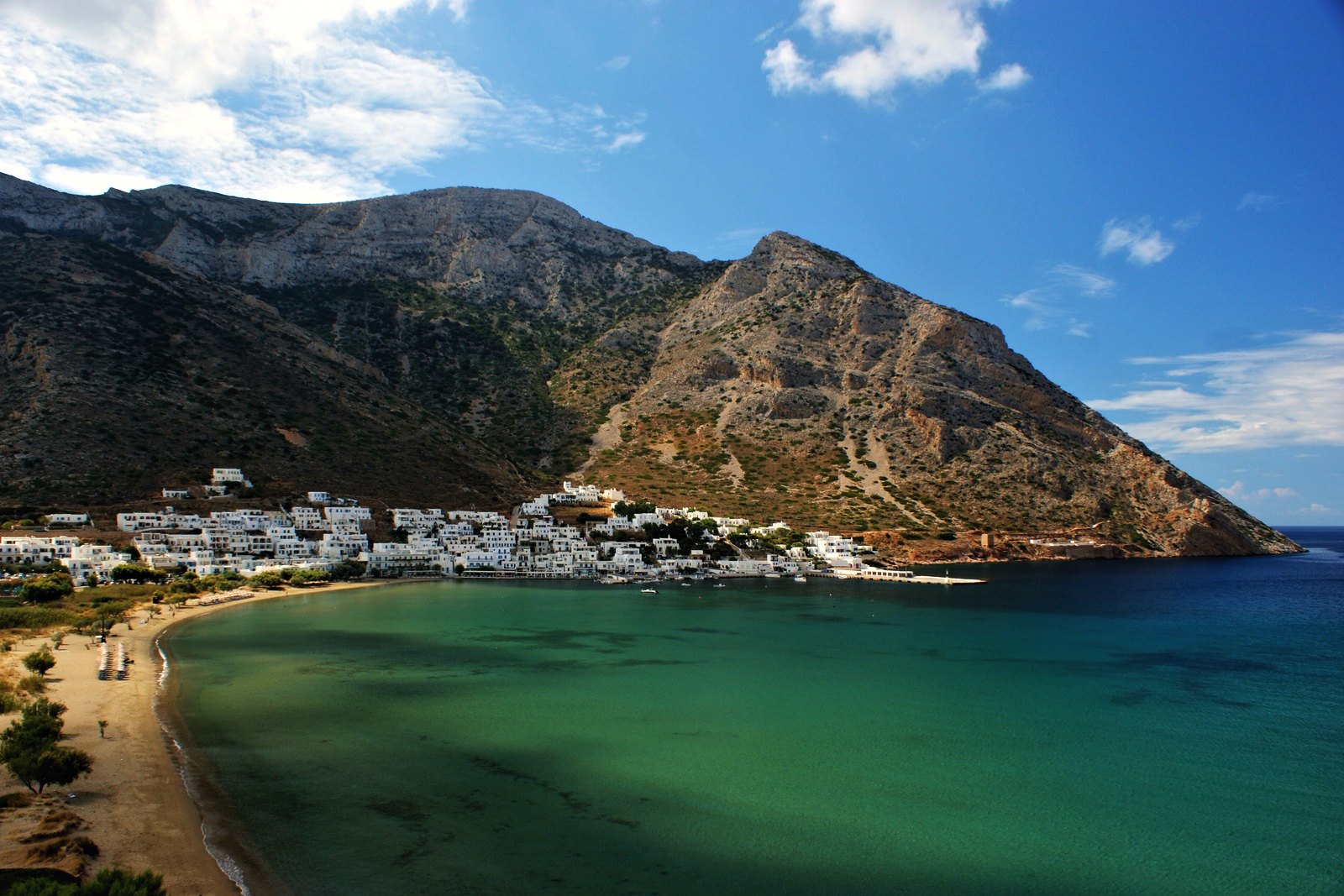
Sifnos is roughly 15 km long and 7 km wide, with the villages strung along a high central spine and the beaches tucked into bays below. Ferries arrive at Kamares, a west-facing port with a sandy beach and a strip of tavernas. The road climbs 6 km to Apollonia, the capital, where the pedestrianised Steno is the island’s evening promenade of bars, bakeries and boutiques. Artemonas, a ten-minute walk north, is the grander sibling: neoclassical mansions, bougainvillea, windmills and the island’s oldest sweet shop. On the east coast, Kastro clings to a cliff above the sea, the capital until 1836, its houses forming the fortress walls and the chapel of the Seven Martyrs standing alone on a rock below.
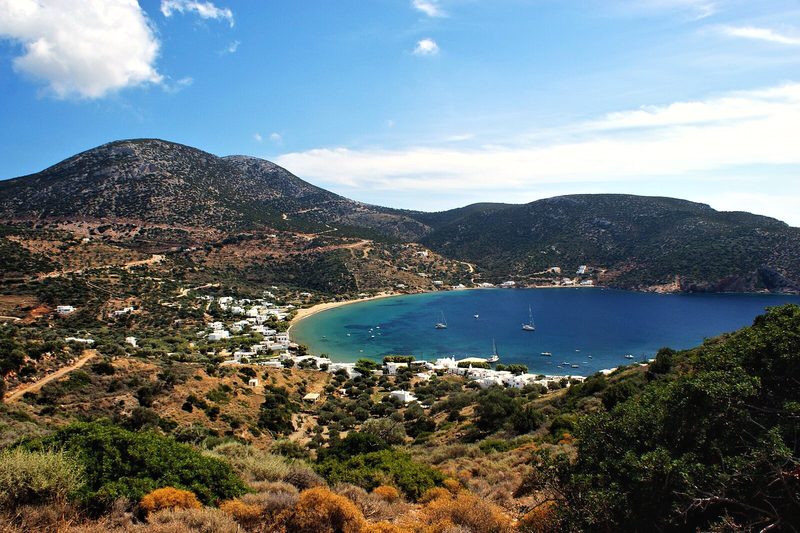
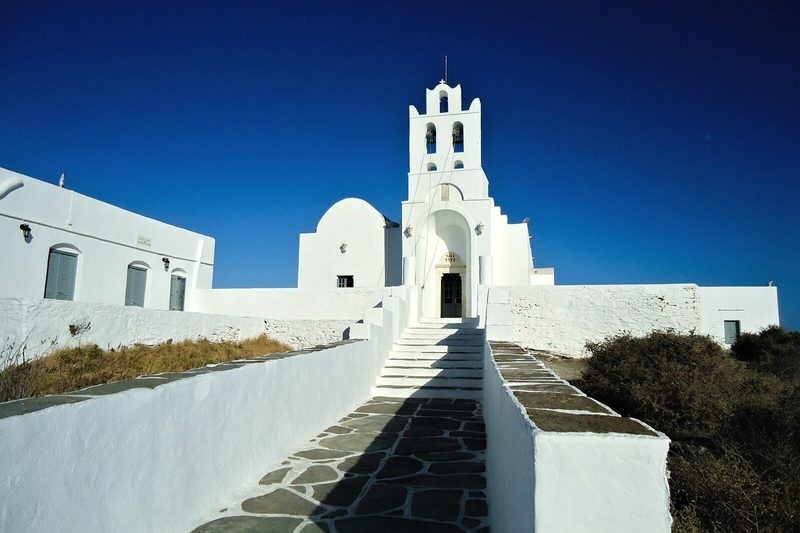
South is where you swim. Platis Gialos is the longest sandy beach, lined with tavernas and sunbeds; Vathi is a horseshoe bay with pottery kilns, tamarisks and shallow water; Faros is a former port with three small beaches in a row and a coastal path to Chrysopigi, the monastery of 1650 that stands on a split rock above Apokofto beach. North, the land empties out towards Cheronissos, a fishing hamlet with two tavernas and the last potter’s wheel on the beach. Profitis Ilias, the island’s summit at nearly 700 metres, carries a fortified monastery and the best view in the western Cyclades.
Eat & drink
- Omega3, Platis Gialos – a tiny seafood bar on the sand; raw, cured and flame-grilled fish in small sharing plates at €40 – €50 a head, a tasting counter rather than a cheap beach bar. Book ahead in summer.
- Cantina, Seralia – Giorgos Samoilis’s zero-waste kitchen in the cove beneath Kastro; a fixed tasting menu from about €70 a head, a deposit to book, and tables that go months ahead.
- Kafeneio Drakakis, Apollonia – a kafeneio-taverna in the same family since the late 1800s; salt cod, chickpea fritters and village eggs.
- To Astro, Kastro – the village’s first taverna, since 1969; mastelo and dakos on a sheltered veranda at the gate, simple and busy in August.
- Okeanida, Vathi – family-run taverna with tables a metre from the water; goat mastelo, fried fish and skordalia.
- Theodorou, Artemonas – the lavender-shuttered sweet shop, hand-making amygdalota and halvadopita since 1933.
Stay
- Verina Astra, Poulati – clifftop suites with private pools and the Bostani restaurant (book it when you book the room); luxury band, adults in mind, and a car is essential.
- Elies Resorts, Vathi – the island’s full-service resort: spa, hammam, pool villas on the bay; luxury band.
- Niriedes, Platis Gialos – suites built into the rock above the beach; mid-to-upper band.
- Petali Village, Apollonia – pool, breakfast terrace and village views five minutes from the Steno; mid band.
- Windmill Bella Vista, Artemonas – twelve units, one of them a converted 18th-century windmill, pool, sea views to Paros; mid band.
Things to do
- Walk the stepped lanes of Kastro at dusk and out to the chapel of the Seven Martyrs.
- Follow the coastal path from Faros past Glyfo to Apokofto and the Chrysopigi monastery.
- Hike Trail 1, Agios Andreas to Artemonas via Kastro and Panagia Poulati (8.6 km, about three hours).
- Climb to the Profitis Ilias monastery for the summit view.
- Watch a pot being thrown at Atsonios in Vathi or Apostolidis on the Kamares road.
- Order revithada on a Sunday, anywhere that bakes it in a wood oven.
- Swim at Vathi in the morning and Platis Gialos in the afternoon.
- Drive to Cheronissos, the fishing hamlet at the island’s northern tip, for a swim in its sheltered bay.
- Visit the Mycenaean acropolis and museum at Agios Andreas (8.30am to 3.30pm, closed Tuesdays, about €5).
- Buy amygdalota at Theodorou and manoura from a village grocer.
- Time a visit for the three-day Cycladic Gastronomy Festival “Nikolaos Tselementes” in Artemonas in mid-September.
- Join a panigiri at Chrysopigi on the eve of Ascension Day.
Getting there & around
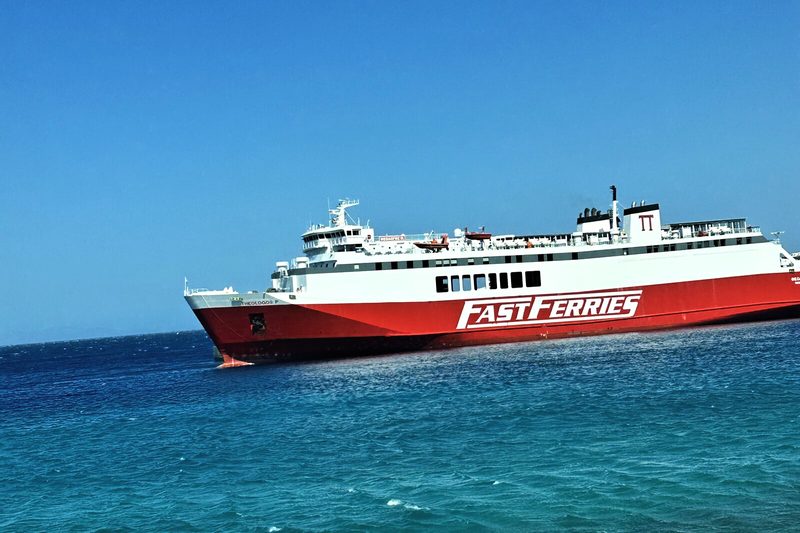
There is no airport; the nearest are Milos and Athens. From Piraeus, SeaJets high-speed boats take about two and a half hours and conventional ferries (Aegean Sea Lines, Fast Ferries) five to six, with two or three sailings a day in summer and tickets roughly €40 – €69 one way. The classic western line runs Piraeus – Kythnos – Serifos – Sifnos – Milos – Kimolos, so hopping on is easy: Serifos is 20 – 50 minutes away, Milos 40 minutes to just over two hours, Paros one to three hours, Folegandros two to four. Everything docks at Kamares. On the island, summer buses connect Kamares, Apollonia, Artemonas, Kastro, Platis Gialos, Faros and Vathi reliably enough to go car-free if you are staying centrally; a hire car or scooter makes Cheronissos, Vroulidia and the trailheads easy, though a summer bus does run out towards Cheronissos. Book your vehicle before July.
When to go
Late May to June and September to mid-October are the sweet spots: warm sea, open tavernas, empty paths. July and August bring Athenian regulars, full restaurants and the strongest meltemi. The island’s festival calendar favours September, when the Tselementes gastronomy festival fills Artemonas with clay pots. From November to Easter most hotels and many restaurants close, though Apollonia keeps a pulse through winter.
Good to know
Tap water comes from desalination and boreholes and is safe for teeth but not pleasant to drink; buy bottled or bring a filter. ATMs are in Apollonia, Kamares and Platis Gialos. The meltemi hits hardest in July and August: Kamares and the north coast take the brunt, while Platis Gialos, Vathi, Faros and Apokofto stay swimmable on most windy days. Restaurants fill from 9pm; book Omega3, Cantina and Nus days ahead in high season. Prices quoted across our Sifnos guides are approximate and change with the season.
Eat slowly, walk the old paths and let the island set the pace.