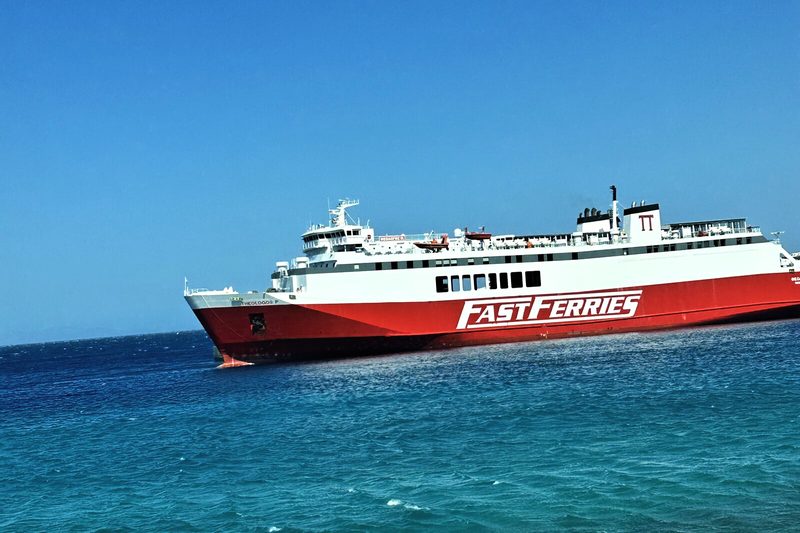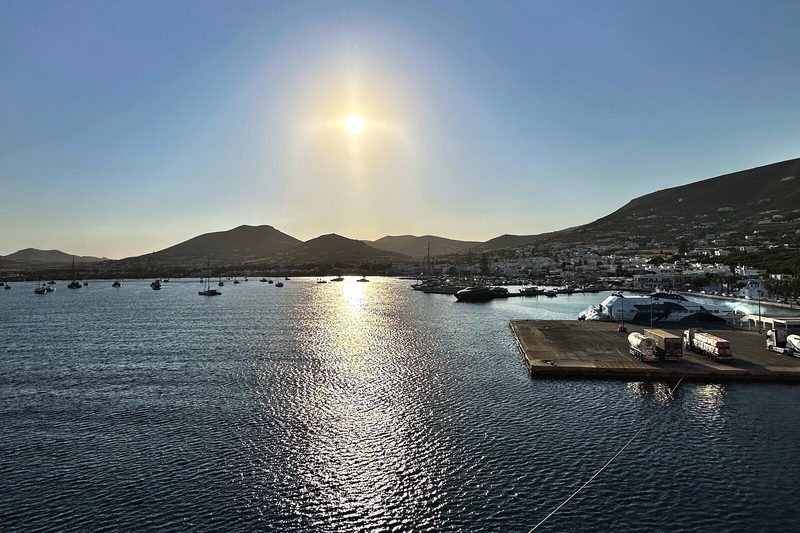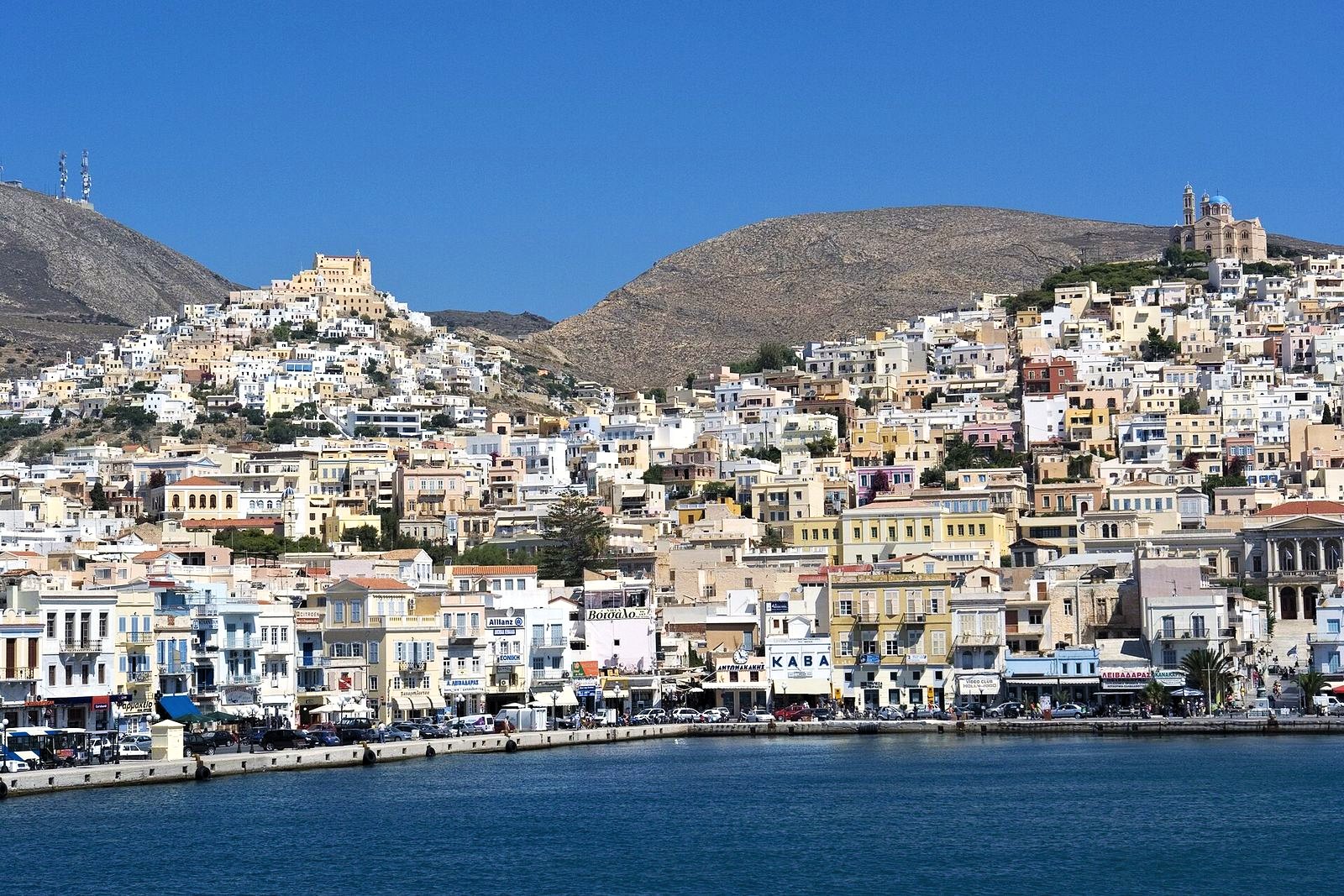
Marble underfoot. Shutters the colour of pistachio. A brass band warming up somewhere behind the town hall. You step off the ferry into Ermoupoli and realise that nobody told you the Cyclades had a city. Built in the 1820s by refugees from Chios and Psara, it became the busiest port in Greece before Piraeus caught up, and the money shows: an opera house modelled on La Scala, a square paved like a ballroom, mansions with their feet in the sea. Syros is the administrative capital of the islands and the one that works all year round. It is also, quietly, one of the best places in the Aegean to eat, swim and do nothing in particular.
Why go
Because it is the opposite of a stage set. Ermoupoli has a courthouse, a shipyard, a Saturday market and students who stay through winter, which means the tavernas cook for locals and the bars open in February. Because two hill-towns face each other across the harbour, Orthodox Ermoupoli below and Catholic Ano Syros above, and by long-standing custom the Catholics keep Easter on the Orthodox date, so every year the whole island processes together. Because you can swim off the rocks beneath 19th-century mansions ten minutes from your breakfast table. And because the north of the island, Apano Meria, is as bare and wild as anywhere in the Cyclades, with one taverna at the end of the road and a bay you reach on foot.
The lie of the land
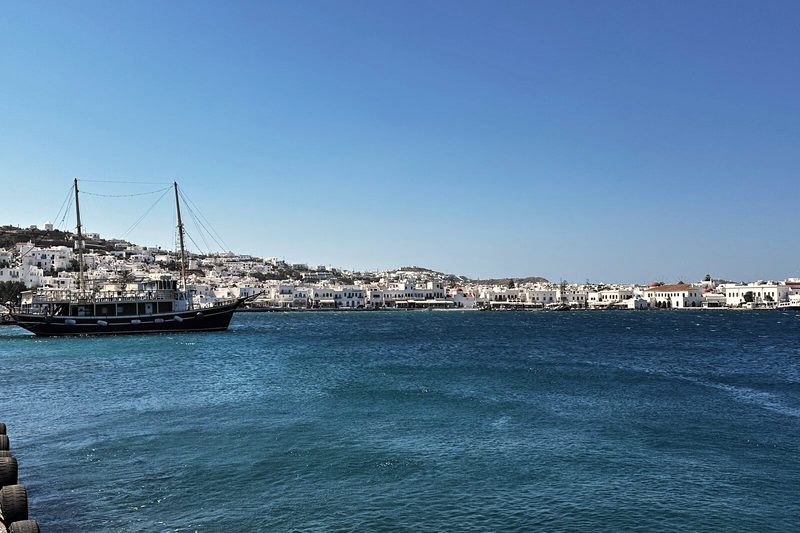
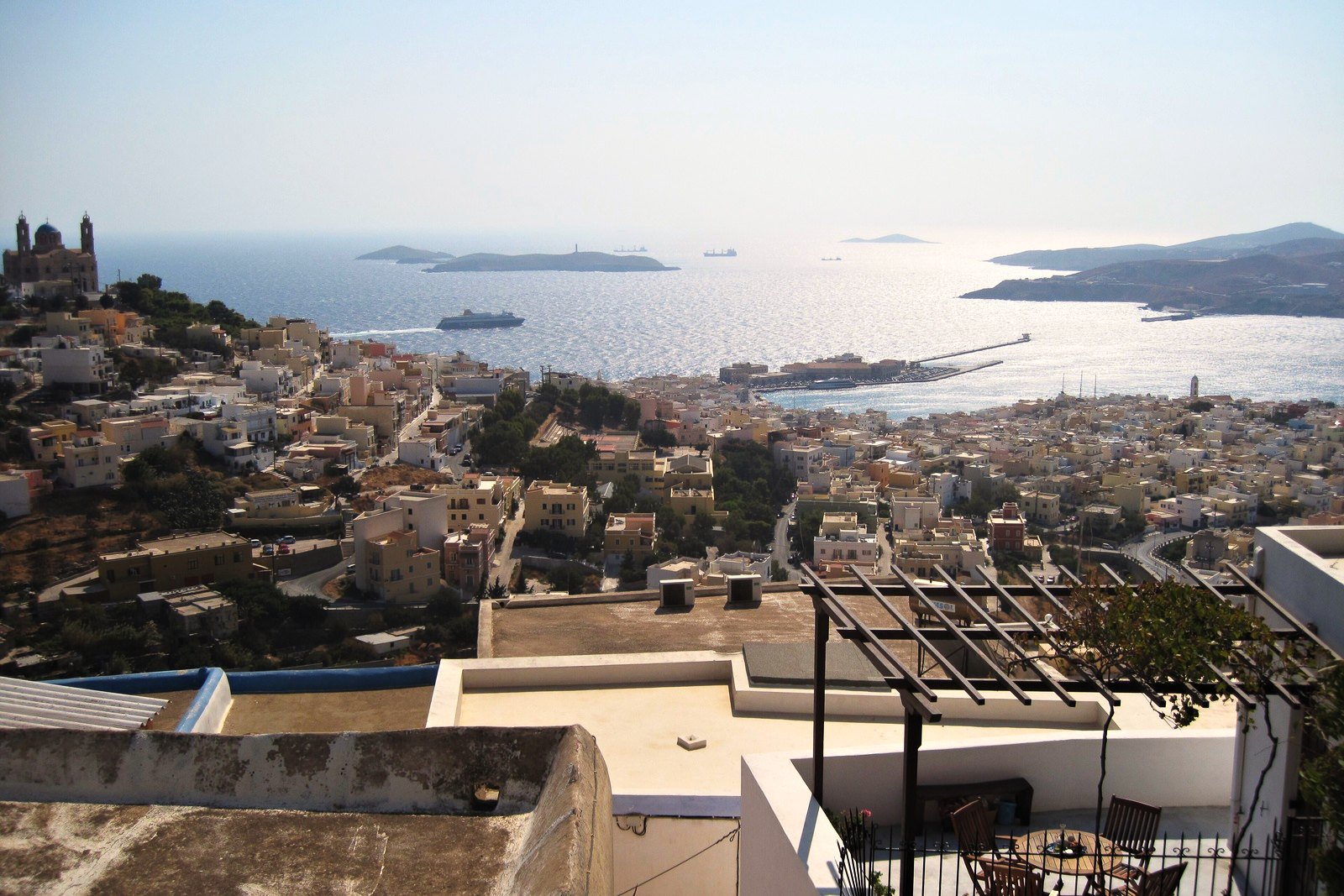
Syros is small, about 20 kilometres top to bottom, and almost everything happens in the south-east corner. Ermoupoli climbs an amphitheatre of hills around the harbour: Miaouli Square and the Apollo Theatre at the centre, the Vaporia quarter to the north-east, where ship-owners’ houses stand on the water and the blue dome of Agios Nikolaos marks the skyline. Above it, Ano Syros is a separate medieval town of stepped lanes, arches and whitewash, crowned by the Catholic cathedral of Agios Georgios and reached by about a thousand steps or a short bus ride.
The west coast is where the island goes to the beach. Kini is a fishing village with a crescent of sand and the island’s best sunset. Galissas, further south, has the longest beach and a family resort. Round the southern tip you find Finikas and Poseidonia, where the 19th-century rich built Italianate villas among palms, then Agathopes, Megas Gialos and Vari, each with a strip of sand and a taverna.
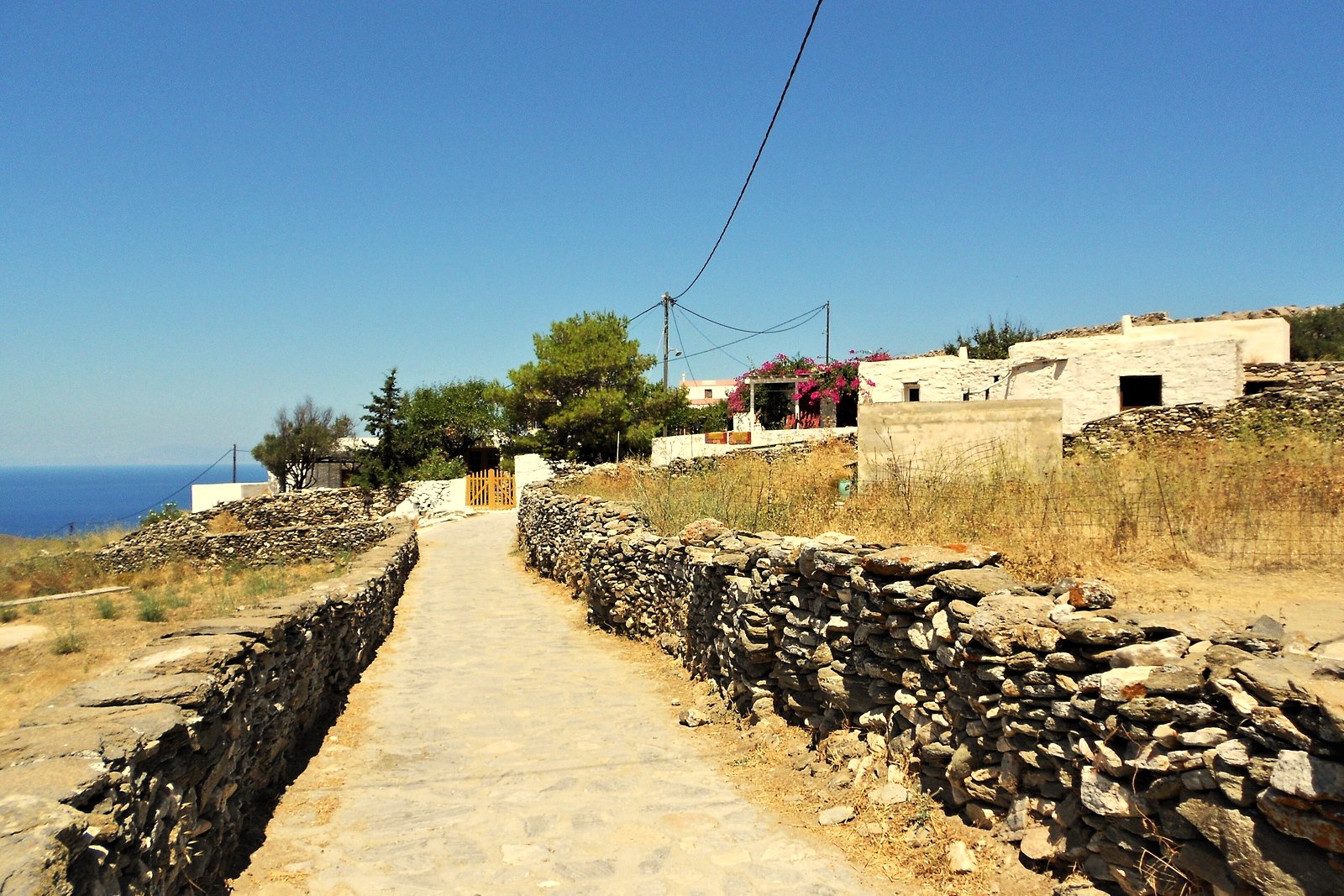
North of Kini the road thins and climbs into Apano Meria: terraced hills, dry-stone walls, the stone village of San Michalis and, beyond it, footpaths down to the bay of Grammata where sailors once carved prayers into the rock. The airport sits on the flat ground south of town.
Eat & drink
- Mazi, Ermoupoli: creative Mediterranean cooking in a stone-arched garden off Miaouli Square, from beef tataki to shrimp tortelloni.
- Avant Garden, Ermoupoli: chef Konstantinos Bourantas’s modern Greek tasting plates opposite the Apollo Theatre, dinner only, April to October.
- Calmo Mare, Finikas: an all-day beachfront mezedopoleio for baked aubergine, grilled squid and fava, with the sunset over the bay; book ahead.
- To Petrino, Ermoupoli: a courtyard taverna under a bougainvillea for moussaka, soutzoukakia and stuffed squid, with live music some nights.
- Plakostroto, San Michalis: the end-of-the-road taverna in Apano Meria, famous for its view, its courgette fritters and goat cooked in the old way.
- Giosifaki, Vari: on the beach since 1958 and now run by its former cook, Raphael Stefanou, for saganaki of San Michalis cheese and fried atherina.
Stay
Price bands are approximate high-season rates per night: € under €100, €€ €100 – €200, €€€ €200 – €400, €€€€ above €400.
- Aristide, Ermoupoli (€€€€): a neoclassical mansion turned art hotel with a rooftop restaurant and suites with plunge pools.
- Apollonion Palace, Ermoupoli (€€€): seafront suites in a grand old building a short walk from the square.
- 1844 Suites, Ermoupoli (€€ – €€€): elegant rooms behind a neoclassical facade in the centre of town.
- Blue Harmony, Kini (€€): a simple three-star hotel right on the beach at Kini, with its own (paid) sunbeds on the sand; agree the price first.
- Dolphin Bay, Galissas (€€ – €€€): the island’s family resort, with a big pool, kids’ activities and the beach ten metres away; rooms vary, so ask for a renovated room or one of the newer suites, the older wing is tired.
- Hermes, Ermoupoli (€€): the town’s largest hotel, 70 rooms in a neoclassical building at the edge of the harbour, handy for early ferries.
Things to do
- Walk Ermoupoli from the port to Miaouli Square, past the Ziller-designed Town Hall and the marble-paved streets behind it.
- Step inside the Apollo Theatre (1864), the little La Scala of the Aegean, or better still catch a summer concert there.
- Swim off the rocks and platforms below the Vaporia mansions, then dry off on a café terrace above Agios Nikolaos.
- Climb to Ano Syros for the cathedral, the lanes and the memory of Markos Vamvakaris, father of rebetiko, who was born here.
- Watch the sun drop into the sea at Kini with a glass of something cold.
- Spend a beach day at Galissas, Agathopes or Delfini, the last reached by a short walk from Kini.
- Drive north into Apano Meria and walk down to the bay of Grammata.
- Visit the Industrial Museum, three old factories full of the machinery that made the island rich.
- Taste loukoumi and halvadopita at a traditional sweet-maker such as Leivadaras or Korres.
- Come for Easter, when Orthodox and Catholic processions share the streets.
- Time a visit for the Festival of the Aegean (July) or the Animasyros animation festival (September).
Getting there & around
Syros has a small airport with flights from Athens that take about 35 minutes. By sea, fast ferries from Piraeus take about 2 hours and conventional ferries about 3 and a half to 4 hours; Syros is a hub, so there are also daily links with Tinos (about 30 to 45 minutes) and Mykonos (about 1 hour), boats to Paros and Naxos most days in summer, and one a week to Andros. On the island, the KTEL bus does a loop from Ermoupoli through Galissas, Finikas, Poseidonia, Megas Gialos and Vari, and a separate route climbs to Ano Syros. Taxis gather at the port. A hire car makes sense for a day or two in Apano Meria; otherwise you can do most of Syros by bus and on foot.
When to go
April to October for swimming, with May, June and September the sweet spots. Easter is special here, and so is winter: Ermoupoli stays open when most of the Cyclades has shut, and a February weekend of harbour walks, loukoumi and rebetiko in Ano Syros is a different sort of island holiday. August is busy by Syros standards, which is to say pleasantly full rather than overrun.
Good to know
Tap water in Ermoupoli is drinkable but most people buy bottled. ATMs and banks are plentiful in town, scarce elsewhere. The meltemi blows hard in July and August; the west-coast beaches (Kini, Galissas, Delfini) sit in its lee, while the north and the harbour catch it. Crowds are modest even in high season. Prices are approximate and seasonal.
Sit on the steps of the Town Hall at dusk, listen to the swallows and the band, and wonder why you took so long to come.