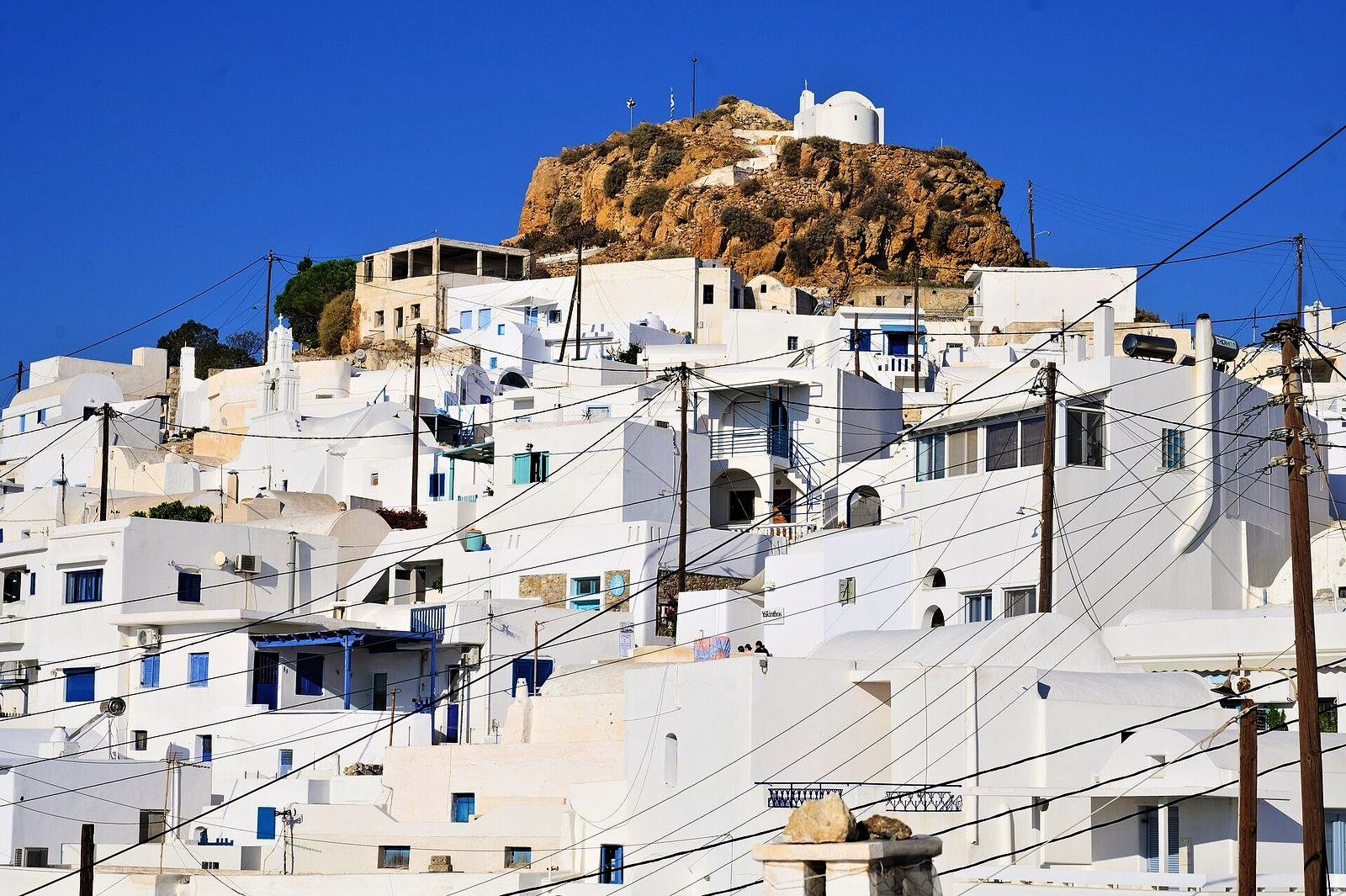
Bare rock. White village. A monolith at the end of the road.
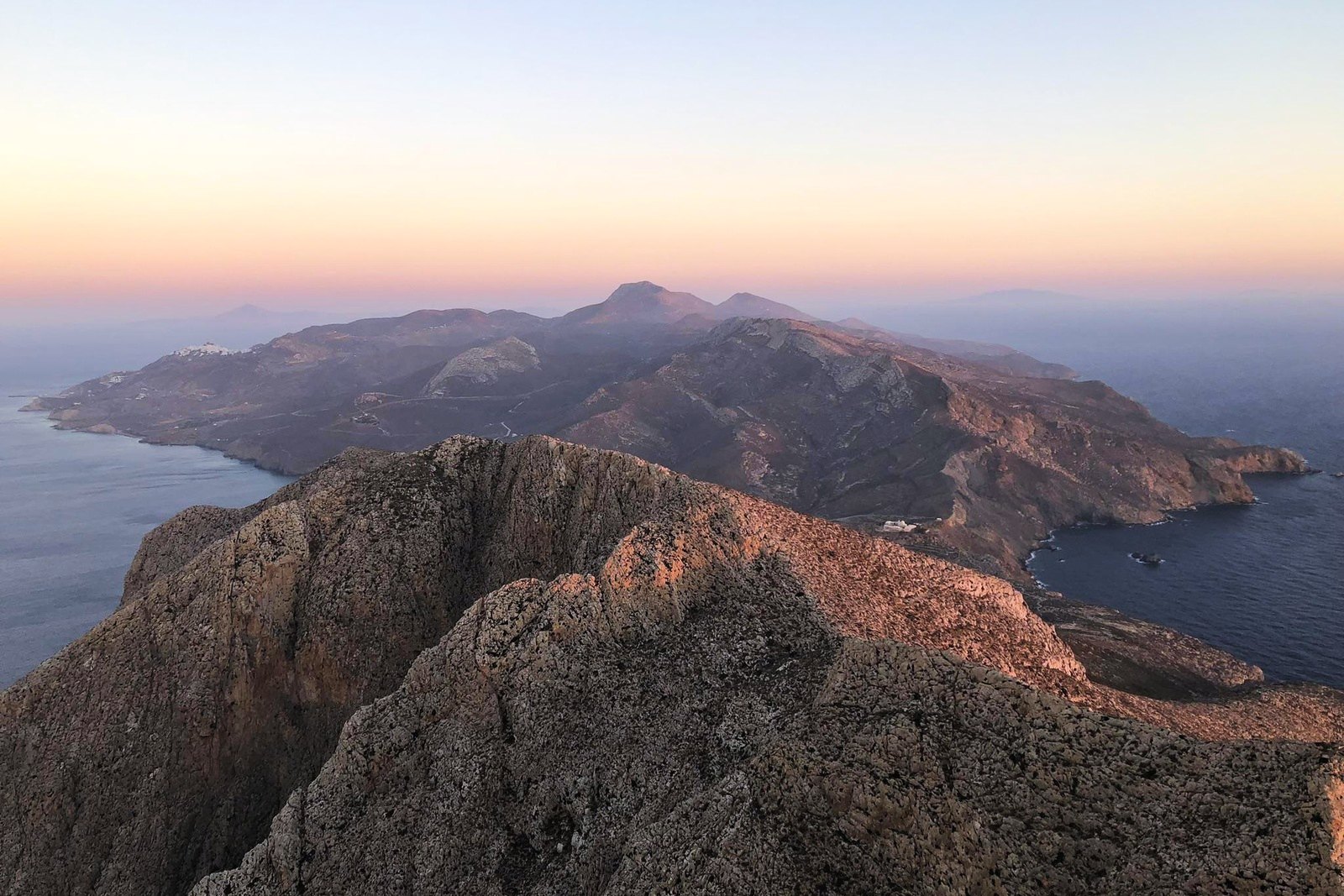
Anafi is the last stop, 20-odd kilometres east of Santorini and the final Cycladic island before the open sea. It has one village, one port, one real road and a geology that stops you in your tracks: at its eastern tip the rock of Kalamos rises sheer from the water to 460 metres, a monolith islanders will tell you is second only to Gibraltar. You leave Santorini’s crowds and step into silence, thyme and the sound of the sea.
Why go
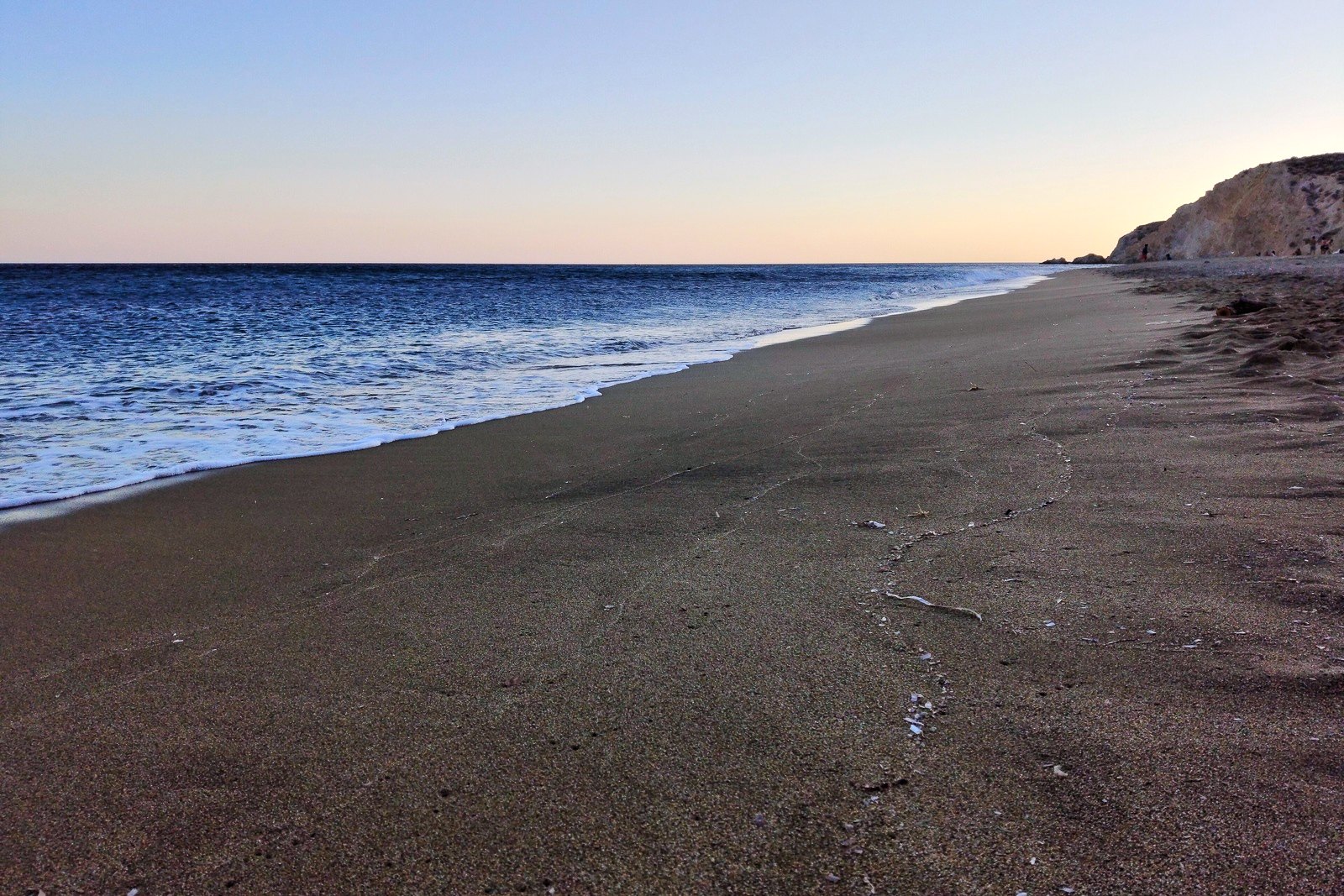
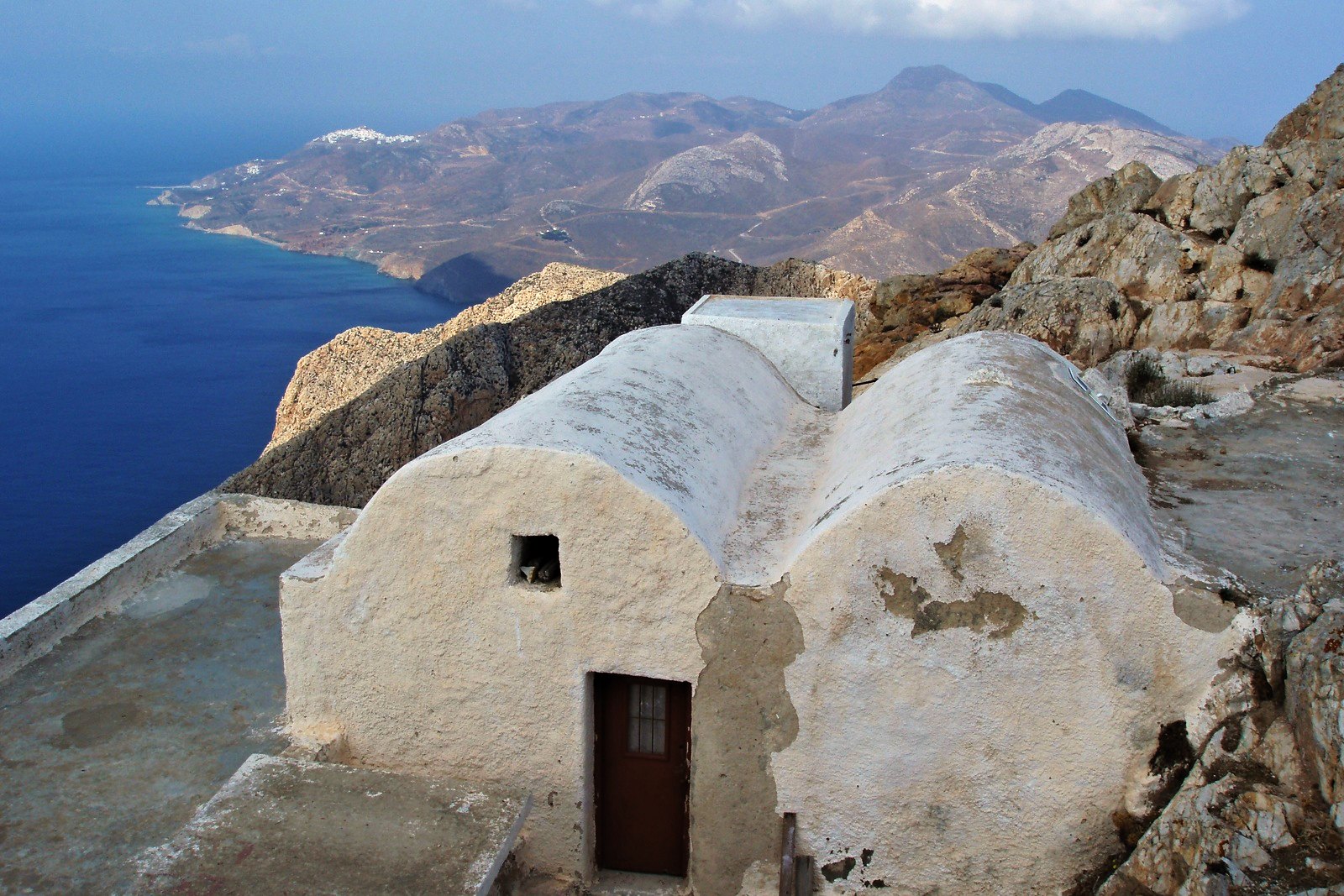
For the walking and the beaches, which here are the same thing. The best sand is strung along the south coast between port and Kalamos, and you reach most of it on foot: Kleisidi is ten minutes from the harbour, Roukounas, long and golden with dunes behind, an hour. Then for the pilgrimage, from the monastery of Zoodochos Pigi, built on the ruins of a temple to Apollo, up the flank of Kalamos to the tiny monastery of Kalamiotissa on the summit, where you’ll see dawn over the Aegean if you’ve carried a sleeping bag. And for the Chora, whitewash and blue steps with nothing to sell you but a coffee and a view.
The lie of the land
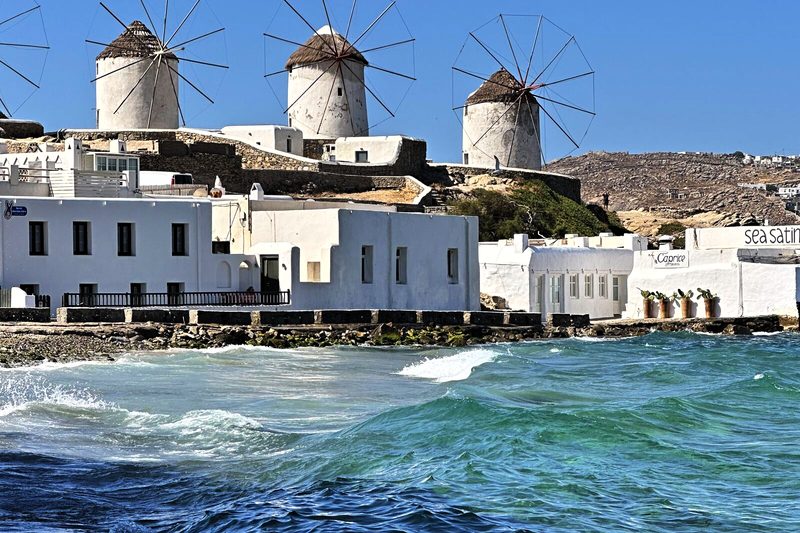
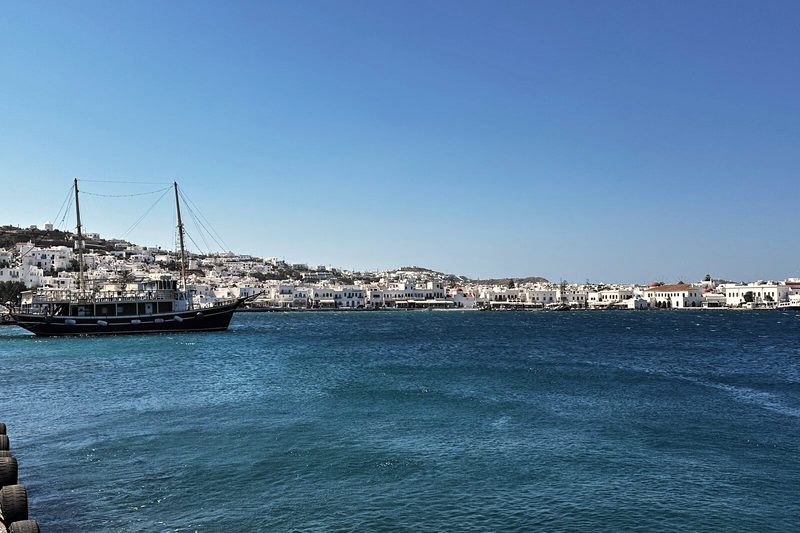
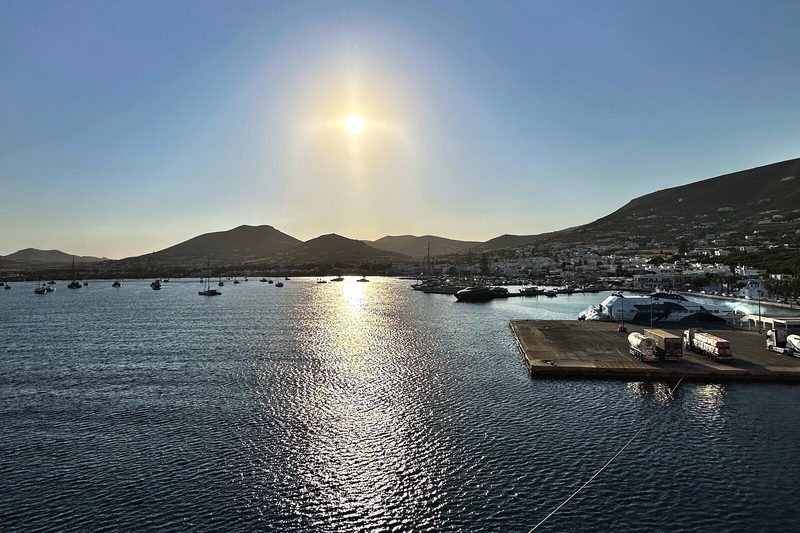
Anafi is small, about 12 kilometres by six. Ferries dock at Agios Nikolaos on the south coast, a harbour with a few rooms and tavernas. The road climbs steeply for two kilometres to Chora, the only village, stacked up a hill below the ruined Venetian castle: white houses, barrel-vaulted roofs, a windmill or two and a handful of tavernas, cafés and rooms. Everything you need, from bakery to bus stop, is here.
From Chora the paved road runs east along the south coast and gives out after six or seven kilometres at the monastery of Zoodochos Pigi, built with stone from the temple of Apollo that stood on the spot. Beyond, there is only the path up Kalamos. Between port and monastery the coast is a chain of beaches, each a short walk from the road: Kleisidi, Katsouni, Flamourou, Roukounas with its dunes and campers, Megas Potamos, and finally Monastiri beneath the monastery. On a rise above Katalymatsa lie the scattered remains of Kastelli, the ancient city, with sarcophagi in the fields. The north coast is cliffs, goats and no road.
Eat & drink
- Liotrivi, Chora – the island’s fish taverna in an old motorised olive mill, its press dating from the 1930s; no reservations, so arrive early.
- Anemos, Chora – a family taverna serving fish from its own boats; order the fish soup.
- To Steki, Chora – open all day and all year; stews and grills.
- Ktima Roukouna, Roukounas – garden vegetables behind the beach, cooked the old way.
Stay
Price bands are for a double in high season: € under €100, €€ €100 – €200, €€€ €200 – €400.
- Ypseli, Roukounas – modern suites above the beach, the island’s most polished stay. €€ – €€€
- Casa di Namphio, Kyparissi – one villa with a private pool and three suites, with sea and country views. €€ – €€€
- Apollon Village, Kleisidi – 20 units with kitchenettes and a pool on the steep hillside above the beach; many steps. €€
- Villa Kalamiotissa, Chora – seven rooms, four studios with kitchens and three doubles, each with its own veranda and the Aegean below. €€
- Villa Aigli, Chora – studios and apartments with kitchenettes and a courtyard on the quiet side of the village, looking down to the harbour. €
Things to do
- Walk from Zoodochos Pigi up Kalamos to Kalamiotissa: allow an hour to an hour and a half each way; start early, carry water.
- Join the panigiri of the Virgin’s birthday on 7 and 8 September, held at the monastery of Zoodochos Pigi at the foot of Kalamos.
- Swim at Roukounas and walk its length through the dunes.
- Find the ancient sarcophagi at Kastelli above Katalymatsa.
- Walk from the port to Kleisidi for a morning swim.
- Hire a boat from the port to see the sheer face of Kalamos from the water.
- Sit on the Chora steps at sunset as Santorini’s lights come on.
- Eat fish soup at Anemos, from the family’s own boat.
Getting there & around
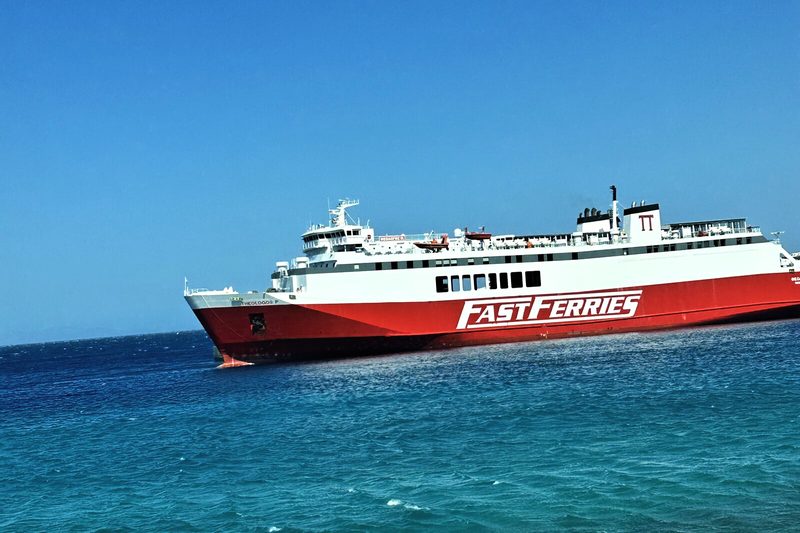
There is no airport; Santorini is the gateway. Ferries make the crossing from Athinios in one to two hours, depending on the boat, several times a week in summer and less often otherwise. Blue Star’s big ferries from Piraeus call two to four times a week en route to the Dodecanese and Crete, taking eight to nine and a half hours. Check the schedule before you fix dates; a day’s delay from the meltemi is not unusual.
A bus meets the ferries and runs between port, Chora and the south-coast beaches in summer. There are a few scooters and cars for hire and one or two taxis, but most visitors walk; the paths are the point.
When to go
June and September, with the sea warm and the trails bearable. July and August are hot and bring Greek campers and Santorini day-trippers, but the island never feels full. From October to May ferries thin and most rooms close.
Good to know
Bring cash: cash machines are scarce, if there is one working at all. Tap water is short and not for drinking; buy bottled and use it sparingly. The north coast takes the meltemi full on in July and August, which is why the beaches are all on the south; Kleisidi and Katsouni are the most sheltered. The Kalamos path has no shade. Prices are approximate and seasonal.
Last island, first light: Anafi is where the Cyclades fall quiet.