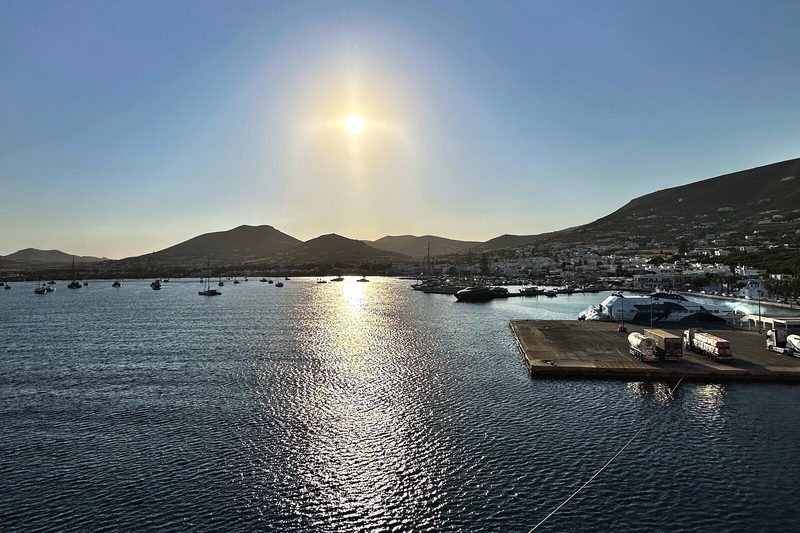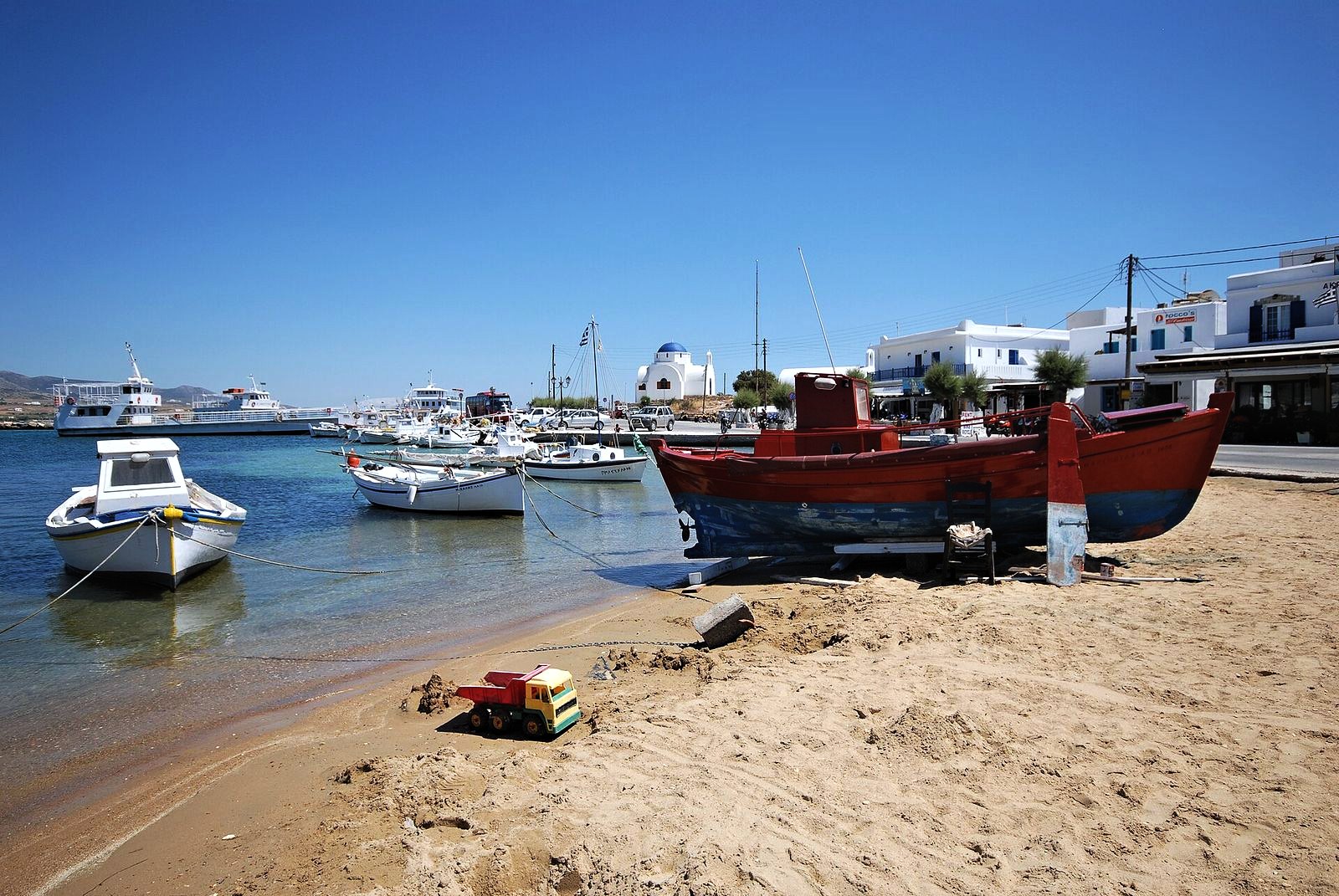
Seven minutes. That is all the strait between Paros and Antiparos takes, and it is enough to change the pace entirely.
Antiparos is 11 kilometres long and a few wide, with one real town, one main street, a castle you can walk through in five minutes and a cave you descend into for an hour. Around 1,200 people live here year-round, and the beaches face every side so that one is always calm. People who could afford anywhere have been coming for decades because it looks like nowhere in particular: no cliffside hotels, no beach clubs, nothing taller than a church. You’ll wake to roosters, cycle to the beach and eat fish grilled by the man who caught it.
Why go
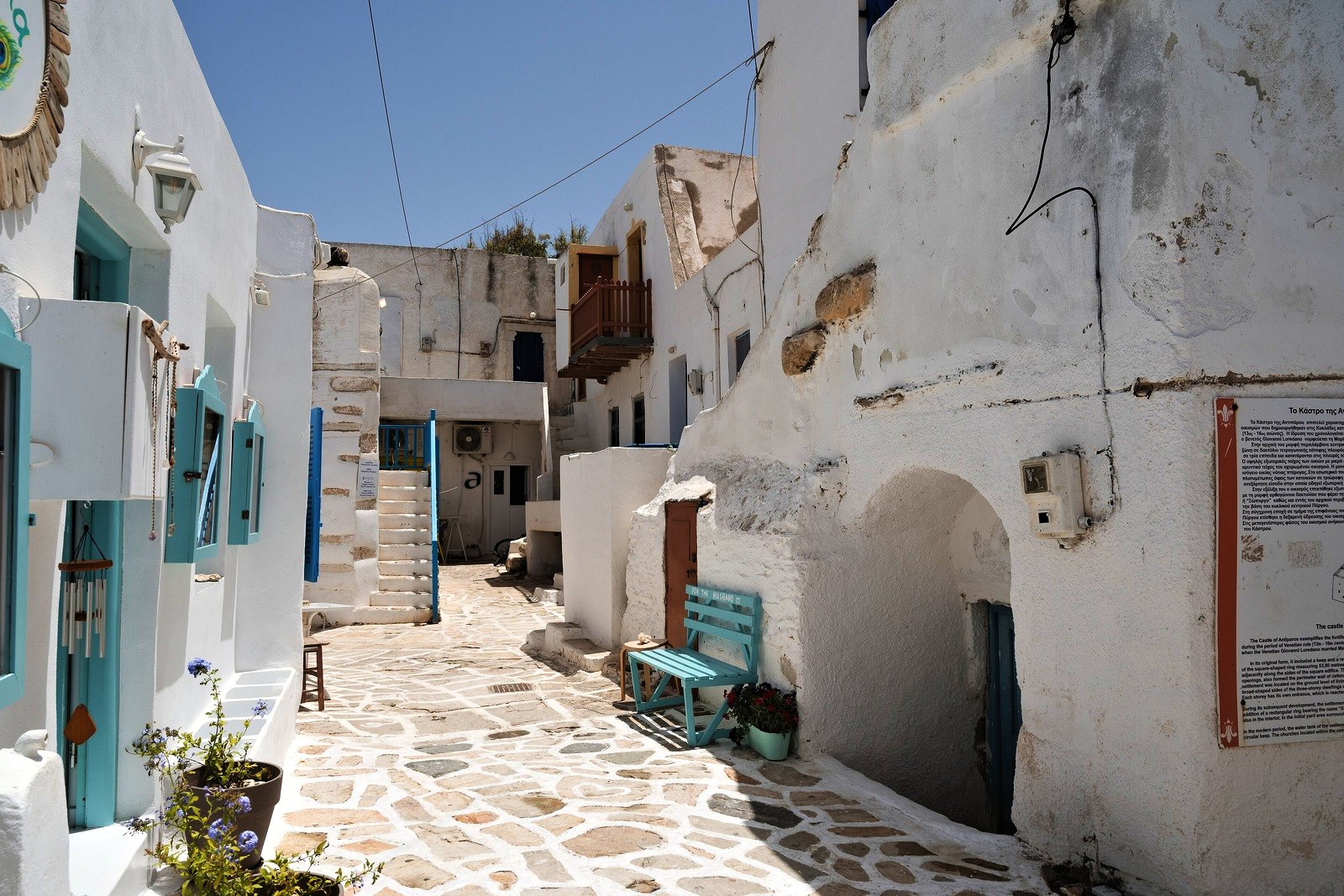
Because it is the Cyclades at walking speed. Antiparos town is a single pedestrian street of bougainvillea, bakeries and bars running from the harbour to the gate of a Venetian kastro built in 1440, where the houses themselves form the castle walls. Three sandy, shallow beaches are within a ten-minute stroll of your coffee. The cave in the south is the island’s one grand gesture, 400 steps down into a cathedral of stalactites. And off the southern tip lies Despotiko, an uninhabited islet where archaeologists are slowly raising a sanctuary of Apollo from the thyme.
The lie of the land
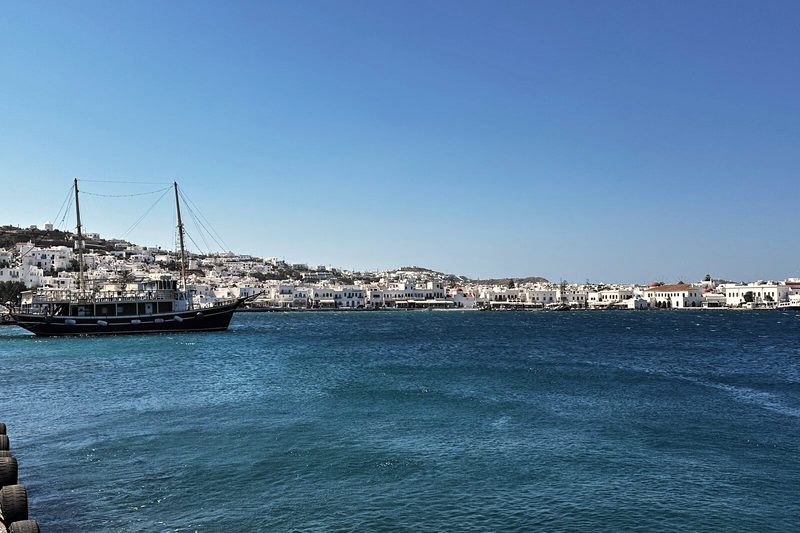
Everything begins at the harbour on the north-east corner, where the car ferry from Pounta and the summer boats from Parikia tie up a few steps from the cafés. Behind it the town runs inland along its main street to the kastro and the central square at the top.
The beaches fan out from town. Psaraliki, two sandy bays a kilometre south on the east side, is the family beach: sunbeds, tamarisks and water you can wade in for fifty metres. Sifneikos Gialos, west of town, is where everyone goes at eight o’clock to watch the sun set behind Sifnos.
Head south down the island’s one proper road and the land flattens into scrub and low hills. Glyfa, about four kilometres down, is the long one with hotels behind it. Soros, about eight kilometres from town, is the island’s favourite: tamarisk shade, shallow turquoise water and a taverna. The road ends at Agios Georgios, a fishing hamlet facing Despotiko with tavernas on the water and boats to the islet.
On the quieter west side, Livadia is the dune-backed bay below The Rooster. Apantima, a small sheltered cove, is back on the east coast, just past the turning for the cave. The cave is in the south-east, about eight kilometres from town.
Eat & drink
- Captain Pipinos, Agios Georgios: the big, busy seafood taverna at the end of the island road, blue chairs on the water facing Despotiko; go for the setting, the sun-dried mackerel and the grilled fish, and expect a wait and brisk service in August.
- Yam, off the main street: garden bar-restaurant, eggs Benedict at brunch to ceviche and cocktails at night; book for dinner.
- Time Marine, second Psaraliki beach: all-day beach bar-restaurant, brunch and lunch by the water, DJ parties on Friday and Saturday nights.
- The harbour kafeneia, Antiparos town: coffee, spanakopita and the morning gossip before the ferry.
Stay
- The Rooster, Livadia: 16 earth-coloured houses with private pools, a wellness house and a farm restaurant (non-residents eat in the courtyard, without the sunset); service can be cool and extras are charged, so go for the houses and the spa; from about €1,000 per night.
- Kameo, Agios Georgios: seven suites (guests 14 and over) with a pool, fifty metres from a beach facing Despotiko; book direct.
- Kouros Village, town: 30 studios, suites and apartments around a pool by the sea; mid-range, with big low-season discounts.
- Mantalena Hotel, harbour front: the long-established family hotel for a simple base; budget to mid-range.
Things to do
- Walk through the kastro’s arched gate and round its inner ring of houses, then up to the square for coffee.
- Descend the 400 steps into the cave to the stalagmite where a Christmas Mass was said in 1673.
- Take the boat from Agios Georgios to Despotiko and walk the excavated sanctuary of Apollo.
- Swim at Soros in the morning and Sifneikos Gialos at sunset.
- Hire bicycles in town and ride the flat coast road to Psaraliki and Glyfa.
- Snorkel the rocks at the ends of Psaraliki’s two bays.
- Eat grilled octopus at Captain Pipinos while the sun drops behind Despotiko.
- Join the Agia Marina festival on 15 – 17 July if you are here; the whole island is.
Getting there & around
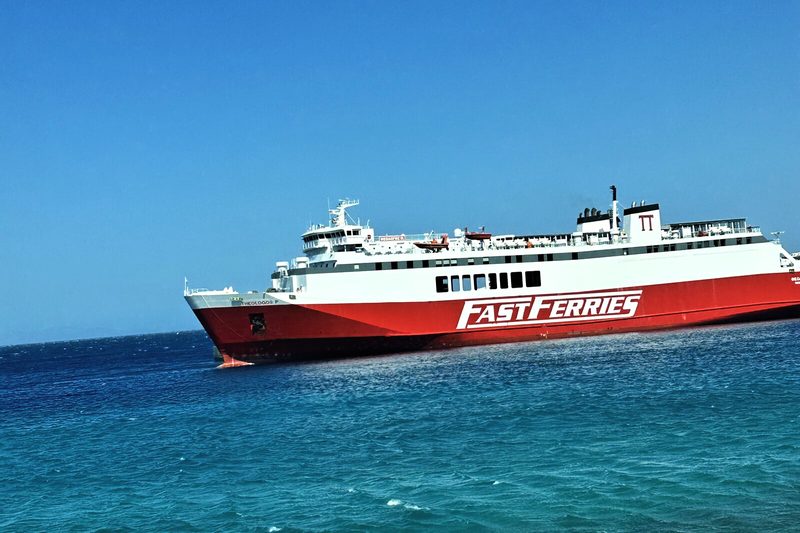
From Paros. The car ferry shuttles between Pounta, on Paros’s west coast, and Antiparos harbour in about seven minutes, roughly every half hour in season and less often in winter. Buses from Parikia meet it. In summer a passenger boat also runs from Parikia harbour direct, about half an hour. There is no airport; everyone comes via Paros.
Getting around. Bicycles from the hire shops in town cover most of it, and in summer a bus runs down the spine road to the beaches and the cave. Cars, scooters and ATVs are for hire near the harbour, or bring a car over on the ferry. Taxis are few; agree a price before heading south.
When to go
June and September are ideal: warm sea, the main street lively but not jammed. July and August are busy with Athenian families and the villa crowd, so book restaurants and The Rooster months ahead. Antiparos is a good refuge when the meltemi blows; its east- and south-facing coves are calmer than Paros’s north shore. May and October are peaceful.
Good to know
- Water. Drink bottled; the supply is desalinated.
- ATMs. A few in town, none at the beaches. Carry cash for tavernas and the cave.
- Meltemi. Sifneikos Gialos and the open west coast feel it; Psaraliki, Apantima and the bays of the south are more sheltered.
- The cave opens daily in season, roughly spring to October, 10am to 4pm, for a small fee (€6 at the time of writing, folklore museum included); the steps are damp, so wear shoes with grip.
- Crowds. Day-trippers fill the town between noon and five; the southern beaches stay quiet.
Cross the strait, lose the car keys for a day and let Antiparos show you how little an island needs.