Quick answers
- When is the best time to visit Santorini?
- May, June, September and the first half of October: warm sea, long evenings and tables available.
- Where should I stay on Santorini?
- One night on the caldera, in Oia, Imerovigli or Fira, for the view; the rest of the week in the wine villages such as Pyrgos and Megalochori, or by the south-coast beaches.
- How do I get to Santorini?
- Direct flights from many European cities from May to October, or 45 minutes from Athens year-round. Ferries from Piraeus take about 5 hours fast or 7–8 hours on Blue Star.
- How expensive is Santorini?
- Caldera suites from about €400 a night in season, inland and beach villages from about €120, taverna mains €14–€28.
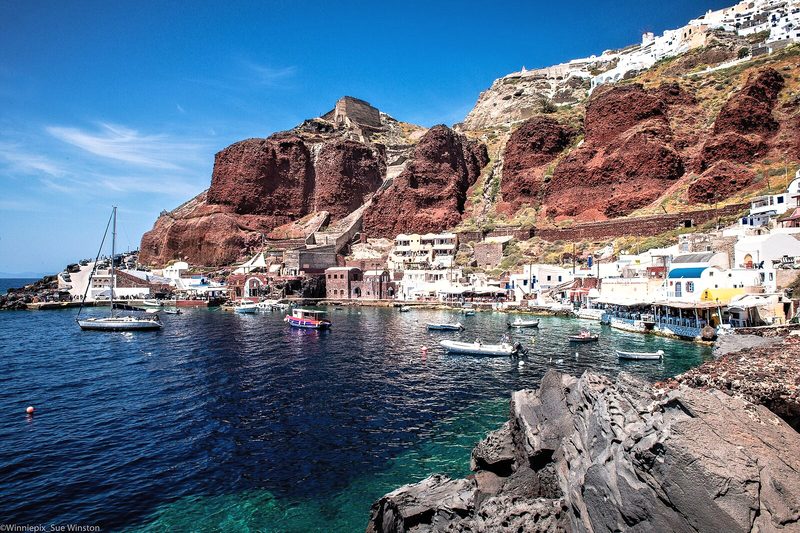
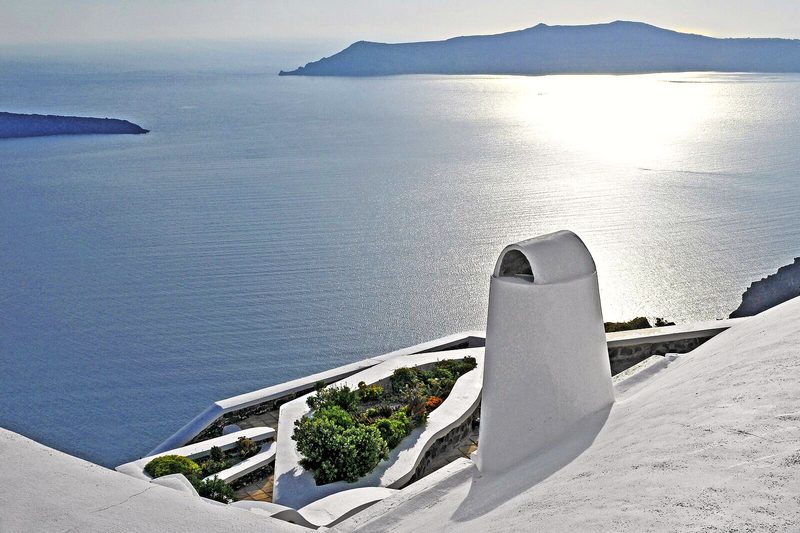
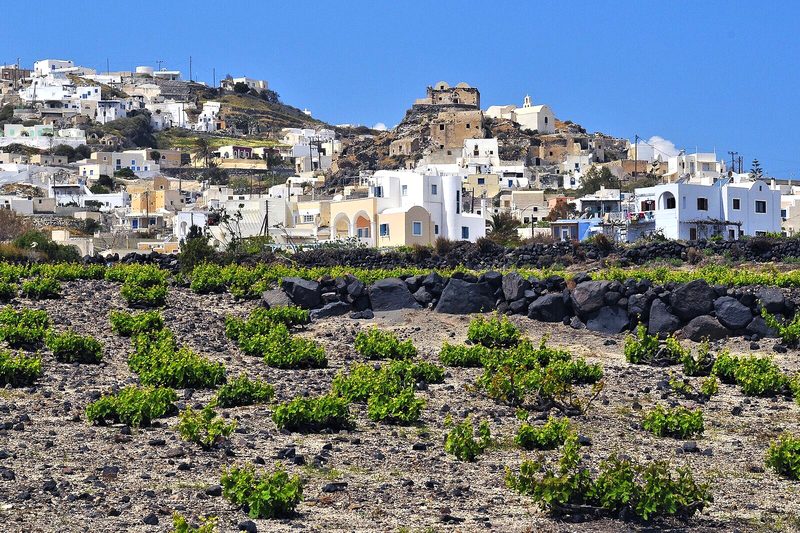
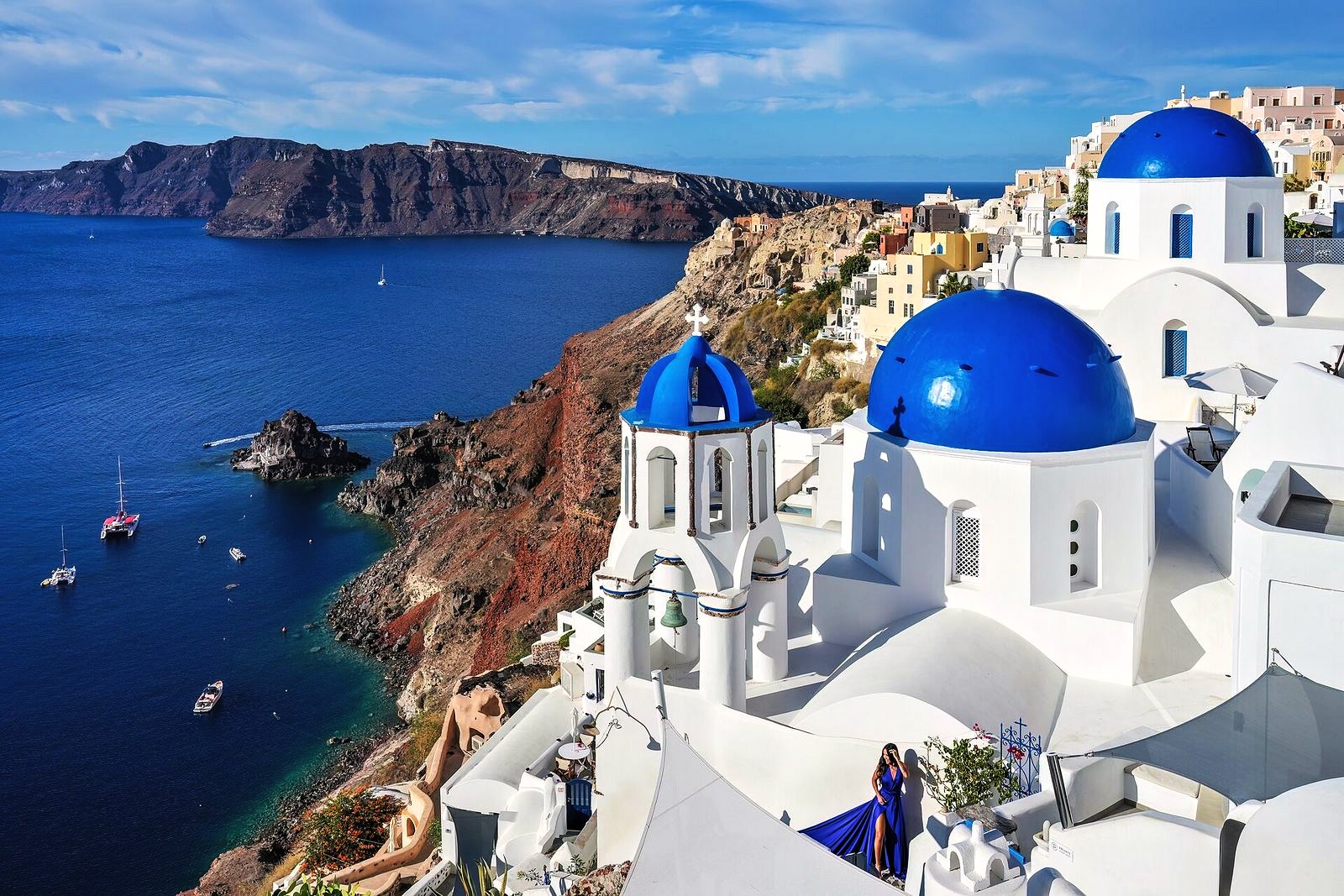
Cliff. Sea. Volcano. The first sight of Santorini from the ferry is one of the great arrivals in travel: a 300-metre wall of rust-red and black rock, iced along its rim with white villages, curving around a drowned crater nine kilometres across. Everything you have seen in photographs is here and it is all true. What the photographs leave out is the rest of the island – the gentle eastern slopes where vines grow in coiled baskets on black ash, the Bronze Age city buried under pumice at Akrotiri, the long dark beaches of the south, and villages like Pyrgos and Megalochori where life carries on at its own pace while the caldera does the showing off.
Why go
Because the caldera view really is worth the ferry ride, and because the island behind it rewards anyone who turns their back on the sunset for a day. Santorini is the only place on earth where Assyrtiko grows the way it does here, in vines wound into low baskets against the meltemi, on soil with no clay and almost no rain. It has one of the best-preserved prehistoric sites in the Aegean. Its east and south coasts have proper swimming beaches with sunbeds and tavernas, a rarity in the Cyclades. And in May, June, September and October it is a place you can love without queueing for it.
The lie of the land
Santorini is a crescent about 18 kilometres long, the surviving rim of a volcano that blew itself apart around 1600 BC. The caldera cliff runs down the western side, and along its top sit the villages everyone comes for: Oia at the northern tip, then Imerovigli (the highest point of the rim, with the fortress rock of Skaros below it), Firostefani, and Fira, the capital, where the cable car drops to the Old Port. South of Fira the rim lowers through Athinios, the ferry port, to Akrotiri and the lighthouse at the island’s southwestern tip.
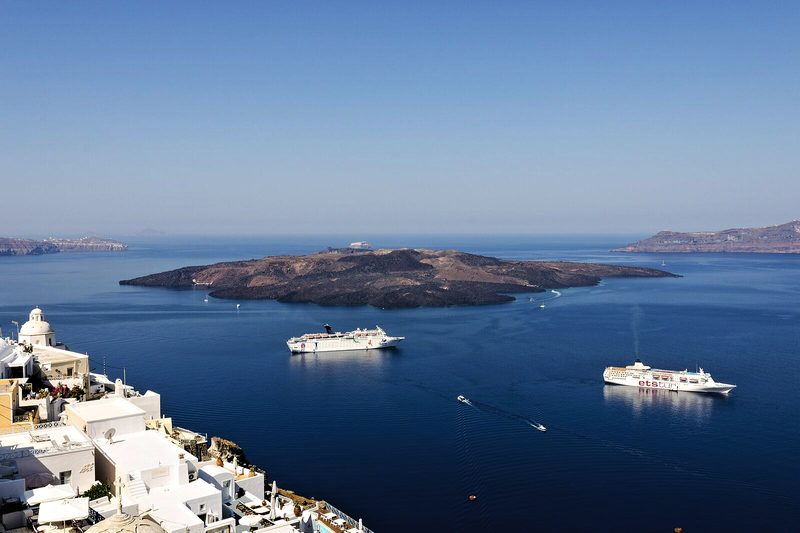
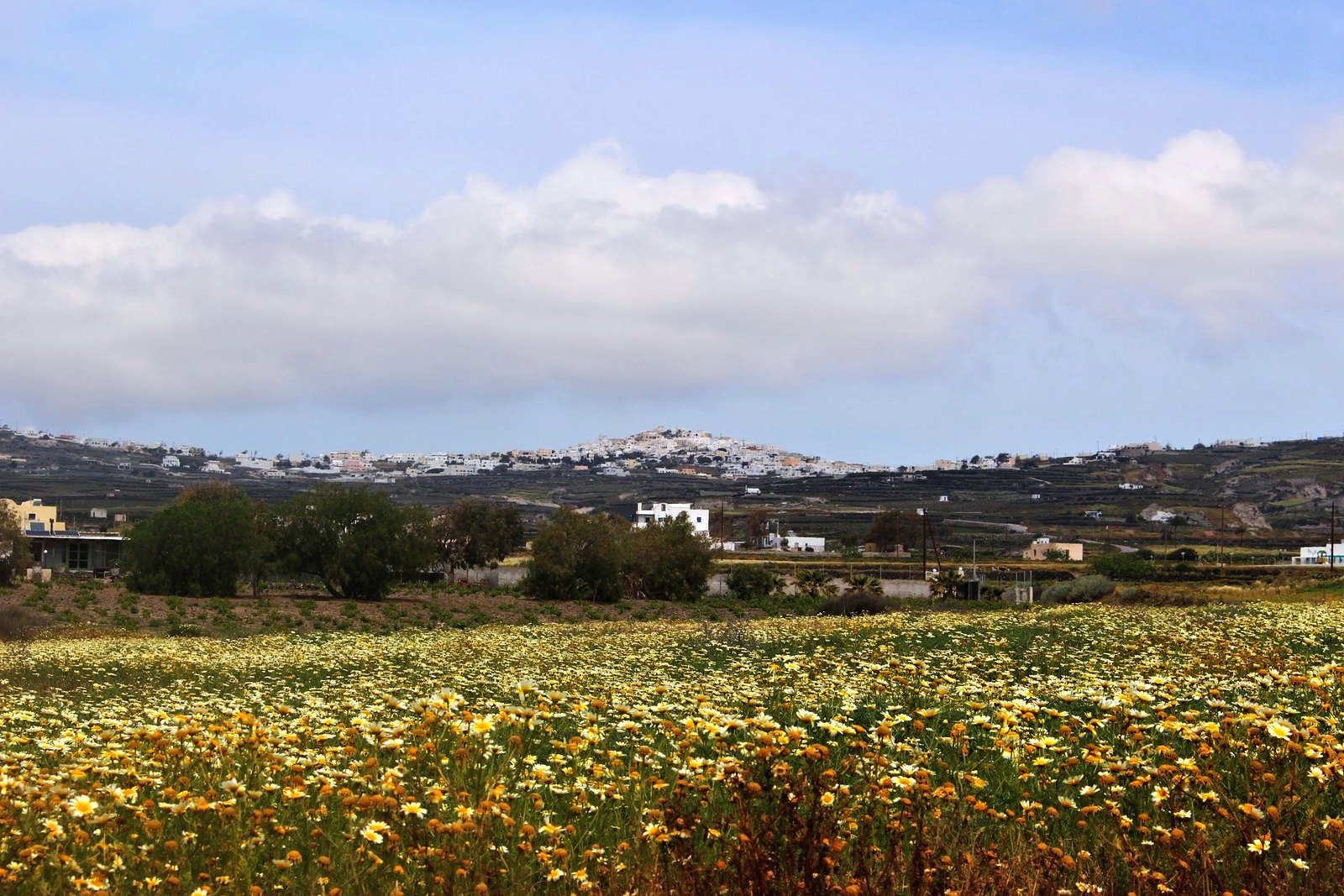
Turn east and the land falls away in a long, soft slope to the sea. This is the farming side: vineyards around Megalochori, Pyrgos (the highest village, crowned by a Venetian kastelli), Exo Gonia and Episkopi Gonia, with the monastery of Profitis Ilias on the summit at about 567 metres. Below the mountain, the beaches run along the east and south coasts – Kamari and Perissa either side of the headland of Mesa Vouno, Perivolos and Agios Georgios continuing south from Perissa, Vlychada with its sculpted white cliffs, and the Red Beach under the cliffs at Akrotiri. Out in the caldera lie the two Kameni islets, the youngest land in Greece, and across the water the quiet island of Thirassia.
Eat & drink
- Metaxi Mas, Exo Gonia – the taverna every local sends you to; book ten days ahead for dinner.
- Selene, Fira – the island’s gastronomic institution, in an 18th-century Catholic monastery.
- Dimitris Ammoudi Taverna, Ammoudi – fish by the kilo with the water a metre away, below the Oia steps.
- To Psaraki, Vlychada – fish tavern above the marina, cherry-tomato salad to start.
- Aktaion, Firostefani – three generations and a century of cooking on the caldera edge.
- Santo Wines, Pyrgos – a flight of Assyrtiko on the biggest terrace on the island; come for the tasting rather than a meal, and book.
Stay
- Katikies Santorini, Oia – whitewashed suites, three pools stepped down the cliff and the classic Oia view; from about €500 per night for the smallest, compact suites; a terrace and the view cost more.
- Perivolas, Oia – old cave houses turned into the island’s most serene hotel; no under-16s; from about €450 in shoulder season.
- Grace Hotel Santorini, Imerovigli – what the hotel calls the largest infinity pool in Imerovigli; guests 14 and over; from about €750.
- Istoria Beach, Perivolos – a contemporary design hotel on the black sand; from about €450.
- Voreina Gallery Suites, Pyrgos – nine suites hung with Greek art, private pools or jacuzzis; from about €175 in low season.
- Vedema, Megalochori – a Luxury Collection village of very spacious villas and suites around a 400-year-old winery, inland with no caldera or sea view; come for the space, the quiet and the pools, and eat out, as the restaurants are priced for the brand; from about €450.
Things to do
- Walk the caldera path from Fira to Oia (about 10 km, 3 – 4 hours) before the heat.
- Spend a morning in the Bronze Age streets of Akrotiri.
- Climb to Ancient Thera on Mesa Vouno for the view down both coasts.
- Taste Assyrtiko, Nykteri and Vinsanto at Santo Wines, Venetsanos and Gavalas.
- Swim at Vlychada, then eat at To Psaraki above the marina.
- Take a sunset catamaran cruise around the caldera with dinner on board.
- Take the boat out to Nea Kameni and swim in the warm springs off Palea Kameni.
- Wander Pyrgos and Megalochori in the late afternoon when the day-trippers have gone.
- See the golden ibex and the Blue Monkeys fresco at the Museum of Prehistoric Thera in Fira.
- Spend a day on a sunbed at Perivolos and a night at the open-air cinema in Kamari.
- Combine wine, art and a pumice-carved canava at Art Space in Exo Gonia.
- Eat grilled fish at Ammoudi with your feet almost in the water; the road down is closed to private cars under civil-protection rules in force until at least the end of March 2027, so walk down the steps from Oia or use the shuttle.
Getting there & around
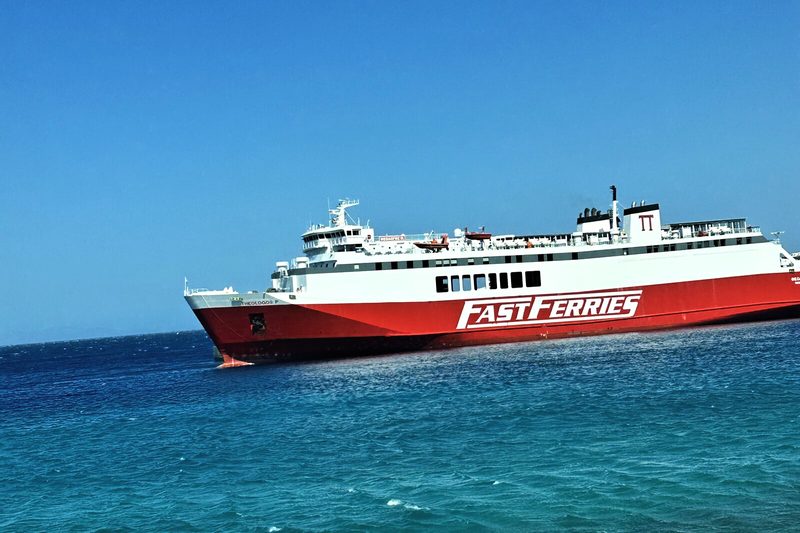
By sea Ferries dock at Athinios, about 10 km south of Fira. From Piraeus it is roughly 5 hours by fast ferry (SeaJets) or 7 – 8 hours on the conventional Blue Star boats; there are also seasonal sailings from Rafina. From the neighbouring islands, allow 1 – 2 hours from Naxos, 1.5 – 3 from Paros, 2 – 3 from Mykonos, 2 from Milos on the fast boats and as little as 35 minutes from Ios. Heraklion in Crete is about 2 hours by fast ferry in summer. Book ahead for July and August and check for meltemi cancellations.
By air Santorini’s airport is on the east coast near Kamari, about 6 km from Fira. Athens is 45 minutes away year-round, and from May to October there are direct flights from most big European cities, including London, Manchester and the Northern European capitals.
Getting around KTEL buses run from the station in Fira to Oia, the beaches, Akrotiri, Pyrgos and the port; they are cheap and crowded in summer. A hire car or ATV gives you the island, but Oia parking is a trial and the cliff roads are narrow. Taxis are famously scarce, so pre-book your airport and port transfers through your hotel.
When to go
May, June, September and the first half of October are the months we would choose: warm sea, long evenings, tables available. July and August bring heat, the meltemi, cruise ships and peak prices, though the beaches stay lovely. Easter in Pyrgos, when the village is lit with tins of fire on Good Friday, is the one spring date worth planning around. Most caldera hotels close from November to March, but Fira, Kamari and Perissa stay open and the winter light on the cliffs is extraordinary.
The season, plainly
Santorini’s caldera towns take more visitors per square metre than anywhere in Greece, and in July and August it shows. Cruise ships land several thousand people on Fira before lunch; Oia’s sunset lanes are shoulder to shoulder by seven; the caldera hotels charge what the view can bear and nearly all of them involve a great many steps; and the celebrated sunset tables at Ammoudi and along the cliff take deposits and price their fish by the kilo. Service under that pressure is efficient rather than warm, and the reviews of the busiest names say so. The island is still worth it, and it is wonderful in May, June, late September and October. If you come in high summer, book everything, ask the price of fish and of the front row before you sit, check the bill before you tip, and give yourself one caldera night and the rest of the week in the east, the wineries and the villages, where Santorini is still a Greek island.
Good to know
Tap water is desalinated and not for drinking; buy bottled. ATMs are plentiful in Fira, Oia and Kamari, thinner on the ground in the inland villages. The meltemi blows hardest in July and August, from the north: the caldera path gets gusty and the sea on the Oia side is often choppy, while the south-coast beaches at Perivolos and Vlychada stay calmer. Cruise ships can land several thousand people a day; Fira and Oia are theirs from late morning to late afternoon, and yours at dawn and after dark. Prices throughout this guide are approximate and seasonal.
Stand on the rim at first light, with the villages still asleep and the volcano black in a grey sea, and you understand why people keep coming back.
Good to knowTap water is not for drinking; cruise crowds peak in Fira and Oia from late morning.
CostCaldera suites from about €400 per night in season; inland and beach villages from about €120; taverna mains €14 – €28
WhereSantorini (Thira), southern Cyclades