Quick answers
- When does the meltemi blow?
- Roughly mid-May to mid-September. It is strongest from mid-July to late August, typically Beaufort 5–7 with spells of force 8 that can last several days.
- Which Cyclades islands are most sheltered from the meltemi?
- Milos, Sifnos, Santorini, Folegandros and Serifos feel it less; Mykonos, Tinos, Andros, Paros and Naxos get it worst. On any island, south-facing coasts stay calmest.
- Will the meltemi cancel my ferry?
- Fast catamarans are often pulled from Beaufort 7, while big conventional ferries keep sailing into force 8. Book a conventional ferry for any crossing you cannot miss and leave a buffer night before flying home.
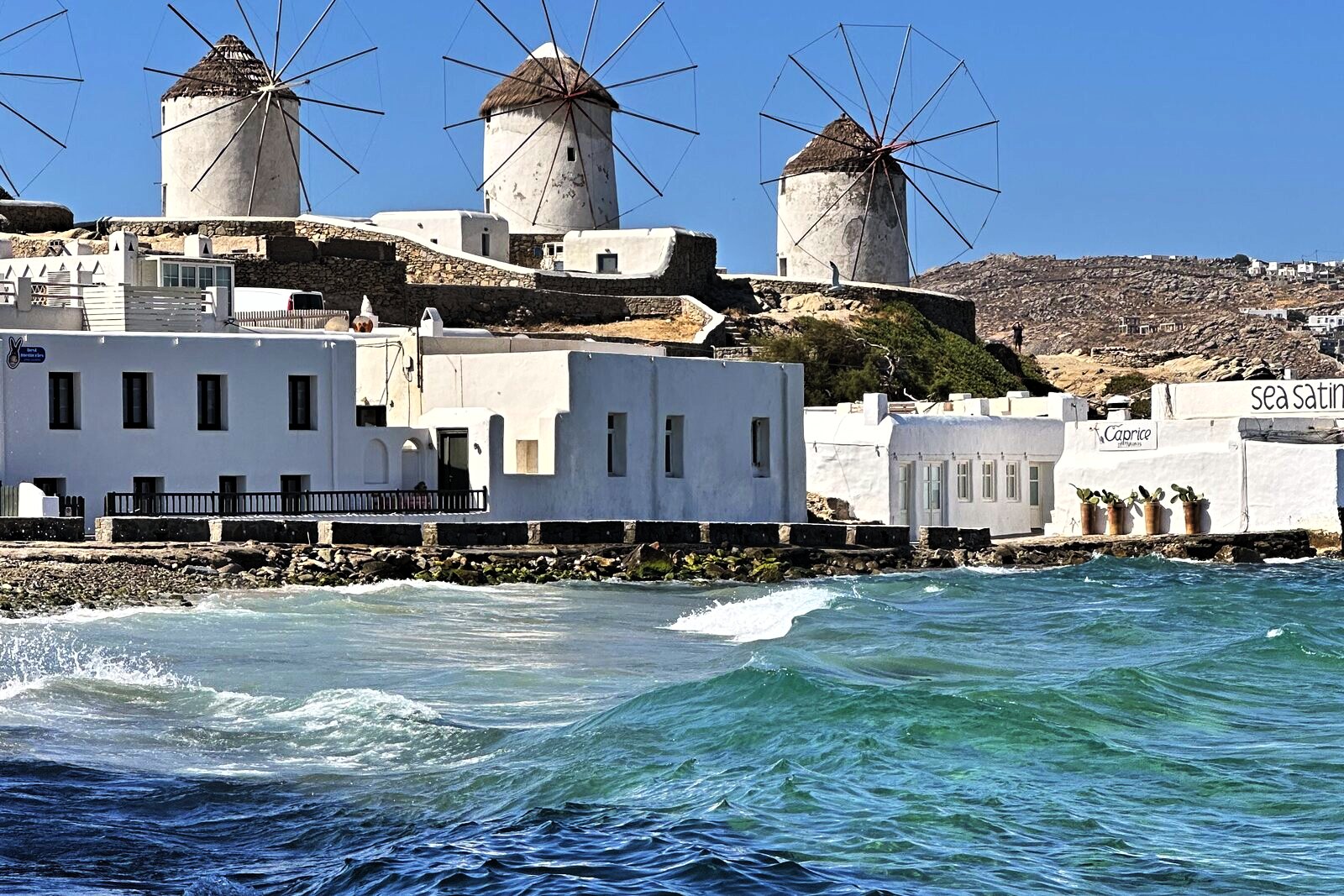
Dry air, hard light, a sea torn white. Some July afternoon on a Mykonos beach a sunbed cushion lifts off the sand and cartwheels into the shallows, and you understand why every island here has a lee side. That is the meltemi: the north wind of the Cycladic summer, the thing that keeps the air clear, the heat bearable and the ferry timetable honest. Islanders shape their days around it. Houses turn their backs on it. Once you know its habits, so will you, and it stops being a nuisance and becomes the weather you came for.
What it is
The meltemi is the modern name for the Etesian winds of antiquity, from the Greek etos, year, because they return every summer like a tide. In the Cyclades it blows from the north or north-east, dry, cool and persistent, under skies with barely a cloud. It is not a storm. There is no rain in it. It is a steady river of air pouring down the Aegean, which is exactly what makes it so useful and so awkward: the same wind that gives Paros a world-class kitesurfing lagoon also cancels the catamaran to Santorini.
Why it blows
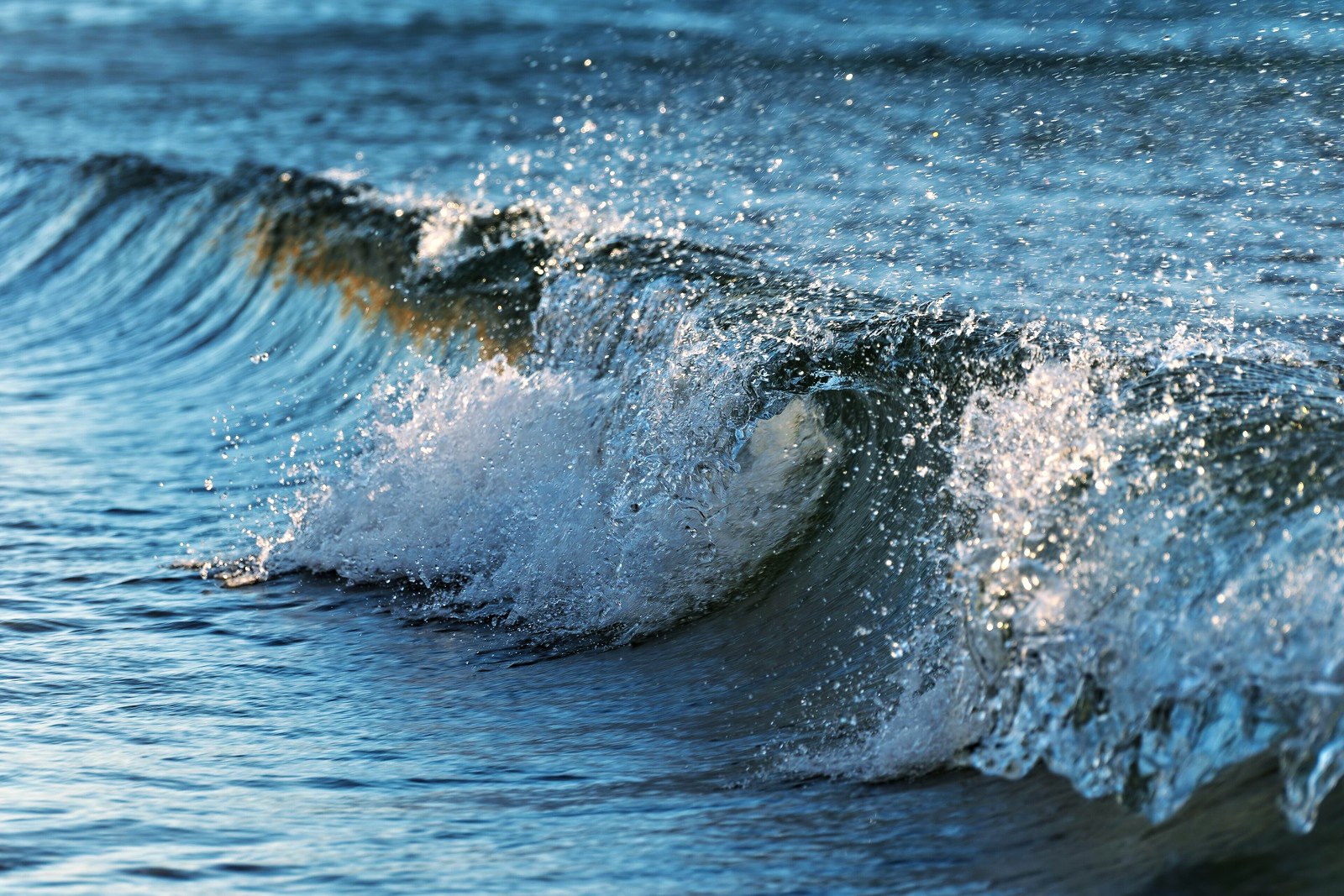
Picture two weather systems that have nothing to do with Greece. To the west, the Azores high spreads a tongue of high pressure over the Balkans and central Europe in summer. To the east, the land of Anatolia and south-west Asia bakes under the sun and a deep thermal low forms, the same low that drives the Indian monsoon. Air flows from high to low, and the Aegean is the corridor between them. The steeper the pressure gradient, the harder the wind. The channel narrows between the islands, so the central Cyclades, around Mykonos, Tinos, Paros and Naxos, get the strongest, most reliable blow in the whole Aegean. By the time the wind reaches Santorini and Milos it has typically backed a little to the north-west and lost some of its teeth, though not all.
When it blows
The season runs roughly mid-May to mid-September. June is often gentle, with calm spells between blows. From mid-July to late August the meltemi settles in, typically at Beaufort 5 to 7, with episodes of force 8 that can last several days without a break. September softens quickly; by October the north wind gives way to the milder, wetter south-westerlies of autumn.
There is a daily rhythm too. The wind usually builds through the morning, peaks in the afternoon and eases after sunset, often dropping to a whisper by midnight. On the worst days it does not ease at all. Forecasts show a strong blow coming three or four days out, and a sailing ban is often announced the evening before, and sometimes only at dawn.
| Period | Typical strength | What it means for you |
|---|---|---|
| Mid-May – June | Beaufort 3 – 5, calm spells | Easy ferries, pleasant beaches, light haze at times |
| Early – mid-July | Beaufort 4 – 6 | Afternoon chop; pick your beach by the wind |
| Mid-July – late August | Beaufort 5 – 8 | Fast ferries at risk; sheltered coasts only on big days |
| September | Beaufort 3 – 6, fading | Warm sea, lighter wind, the best month for many |
Exposed and sheltered
The rule is simple: north coasts take the wind, south coasts hide from it. The practice is more interesting, because every island has its own corners.
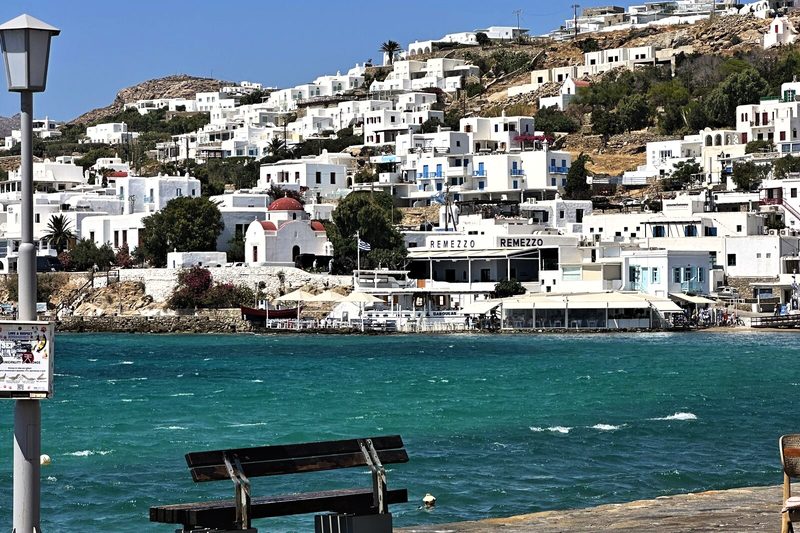
Exposed islands. Mykonos, Tinos and Andros sit squarely in the channel. Mykonos town can be genuinely wild in August; Ftelia on the north coast is a surfers’ beach for a reason. Paros and Naxos are next in line, and their west and north coasts catch everything. The strait between the two islands funnels the wind, which is why Pounda on Paros is a kitesurfing mecca and why Naoussa’s harbour sometimes closes to small boats.
Sheltered corners. Milos is the great refuge. Its long south coast, Paliochori, Firiplaka, Tsigrado and Provatas, lies in the lee of the island’s bulk, and the enclosed bay at Adamas stays swimmable when the north shore is foaming. Santorini’s caldera side is protected by the cliff itself; Oia feels the gusts on its rim, but the water at Ammoudi and Armeni stays calm, and the east-coast beaches at Kamari and Perissa are usually fine. On Sifnos head south to Platis Gialos, Vathi and Chrysopigi. On Folegandros the sandy bay at Agali and its neighbours sit under the cliff and out of the wind. Serifos keeps Livadakia, Ganema and Vagia calm; Paros has Aliki and Faragas on its south coast; Naxos sends you to the south-east, to Moutsouna and Panermos. Even on Mykonos, Ornos, Psarou, Platis Gialos and Agrari face south and swim well on all but the roughest days.
If the forecast says force 7 and your room has a north-facing terrace, you will hear it all night. Look for houses with walled courtyards, ground-floor rooms and shutters that close properly. The old Chora architecture, with its blank north walls and tight lanes, was designed for exactly this.
Ferries in the wind
This is where the meltemi bites hardest. Greek ports and the coast guard impose sailing bans, the apagoreftiko, when the wind passes a threshold, and the threshold is lower for high-speed craft than for conventional ships. In practice, the fast catamarans, most of them run by Seajets and Golden Star, are the first to be pulled, often from Beaufort 7, and sometimes earlier on exposed routes. Blue Star’s big conventional ferries, with their deep hulls and open vehicle decks, keep sailing into force 8 and are typically the last to stop.
The pattern repeats every August. On 14 August 2026, the Friday before the Assumption weekend, winds of force 9 with gusts over 100 km/h closed Rafina and Lavrio entirely, while from Piraeus two early Cyclades sailings were cancelled, with more changes expected through the day. Bans can last anything from a few hours to a couple of days, and are lifted as soon as the wind eases.
What to do about it:
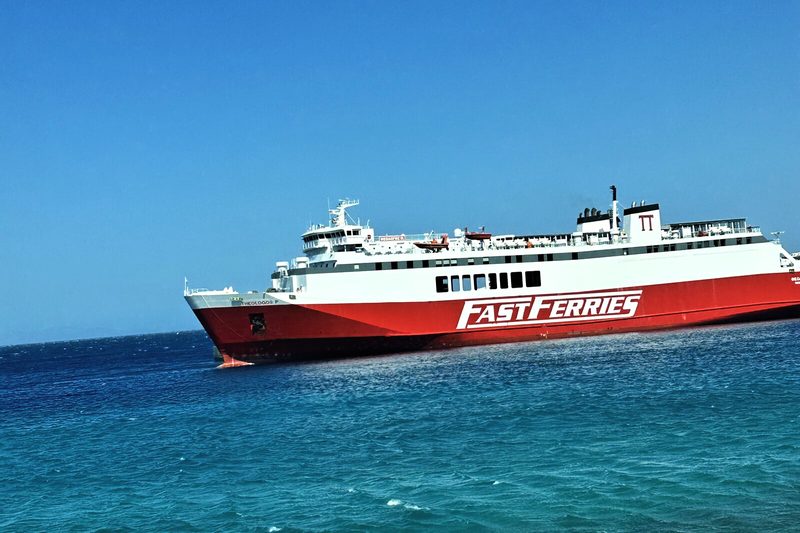
- In July and August, book a conventional ferry (Blue Star, or Fast Ferries, whose slow ships now include the old Zante Ferries fleet) for any crossing you cannot afford to miss, especially the one that connects to your flight home.
- Leave a buffer night. Sleep in Athens, or on the island you fly from, the night before an international departure.
- Watch your email and phone. Ferryhopper and the operators notify you of cancellations and offer a free switch to the next sailing or a refund.
- Sailings from Piraeus often keep running when Rafina, the port for Andros, Tinos and Mykonos, has closed, so check both ports before you give up on the day.
- Expect delays, not just cancellations. A conventional ferry can run an hour or two late in a big blow, and the wind makes docking slow.
Where the wind is the point
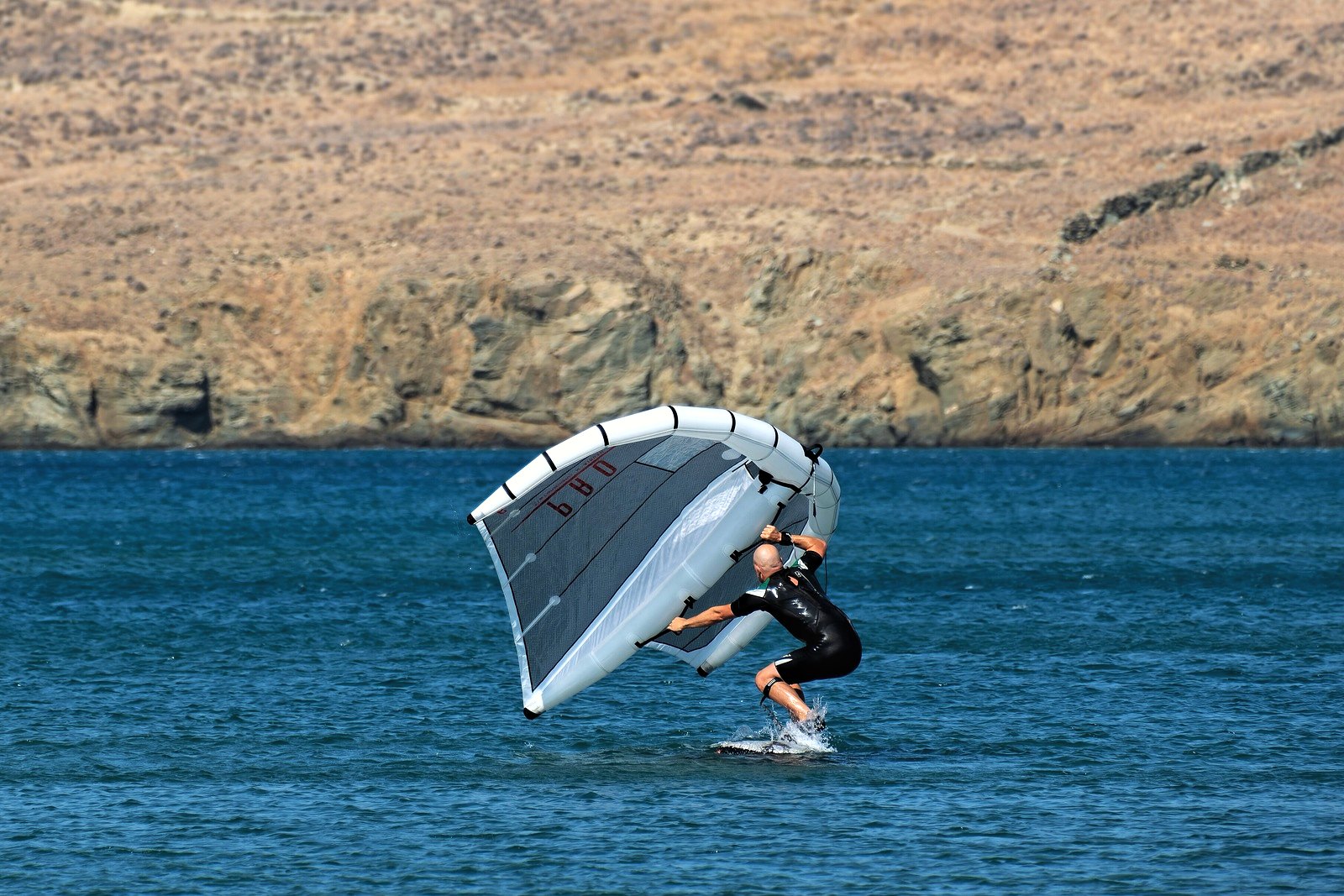
For windsurfers and kitesurfers the meltemi is the whole reason to come. Pounda on the west coast of Paros, opposite Antiparos, is the classic kite lagoon: flat, shallow water in a cross-shore wind, with schools on the beach and lessons from about €180 a head for a two-hour taster in a pair (€240 private) to €700 – €1,400 for a full 12-hour beginner’s course, depending on season and whether you share the instructor. Across the strait on Naxos, Mikri Vigla has two personalities: the north beach for kiting in big wind, the south beach for calm. Further up the Naxos coast, Laguna by Agios Georgios is the gentle lagoon where beginners learn to windsurf. On Mykonos, Ftelia in the north is the island’s windsurfing beach, and Kolymbithra on Tinos has become a surf break for the same reason. Santa Maria and Chrysi Akti on Paros round out the list. Peak conditions are mid-July to late August, when the wind can blow 25 to 35 knots for days at a stretch; June and September give lighter, kinder sessions.
What to pack
A light windbreaker for ferry decks and evening harbours, even in August. A hat with a strap or a cap that stays put. Sunglasses for the dust and glare. A sarong rather than a big towel, and something to pin it down. Lip balm, as the air is drying. Beach shoes for the pebbled sheltered coves you will end up on. Hair ties and a scarf for the afternoon walk through the Chora. Leave the umbrella; they do not survive.
How to plan around it
Travel in June or September if you want the sea without the fight. If August is your only option, base yourself on an island with a sheltered coast, Milos, Sifnos, Santorini, Folegandros or Serifos, and visit the windy central islands for a day or two. Hop in the morning, when the wind is lightest. Book conventional ferries for the legs that matter and keep the fast ones for optional day trips. Check the forecast each evening and choose tomorrow’s beach by the arrows on the map, not by the photo. And when a big blow comes through, do what the islanders do: go to the lee side, order a plate of grilled sardines, and let the sky be scrubbed clean for you.
The meltemi is not the weather getting in the way of your holiday. It is the holiday, in its purest and most Cycladic form.
Good to knowForecasts for Greek seas are published daily by the Hellenic National Meteorological Service; the apps Windy and Windguru show the wind in knots and Beaufort for every beach. A sailing ban is announced by the port authorities, often the evening before and sometimes only at dawn.
CostNothing, unless it cancels your catamaran; then a free rebooking or refund.
WhereThe central Cyclades get it worst: Mykonos, Tinos, Andros, Paros, Naxos. The western and southern islands feel it less.
You might also like
- Cyclades Ferries: How Island Hopping Actually Works
- When to Go to the Cyclades: A Month-by-Month Guide
- Milos: The Island of Seventy Beaches
Prices and opening times are approximate and change with the season. If something has changed, let us know.