Quick answers
- Which Athens port do Cyclades ferries leave from?
- Piraeus for most of the Cyclades; Rafina, 30 minutes from the airport, for Andros, Tinos and Mykonos; Lavrio for Kea and Kythnos.
- Should I take a fast ferry or a conventional ferry?
- Fast ferries for short daytime hops in calm weather; conventional ferries for long legs, August crossings and anything that connects to a flight, because fast ferries are the first cancelled in strong wind.
- How much does a Cyclades ferry cost?
- From about €40–€55 conventional and €60–€90 fast from Piraeus, and about €8–€35 for island-to-island hops (2026 season).
- When should I book Cyclades ferries?
- Summer timetables appear between February and April; book August crossings, cabins and car spaces as soon as they do. Hops in June or September can be bought a day or two ahead.
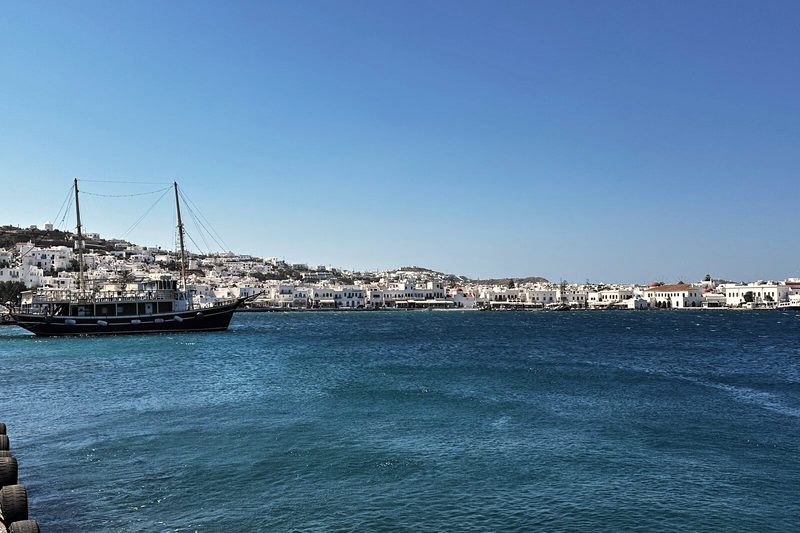
Rope hits the quay. A ramp drops with a clang. Two hundred people, a van of watermelons and a priest on a scooter pour onto the harbour in four minutes flat, and the ship is already pulling away. Greek ferries are theatre, and they are also the only way to see the Cyclades properly. The system is bigger and better organised than it looks from the dock: a dozen operators, three Athens ports, hundreds of daily summer sailings and a booking site that shows them all. Here is how to read it.
The three Athens ports
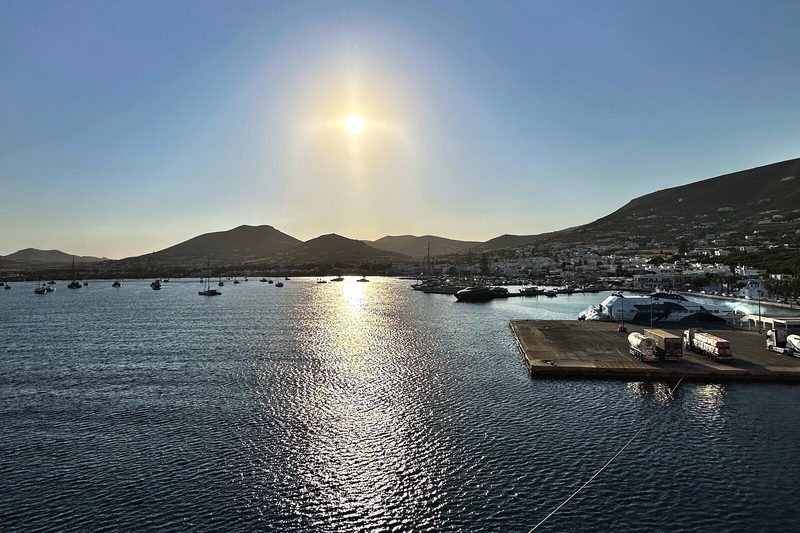
Piraeus is the big one, a city-sized harbour on the metro and the departure point for most ships to Syros, Mykonos, Paros, Naxos, Santorini, Milos and the western islands. Gates for the Cyclades are usually E6 to E10 (occasionally E4), but they move; check the gate on your ticket or on the screens. Walking from one end of the port to the other takes close to an hour, so arrive 45 minutes before a conventional sailing and an hour before a fast ferry in August.
Rafina, on the east coast of Attica, is about 30 minutes from the airport and the natural choice for Andros, Tinos and Mykonos, with summer extensions to Paros and Naxos and, on Golden Star, a few weekly sailings on to Ios and Santorini. It is a small, friendly port where you can see your ship from the café.
Lavrio, further south, serves Kea and Kythnos year-round, with a few weekly Blue Star sailings to Syros and on down the western chain, and summer boats to Serifos and Sifnos. It is the quiet start to a western loop.
Who sails where
Operators and vessels shuffle every season, so treat this as the shape of things rather than a timetable. Ferryhopper shows the live line-up.
| Operator | Type | From | Where it goes |
|---|---|---|---|
| Blue Star Ferries | Conventional | Piraeus | Syros, Tinos, Mykonos; Paros, Naxos, Ios, Santorini; Milos; Amorgos and the Small Cyclades |
| Seajets | High-speed | Piraeus, Rafina | Mykonos, Paros, Naxos, Santorini, Milos, Sifnos, Serifos, plus most island-to-island hops |
| Golden Star Ferries | Conventional and high-speed | Rafina | Andros, Tinos, Mykonos, Paros, Naxos, Ios, Santorini |
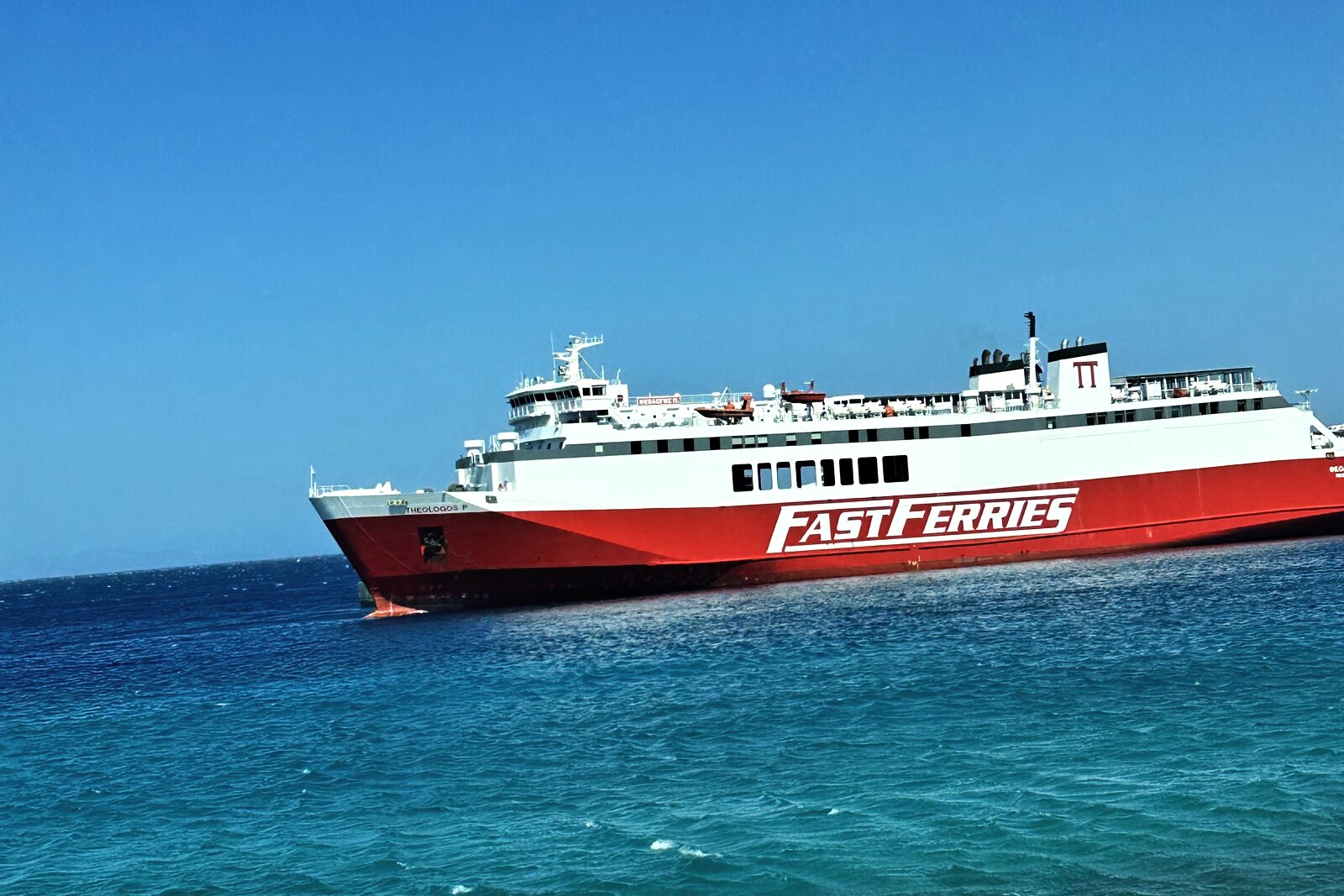
| Fast Ferries | Conventional | Rafina; Piraeus | Andros, Tinos, Mykonos (Paros and Naxos in summer); the Western Cyclades from Serifos to Santorini with the Dionisios Solomos |
| Minoan Lines, Magic Sea Ferries | Conventional; high-speed | Piraeus; Lavrio | Minoan: Milos on its Piraeus–Milos–Heraklion run; Magic Sea Ferries: Kythnos, Serifos, Sifnos and Kimolos from Lavrio, May to September |
| Goutos, Triton, Karystia | Small conventional | Lavrio | Kea, Kythnos |
| Small Cyclades Lines | Small conventional | Naxos, Amorgos | Iraklia, Schinoussa, Koufonisia, Donousa |
Blue Star is the backbone. Its ships are big, stable, punctual and cheap, with open decks, cafés and cabins. Seajets runs the biggest high-speed fleet in the Aegean and will get you from Piraeus to Mykonos in under three hours, at a price. Golden Star and Fast Ferries own the Rafina lanes; the latter’s Dionisios Solomos ambles down the western chain from Piraeus and is the ship you want for Serifos, Sifnos and Folegandros. Small Cyclades Lines’ Express Skopelitis is a local institution, a small blue ship that calls at every quay between Naxos and Amorgos; buy tickets at the port or through Ferryhopper.
Fast or conventional
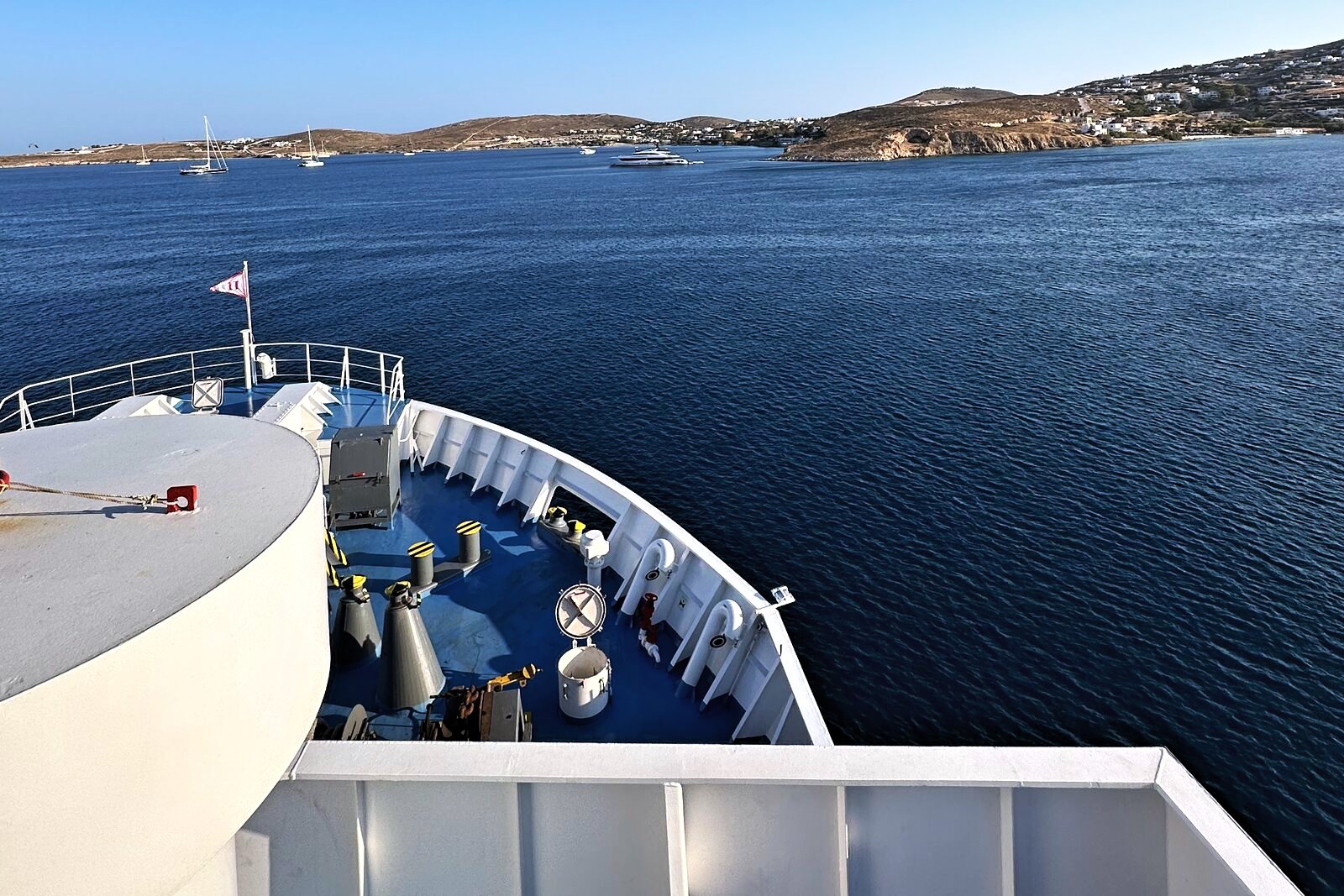
A fast ferry is a catamaran or monohull that sits low, moves at 30 to 40 knots and keeps you indoors in an aircraft-style cabin. A conventional ferry is a proper ship: slower, roomier, with outside decks, a bar, a shop and, on the longer routes, cabins. Rough guide to the trade-offs:
- Time. Piraeus to Santorini is about 5 hours fast and 6 to 8 hours conventional, or 8 to 10 on the slow boat down the western chain. Piraeus to Mykonos is about 2 hours 40 minutes fast and 5 hours conventional. Naxos to Santorini is just over an hour fast, two hours conventional.
- Price. Conventional economy from Piraeus starts at about €40 to €55 for most islands. Fast ferries typically cost half as much again to double, from around €60 to Naxos and €80 and up to Santorini.
- Comfort. Conventional ships sail smoother in a meltemi. Fast ferries slam in a head sea and some people are sick; sit low and central if you are prone.
- Reliability. Fast ferries are the first cancelled in strong wind. Conventional ships are the last.
- Luggage. Fast ferries ask you to leave big bags in racks on the car deck. Conventional ships let you keep them with you.
The easy rule: fast ferries for short daytime hops when the forecast is calm, conventional ferries for long legs, August crossings and anything that connects to a flight.
Seats and cabins
Economy on a Blue Star ship means any seat in the public lounges, on deck or at the café: fine for five hours in daylight. Air seats are reserved reclining seats in a quieter lounge, worth the extra €10 or so on a full August sailing. Cabins, two- or four-berth with a shower, come into their own on the long western loop and on the early morning Piraeus departures, when you can sleep from 7am to Naxos. Expect to pay roughly €85 to €130 a head for a berth from Piraeus, against €45 to €55 in economy; inside cabins are cheapest. Fast ferries sell economy, business and VIP, which mainly buy you legroom and a quieter saloon.
Booking
Ferryhopper is the site to use. It shows every operator side by side, lets you build a multi-leg trip, issues e-tickets you show on your phone and sends alerts when something changes. The operators’ own sites, Blue Star, Seajets, Golden Star and Fast Ferries among them, sell the same tickets at the same price. There is no discount for booking direct and no penalty for using the aggregator.
- Summer timetables usually appear between February and April. Book the big August crossings as soon as they do, especially cabins and car spaces.
- Island-to-island hops in June or September can be bought a day or two ahead, except around 15 August.
- Children under about five travel free on most operators and older children pay a reduced fare; check each company.
- Taking a car on the ferry costs from about €85 each way from Piraeus (over €100 to Santorini); hiring on the island is usually cheaper and simpler.
- Some e-tickets must be exchanged for paper at the port; the booking confirmation will say.
When the wind stops play
The port authorities ban sailings when the meltemi passes a threshold, lower for high-speed craft than for conventional ships. If your ferry is cancelled, the operator rebooks you onto the next available departure at no cost or refunds the fare, and Ferryhopper will email and message you as soon as it knows. Refunds are not automatic; you have to ask. Delays of an hour or two in strong wind are routine on conventional ships, so never plan a same-day ferry-to-flight connection in July or August. Build in a buffer night on your departure island, or in Athens, before you fly.
Good island-hopping manners
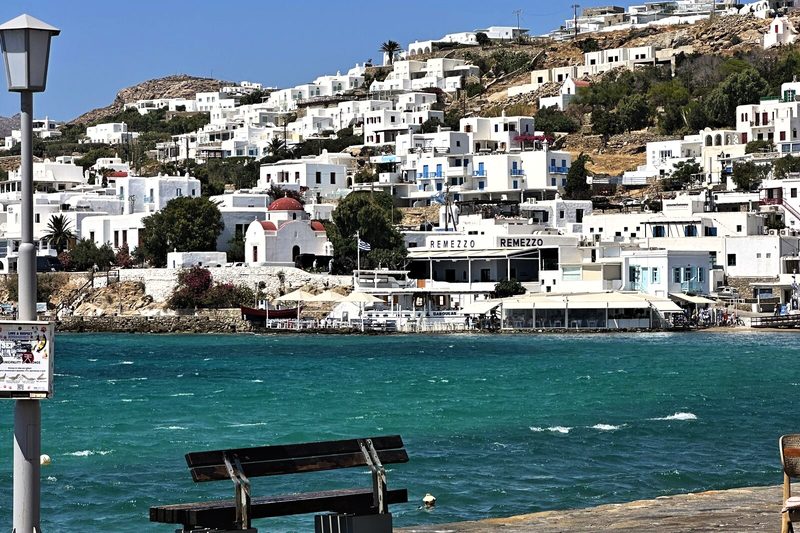
Buy frappé for the queue. Board promptly; the ship will not wait. Note your deck and stairwell, because every lounge looks the same. If you are travelling on an open deck, sit forward of the funnel and out of the exhaust. On arrival, let the lorries off first and walk, do not run, down the ramp. And look up as you leave the harbour: the view back at any Chora from the stern is the one you will remember.
The boat is not the gap between islands. It is where the islands begin.
Good to knowAllow an hour between connecting ferries at the same port, more if one is a fast ferry. Durations and prices here are typical for the 2026 season and change each year; check before you book.
CostFrom about €40 – €55 conventional and €60 – €90 fast from Piraeus; island-to-island hops from about €8 – €35
WherePiraeus, Rafina and Lavrio, Athens
BookCOMPARE SAILINGS
You might also like
- The Meltemi: The Wind That Runs the Cyclades
- Getting to the Cyclades: Flights, Ferries and the Athens Connection
- Cyclades Itineraries: Seven, Ten and Fourteen Days Done Well
Prices and opening times are approximate and change with the season. If something has changed, let us know.