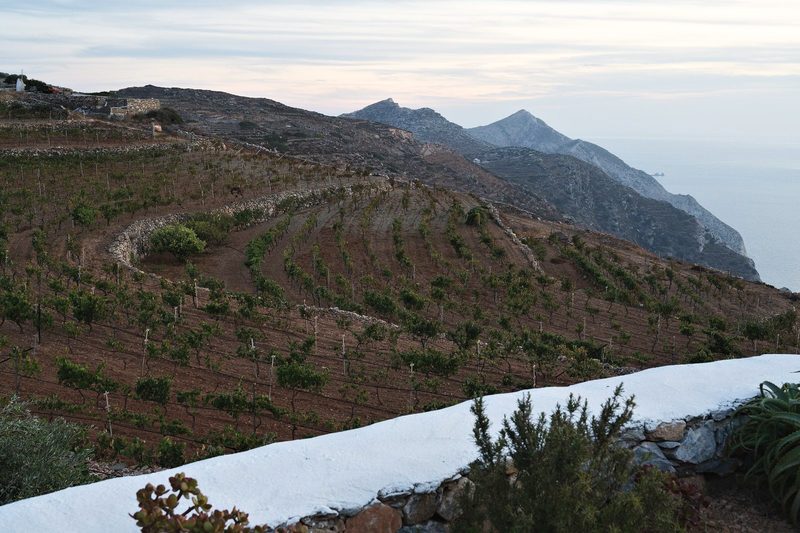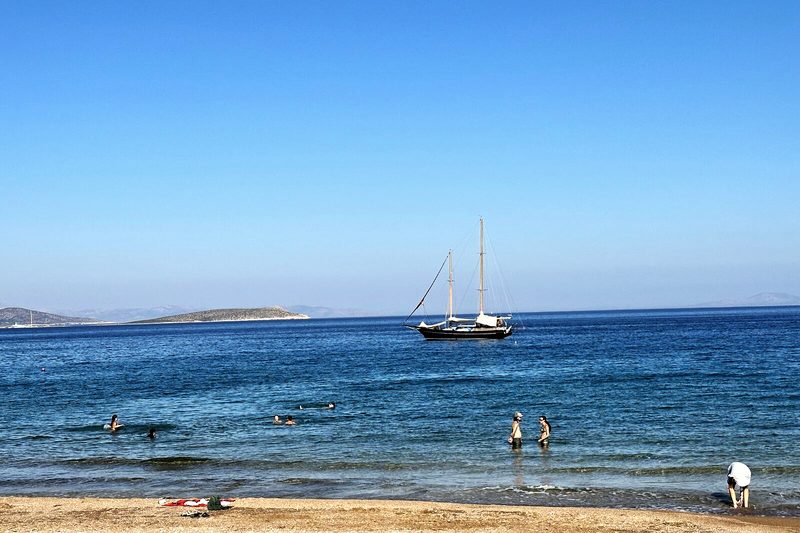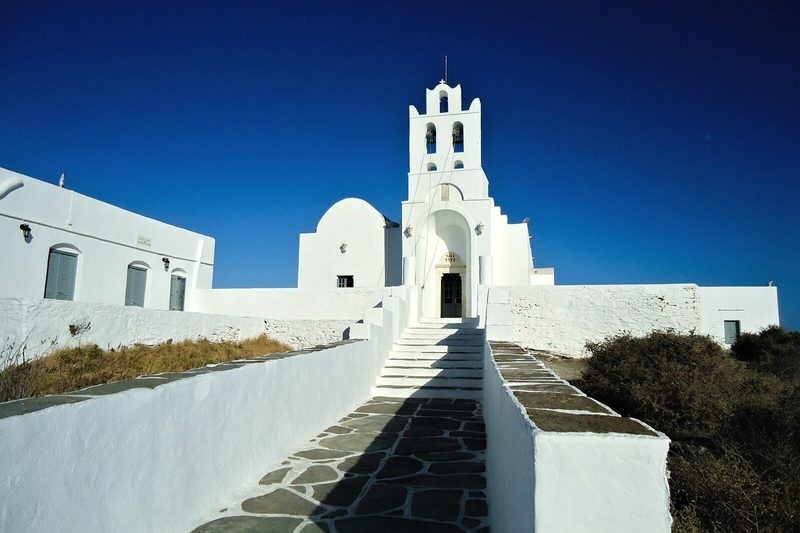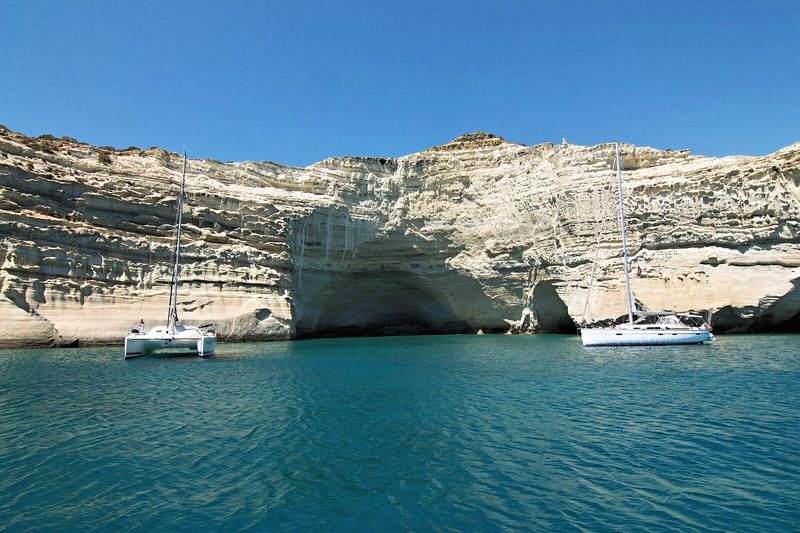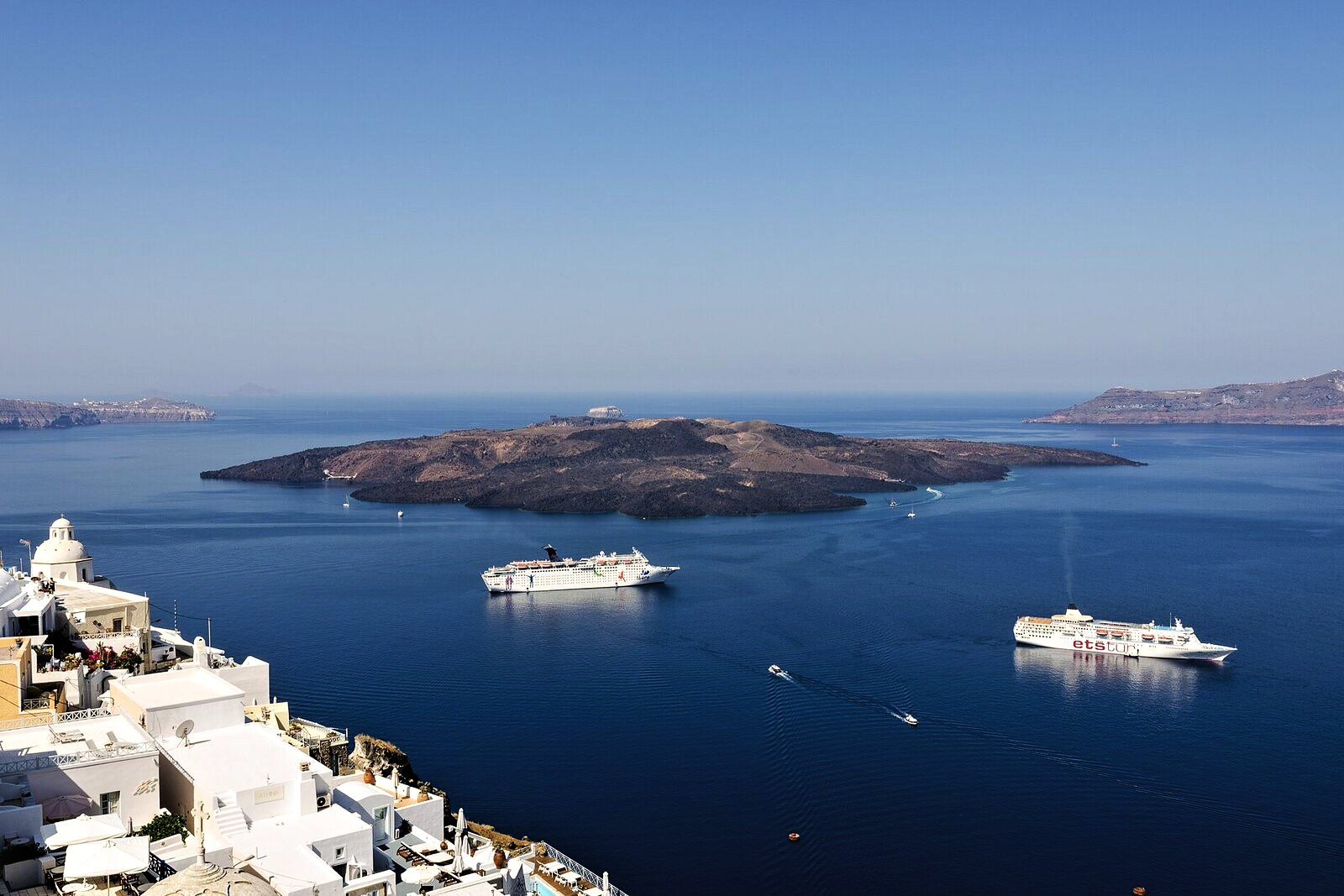
Santorini rewards a plan. Left to chance, a day here becomes a slow shuffle through Fira in the heat, a bus to Oia and a sunset shared with several thousand people. Done with a little thought, it becomes a dawn walk along the rim, a Bronze Age city before the coaches arrive, a long lunch in a vineyard and an evening on a black beach with the cliffs turning pink behind you. These fifteen cover the island from the caldera to the south coast. Prices are approximate and seasonal; archaeological sites and boats run shorter hours from November to March, and a few close entirely.
The Caldera Path: Fira to Oia
Ten kilometres along the rim, with the volcano for company.
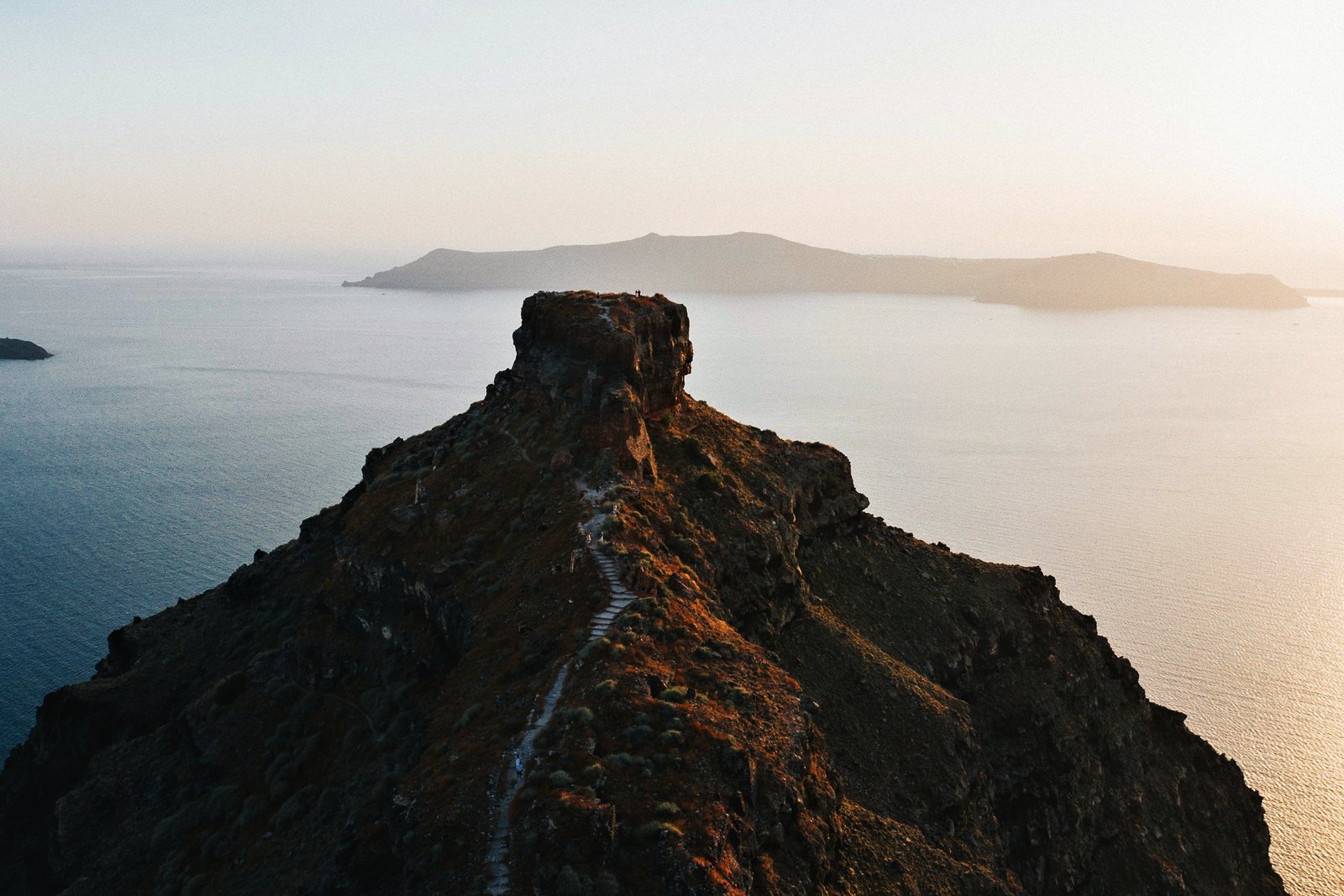
This is the walk of the Cyclades. Start in Fira at first light and follow the cliff-top path north through Firostefani and Imerovigli, past the fortress rock of Skaros, then up and over the ridge by the little chapel of Profitis Ilias and down into Oia. It is about 10 kilometres and takes three to four hours, with a steady climb in the middle section and no shade after Imerovigli. The reward is the caldera from every angle, the villages before they wake, and a breakfast in Oia that you have earned. Carry two litres of water, wear proper shoes, and take the bus back to Fira.
Good to knowStart by 7am in summer; the stretch north of Imerovigli is exposed and windy in the meltemi.
CostFree; bus back €2.20
WhereFira to Oia, Santorini
Akrotiri: The Bronze Age City
Three-storey houses, paved streets and drains, buried in ash around 1600 BC.
Akrotiri is Santorini’s Pompeii, and the better comparison for anyone who has seen both: a Minoan-era town of multi-storey houses, squares and streets with drainage, sealed under metres of pumice when the volcano erupted and excavated since 1967. A bioclimatic roof covers the whole site, so you walk the ancient streets in shade on raised walkways, looking into rooms where storage jars still stand. The famous frescoes – the boxing boys, the spring swallows, the ship procession – are in Athens and in the Museum of Prehistoric Thera in Fira, which is the right place to go afterwards. Give it ninety minutes and hire a guide if you can.
Good to knowOpen daily from April to October, from 8am to early evening but only 8.30am to 3.30pm on Mondays and Thursdays; from November to March it opens 8.30am to 3.30pm and is closed on Tuesdays. The Museum of Prehistoric Thera in Fira is closed on Tuesdays (€10). Combine with the Red Beach, five minutes away.
Cost€20 (reduced €10)
WhereAkrotiri, Santorini
Ancient Thera: The City on the Mountain
A Hellenistic town nearly 400 metres above two beaches.
The Spartans founded a city on the ridge of Mesa Vouno in the ninth century BC, and the Ptolemies turned it into a garrison town whose agora, temples, theatre and houses still line the spine of the mountain. It takes an effort to reach – a serpentine road climbs from Kamari to a car park and a final walk, or there is a steep footpath up from Perissa – and that is what keeps it quiet. The reward is the ruins, the wind, and a view straight down onto Kamari on one side and Perissa and Perivolos on the other. Go early; from April to October the site opens from 8.30am to 3.30pm and is closed on Wednesdays.
Good to knowCheck opening days before you climb: in November the site opens only from Friday to Sunday, from December to February it is closed, and in March it is shut on Tuesdays and Wednesdays. Carry water; there is nothing at the top.
Cost€10 (reduced €5)
WhereMesa Vouno, between Kamari and Perissa, Santorini
The Red Beach
A cove the colour of rust, under cliffs the colour of fire.
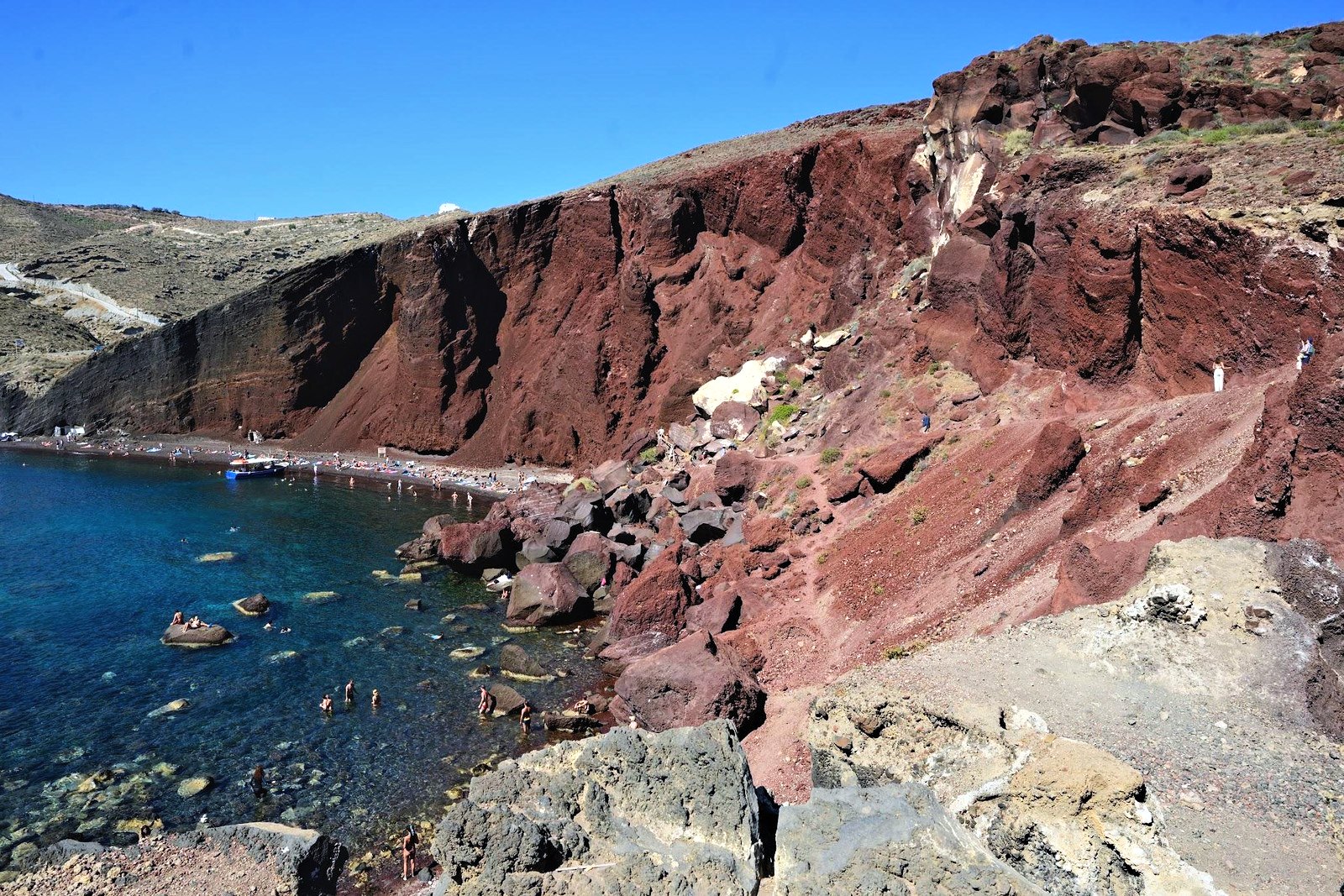
Of all Santorini’s volcanic beaches, Kokkini Paralia is the one that stops people in their tracks: a crescent of dark red sand and pebbles beneath a tall, crumbling cliff of the same colour, with blue water in front. It is a short scramble from the car park at Akrotiri over a rough path with steep drop-offs, so wear proper shoes and treat the rockfall warnings seriously. Facilities are minimal – a few sunbeds, no toilets – and the sand is hot and stony, so water shoes help. Arrive early or late to have it to yourself, or see it the easy way from one of the small boats that shuttle from the Akrotiri harbour.
Good to knowRockfall risk is real; keep away from the cliff base. Boats from Akrotiri also stop at the White Beach.
CostFree
WhereAkrotiri, Santorini
Vlychada: The Moonscape Beach
Wind-carved white cliffs and a fishing marina with the island’s best fish lunch.
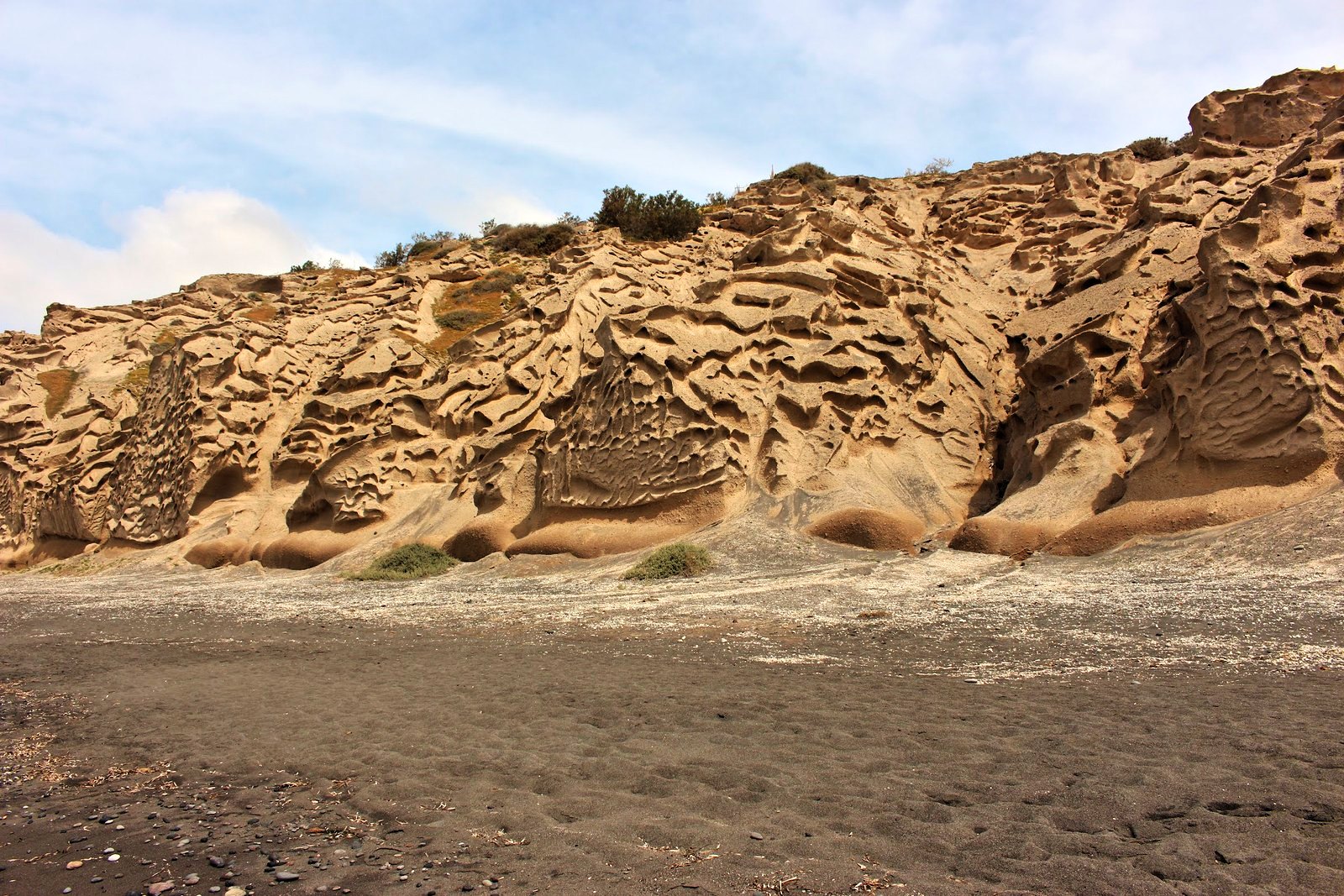
Vlychada is the south coast at its strangest and most beautiful: a long stretch of dark grey sand backed by pale pumice cliffs that wind and rain have sculpted into folds, pillars and hollows, like a sandstone canyon dropped by the sea. The two brick chimneys of an old tomato factory – now the Tomato Industrial Museum – rise at one end, and a small marina holds the fishing boats that supply To Psaraki on the slope above. Sunbeds are cheap, crowds are thin, and the water is clear. It is about 10 kilometres from Fira; drive, or take one of the three daily buses.
Good to knowSunbeds are among the cheapest on the island. Combine with lunch at To Psaraki and a look at the Tomato Museum.
CostFree; sunbeds a few euros
WhereVlychada, Santorini
A Sunset Catamaran Cruise
Five hours on the water, dinner on deck, the sun going down behind the boat.
The caldera is best understood from the sea, and the classic way to do it is a late-afternoon catamaran: out from Ammoudi or the port, down the inside of the cliffs past Fira and Athinios, a swim at the Red and White beaches under Akrotiri, a stop at the hot springs, then a barbecue on deck as the sun drops into the sea. Sunset Oia Sailing runs several shared cruises a day from Ammoudi, including a cheaper morning version, with snorkelling gear, meals and drinks included; Caldera Yachting, based in Fira, has the biggest fleet and offers both shared and private boats. Book a few days ahead in summer.
Good to knowPrivate charters start from about €800. Bring a jumper for the sail home.
CostShared sunset cruises about €110 – €130 per person; morning cruises from about €79
WhereDepartures from Ammoudi (Oia) and the Fira area, Santorini
BookBOOK NOW
Pyrgos: The Village on the Hill
A Venetian kastelli, blue domes and the best Easter in the Cyclades.
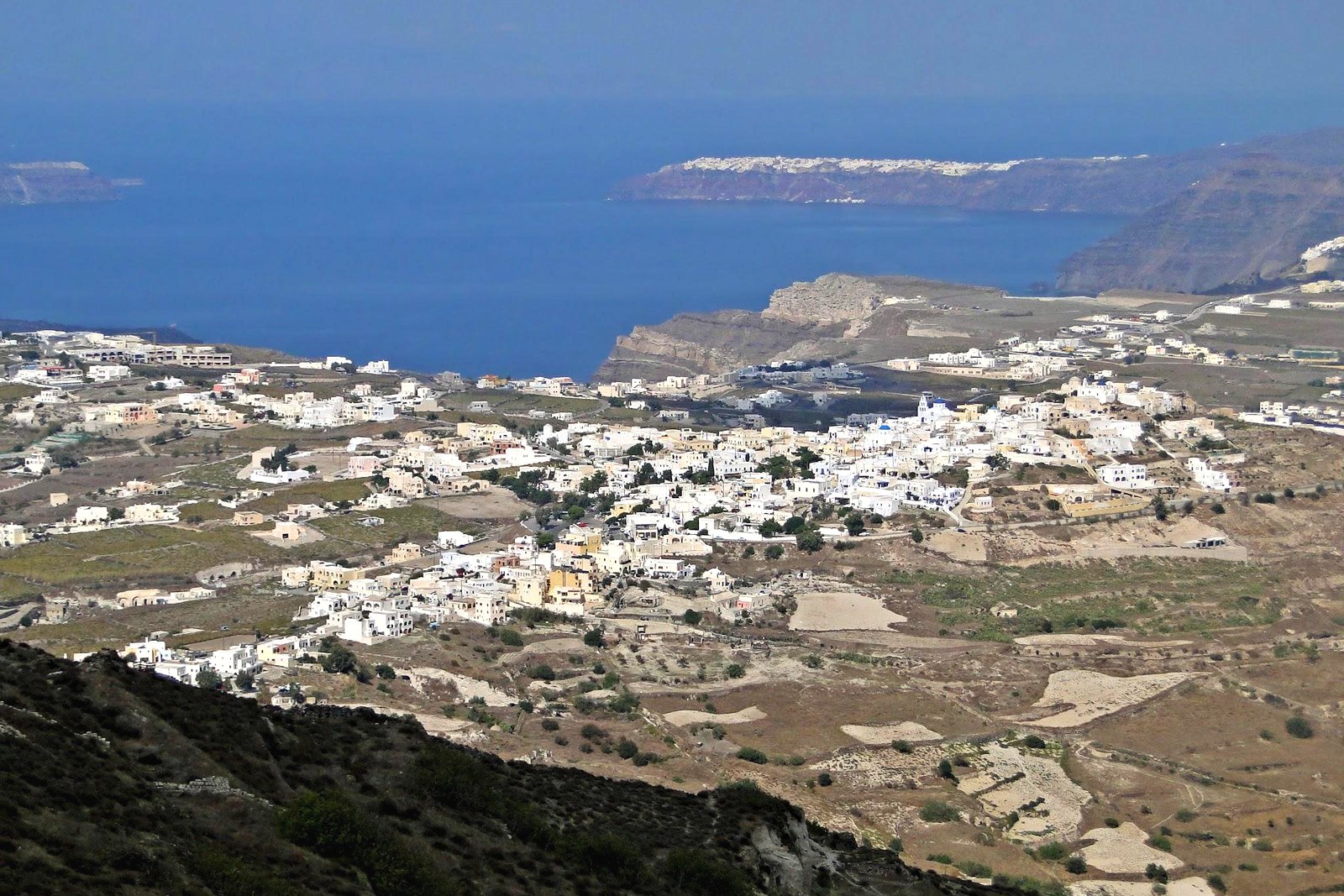
Pyrgos is Santorini’s highest village and the one that has kept its character most intact. Its lanes spiral up through whitewashed houses to a medieval kastelli, built as a labyrinth against pirates, with churches tucked into every turn and the whole island spread out below. Above it, the monastery of Profitis Ilias crowns the mountain. Come in the late afternoon when the day-trip buses have left, climb to the top, then settle in at a café on the square. On Good Friday the village is lit with thousands of tins of fire along the walls and rooftops, and the Epitaphios procession winds through the lanes – the island’s most moving night.
Good to knowSanto Wines is just below the village; combine the two.
CostFree
WherePyrgos, Santorini
Megalochori: Bell Towers and Canavas
The wine village, bougainvillea on every wall.
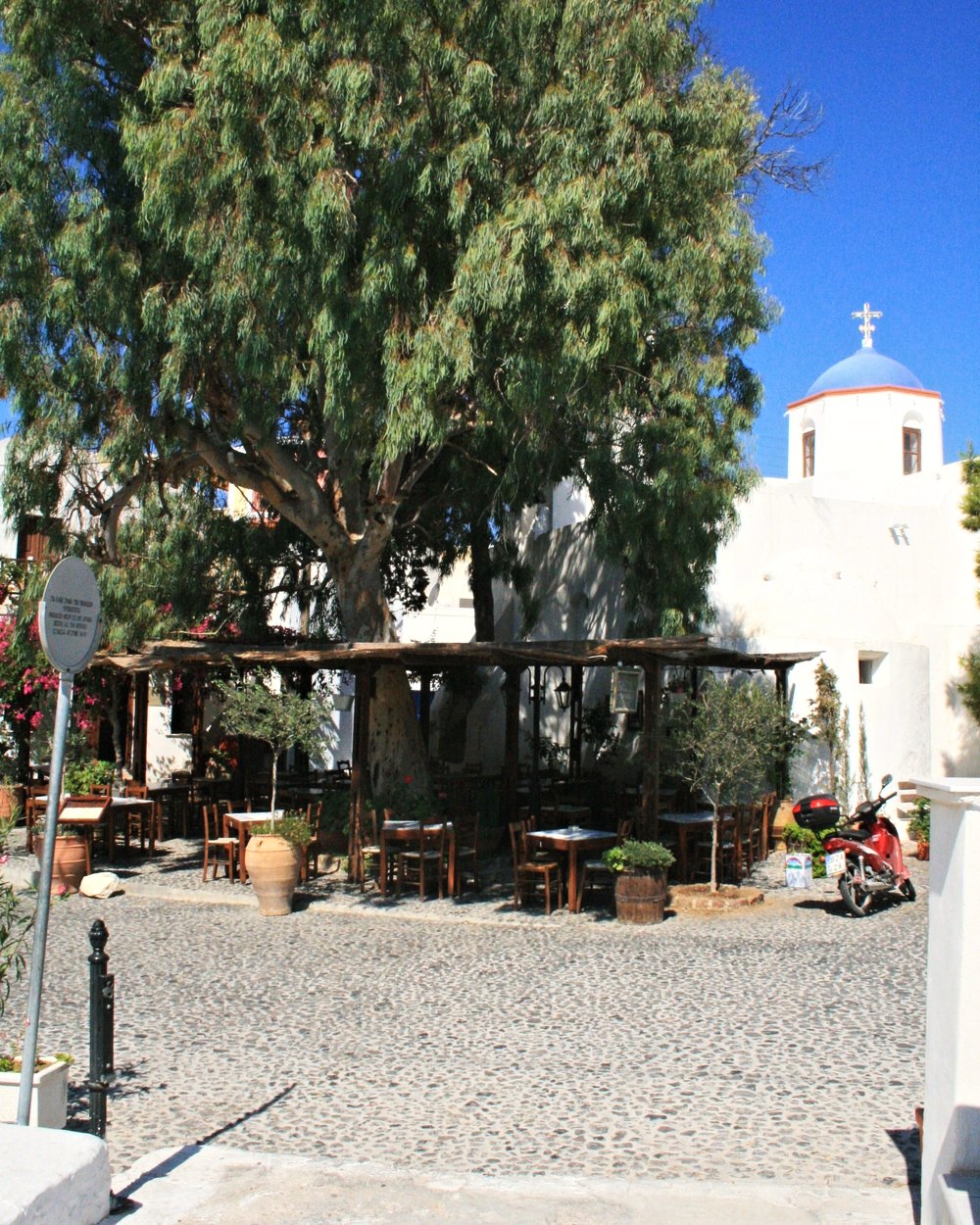
Megalochori lies in the middle of the vineyards on the road to Akrotiri, and its heart is a small square shaded by a tall church bell tower, with tavernas on the cobbles and lanes running off in every direction. The old captains’ houses and canavas – the cave wineries dug into the rock – date from the 17th century, and several have been restored and opened; the village was the home of the island’s wine trade. Gavalas, the fifth-generation family winery, is in the village itself, and Venetsanos is just above the port. Walk it in the late afternoon, then eat at Raki on the square, under a vine pergola facing the bell tower.
Good to knowParking in and around the village; a taxi from Fira is about €20.
CostFree
WhereMegalochori, Santorini
Santo Wines: The Co-operative on the Rim
Twelve hundred growers, one enormous terrace.
Santo Wines is where most visitors meet Assyrtiko for the first time, and it is a good introduction: the island’s co-operative, with roots in 1911, pouring flights of its dry whites, barrel-aged Nykteri and sun-dried Vinsanto on a terrace that runs along the caldera edge above the ferry port. Tastings range from a few glasses to vertical flights of older vintages, with platters of local cheese, fava and tomato fritters to order. The shop sells the full range, plus capers, fava and tomato paste to take home. It is the island’s busiest winery and a coach stop; come for the tasting flight rather than a meal, book the terrace, and expect a minimum spend on the front-row tables. Mid-morning is calm, and the view is the same.
Good to knowOpen year-round; reserve a terrace table for sunset in summer.
CostTasting flights from about €18 to €55; platters extra
WherePyrgos, Santorini
BookBOOK NOW
Venetsanos Winery: Gravity and the View
A 1947 winery built down the cliff above the port.
Venetsanos was built in 1947 on the cliff above Athinios, and built cleverly: the grapes went in at the top and the wine came out at the bottom, moved by gravity through a series of levels cut into the rock, so that barrels could be rolled straight down to the ships. The winery has been restored and the old chambers are part of the tour; the terrace, high above the port with the whole caldera in front of it, is one of the great places on the island for a glass of Assyrtiko at sunset. Tastings come with or without food, and sunset sessions book out days ahead.
Good to knowBook ahead for sunset; the tour of the gravity-flow cellars is worth the extra time.
CostCellar tour about €12; tasting flights from about €35
WhereMegalochori, above Athinios port, Santorini
BookBOOK NOW
Gavalas Winery: Five Generations in a Village Yard
Small, unhurried, and the only place to taste Katsano.
Gavalas is the family winery in the lanes of Megalochori, where George Gavalas and his son Vagelis make around 90,000 bottles a year from Assyrtiko, Aidani, Mandilaria and Mavrotragano – and from Katsano and Voudomato, two rare local grapes that no one else on the island bottles. The tasting happens in the old canava and the vine-shaded yard, walk-ins are welcome in season, and nobody hurries you. It is the antidote to the big terraces: a chance to ask questions, taste the Vinsanto, and buy a bottle you will not find at home. Combine with a walk around the village.
Good to knowOpen April to October, 11am to 7pm; book online if you want a set time.
CostFlights of four to six wines; prices on the online booking page
WhereMegalochori, Santorini
BookBOOK NOW
Art Space: Wine, Art and a Pumice Cellar
An 1861 canava turned gallery, distillery museum and winery.
Art Space is the most unusual winery visit on Santorini. The Argyros family’s canava in Exo Gonia dates from 1861, and in 1999 Antonis Argyros reopened its pumice-carved chambers as a gallery of contemporary Greek painting and sculpture, a folk museum of the old rakidio with its stills and ovens intact, and a small winery making Vinsanto, Nykteri and the dry white Saint August. The tour winds through the caves in a mix of wine history and art, and ends with a tasting. It is open daily from 11am to sunset but strictly by appointment, so call or email ahead.
Good to knowVisits by appointment only; combine with lunch at Metaxi Mas or Aroma Avlis nearby.
CostTastings from about €10
WhereExo Gonia, Santorini
BookENQUIRE NOW
The Volcano and the Hot Springs
Walk on the newest land in Greece, then swim in warm, rust-coloured water.
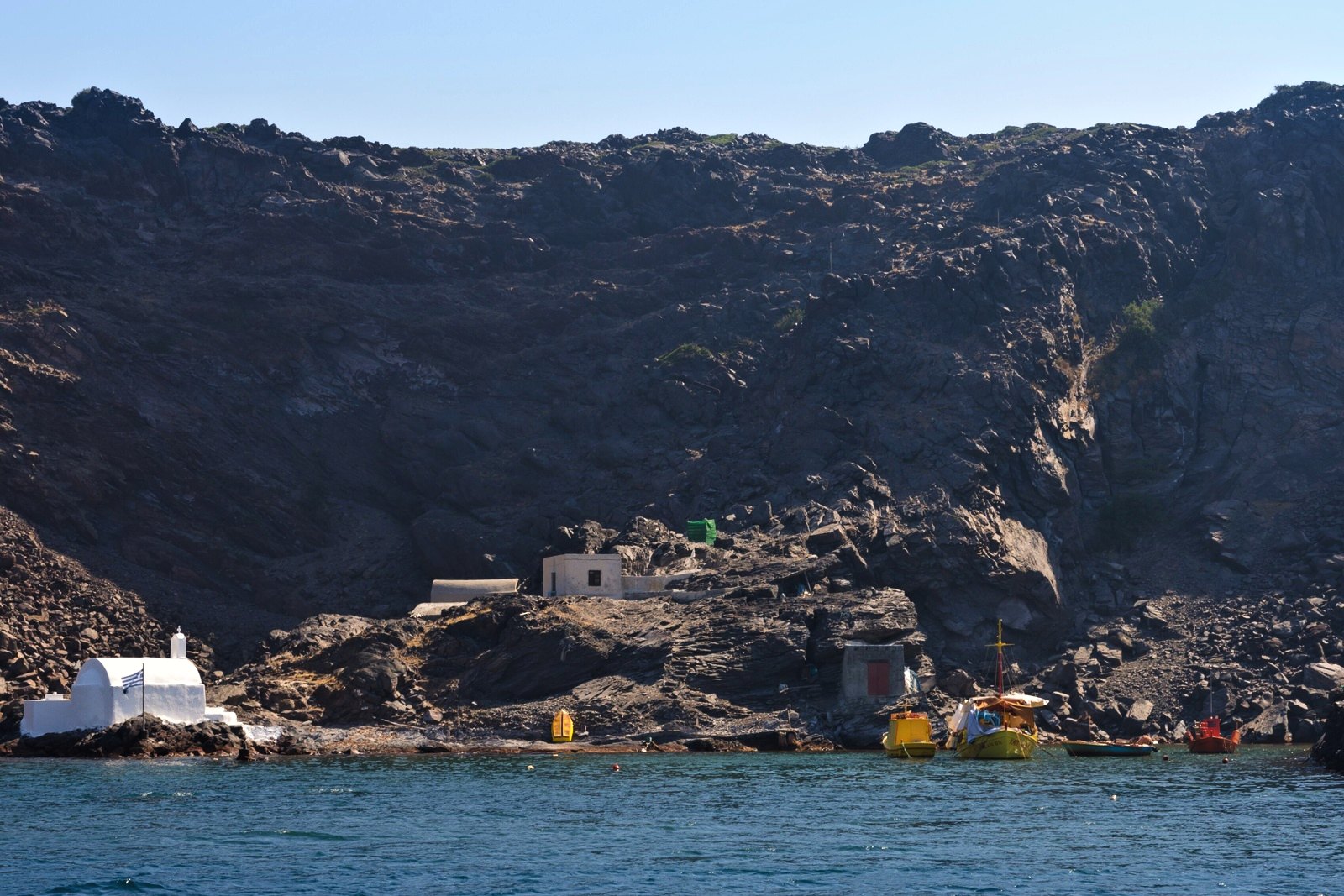
The two Kameni islets in the middle of the caldera are the volcano’s active heart, and the boat trip out to them is the island’s most popular excursion for good reason. From the Old Port below Fira or from Athinios, boats cross to Nea Kameni, where a hot, shadeless half-hour walk climbs to the crater rim and its sulphur vents, then move on to Palea Kameni, where you jump off the boat and swim into a cove of warm, iron-stained water fed by springs at around 30–35°C. Longer versions add Thirassia for lunch. Wear shoes you can walk in, a swimsuit you do not mind staining, and a hat.
Good to knowEntry to Nea Kameni is €5 on top of the boat fare. Trips run roughly mid-March to November.
CostBoat trips from about €35; Nea Kameni entry €5
WhereDepartures from the Old Port (Fira) and Athinios port, Santorini
BookBOOK NOW
Perivolos Beach Clubs
Five kilometres of black sand, sunbeds to the horizon, lunch by the water.
Perivolos is the longest black beach on the island, a continuation of Perissa running south to Agios Georgios, and it is where Santorini goes to lie down. The beach is lined with clubs and bars that rent sunbeds, serve cocktails and lunch, and keep the music at a civilised level by day; Seaside Santorini (the former Seaside by Notos), with its beachfront restaurant, sunset lounge and boutique, is the most polished of them. The water shelves gently, the sand is dark and hot, and the whole strip is sheltered from the worst of the meltemi. Bring a towel for the sand, book a sunbed on a summer weekend, and stay for the sunset over the cliffs.
Good to knowSunbed prices vary by club; most close from November to April.
WherePerivolos, Santorini
Kamari Open-Air Cinema
A film under the stars, in a garden, with a beer.
Cine Kamari has been showing films outdoors in a garden a few minutes’ walk from Kamari beach for decades, and it remains one of the loveliest evenings on the island. Doors open at 8.30pm, the film – usually a current English-language release, with Greek subtitles – starts at 9.30pm, and there is a bar for drinks and snacks before and during. No reservations are taken, so arrive early on a popular night; the season runs from late spring to early autumn. Pair it with dinner on the Kamari promenade and you have the perfect low-key alternative to another sunset in Oia.
Good to knowSeason May to early October; no reservations; cash is useful; check the programme online.
CostAbout €8 – €10
WhereKamari, Santorini
You might also like
- Santorini: Beyond the Caldera Postcard
- The 8 Best Wineries in Santorini
- The Best Beaches in the Cyclades
Prices and opening times are approximate and change with the season. If something has changed, let us know.