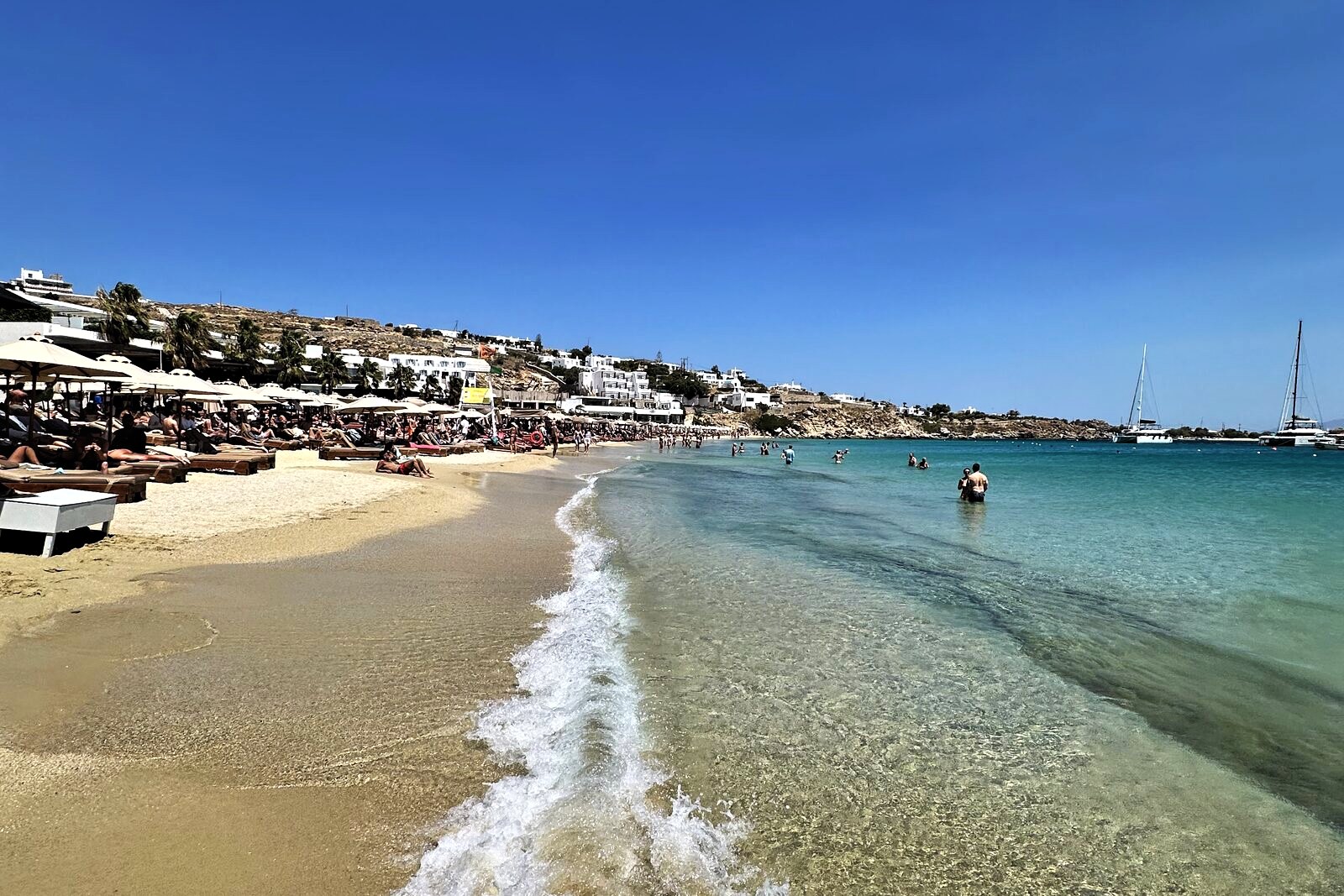
Warm shallows, a bucket, a grandmother at the next table passing over a plate of chips. Greeks adore children, tavernas expect them at 10pm, and the sea in the Cyclades is as safe as the Mediterranean gets: no tides to speak of, no surf on the sheltered coasts, water you can see to the bottom of. The challenge is not the welcome; it is heat, wind, stairs and distance. Pick islands with sandy south-facing beaches and a flat harbour town, go in June or September if you can, keep the ferry days short, and the Cyclades become one of the easiest places in Europe to take a family.
The best islands for families
Naxos is the one. Agios Prokopios, Agia Anna and Plaka are a long run of golden sand that shelves gently, with sunbeds, tavernas and shade; the lagoon at Mikri Vigla’s south side is knee-deep and calm for toddlers; the mountain villages give you a day off the beach. Hotels are family-sized and fairly priced, the town is flat along the harbour and the ferries from Piraeus are big and steady. For children from one to fifteen it works.
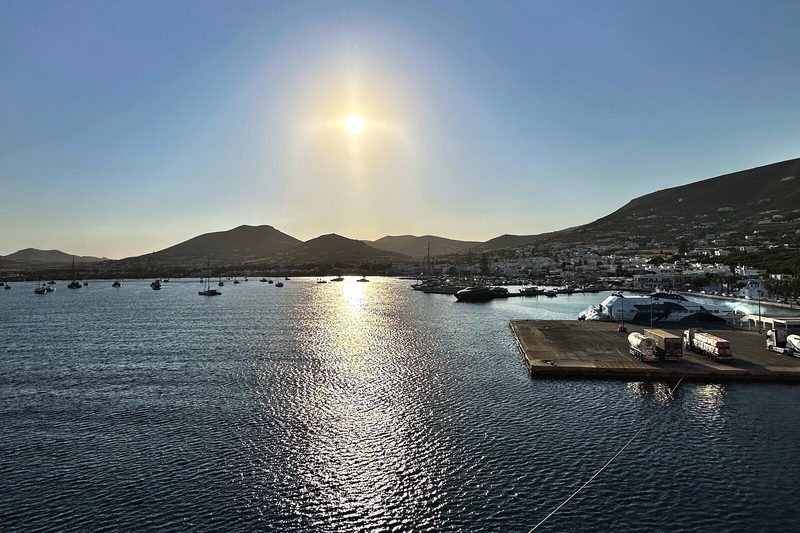
Paros comes second. Kolymbithres, with its rock pools, is shallow and sheltered, Santa Maria is shallow too, though breezy in the afternoon, Aliki on the south coast is small and gentle, and Naoussa’s harbour is made for an evening ice cream. Teenagers can learn to kitesurf at Pounda; everyone can take the ten-minute ferry to Antiparos for the cave and the sand at Soros.
Milos suits children of six and up who will love a boat trip. Paliochori and Provatas on the south coast are calm and sandy, Sarakiniko is a moonscape playground, the Kleftiko boat is the day they will talk about, and the Mining Museum is better than it sounds. Pollonia is a good, quiet base.
Syros is the sleeper. Ermoupoli is a real town with squares to run in, Galissas and Kini are shallow bays, the ferries from Piraeus are short and the prices are the gentlest of the main islands. Good for a family with a baby who want pavements, pharmacies and a hospital nearby.
Sifnos is for families who walk and eat: Platis Gialos is a long, calm, sandy bay with tavernas on the sand, Vathi is a sheltered horseshoe, and a pottery lesson is an easy rainy-hour fallback that does not rain.
Koufonisia is the small one for a few days: no cars to speak of, a sandy coast you can walk, water the colour of a swimming pool at Pori. Not for a pushchair, perfect for a six-year-old.
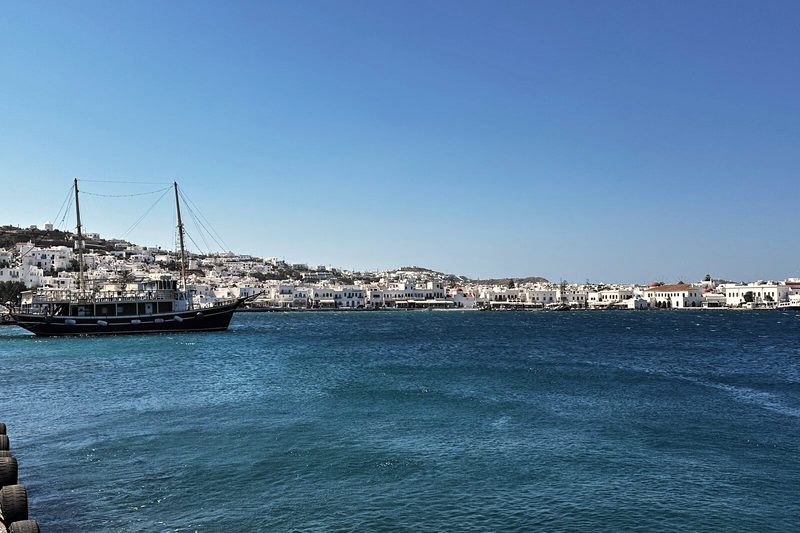
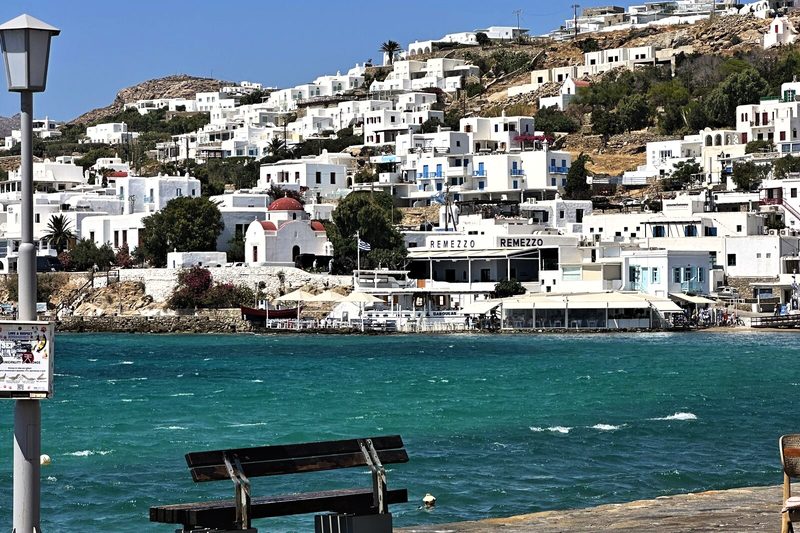
Santorini and Mykonos work for two or three nights rather than a week. Santorini’s black-sand beaches at Kamari and Perissa have sunbeds and shade, though the sea deepens quickly, so keep small children within reach; the caldera is for an afternoon with the cable car. Mykonos has beautiful south-coast beaches at Ornos, Platis Gialos and Agios Ioannis, but the prices and the crowds will test you.
Beaches that work
- Agios Prokopios and Plaka, Naxos. Sand, sunbeds, shade, shallow water, tavernas. The gold standard.
- Mikri Vigla south, Naxos. The toddler lagoon, with the kite school on the other side for older siblings to watch.
- Kolymbithres, Paros. Granite rock pools and sand coves; bring water shoes.
- Aliki, Paros. A village beach with the taverna five steps from the towel.
- Paliochori, Milos. Sand and pebbles, sunbeds and warm springs bubbling up by the shore; it gets deep quickly, so stay beside small swimmers.
- Platis Gialos, Sifnos. The long calm bay, with rooms on the sand so naps are easy.
- Galissas, Syros. A sheltered horseshoe with a gentle slope and a bus from town.
- Kamari, Santorini. Black sand that gets hot and water that deepens quickly, so stay beside small swimmers; sunbeds and a promenade for evening scooters.
- Agali, Folegandros. The sheltered sandy bay below Chora, calm and easy, with a couple of tavernas.
- Pori, Koufonisia. Shallow turquoise water, soft sand, no sunbeds, bring an umbrella.
Ferries with children
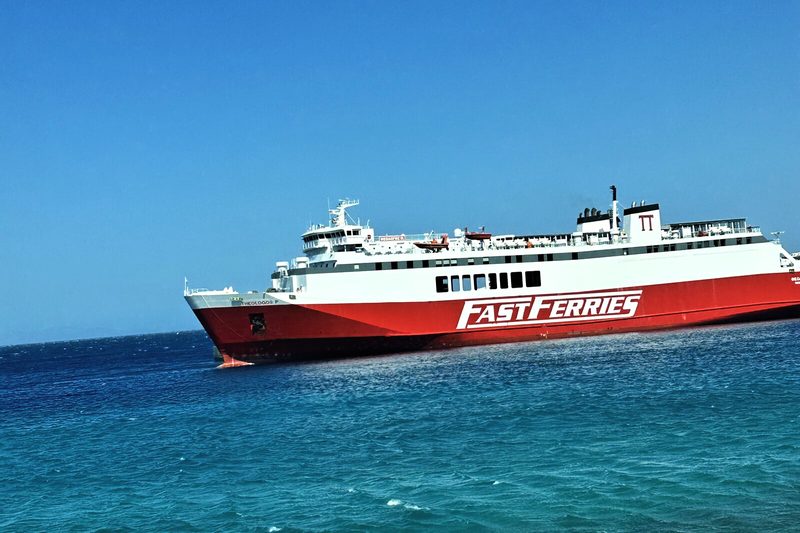
Choose conventional ships for anything over an hour: open decks to run on, cafés, proper loos, a cabin for a sleep on a long crossing and a far smoother ride in the meltemi. Under-fives usually sail free and children up to about ten pay a reduced fare; book them as named passengers. Fast ferries keep everyone in their seats, which is fine for a 45-minute hop and hard work for three hours. Bring snacks, a card game and travel sickness tablets if anyone is prone, and sit low and central on a fast boat. Pushchairs fold and go on with you; the ramps are steep but staff help.
Getting around
Hire a car on Naxos, Paros and Milos and ask for a child seat when you book; agencies have them, but not always on the day. Buses on all the main islands are cheap, air-conditioned and fine with a folded pushchair, and run to the main beaches every half hour or so in summer. Scooters and ATVs are not for families. Most Choras are stepped, so a baby carrier beats a pram in Santorini, Mykonos, Folegandros and Serifos; Naxos town, Naoussa, Adamas and Ermoupoli are flat enough for wheels.
Heat, wind and sun
Stay out of the sun from 11am to 4pm in July and August, which is what everyone else does. Beaches with shade or sunbeds are worth the €15. The meltemi throws sand and takes umbrellas, so on a windy day go to the south coast or the sheltered side of a bay; our guide to the wind lists them island by island. Water shoes save feet on pebbles and sea urchins. Pack high-factor cream and rash vests, and buy the rest at the island pharmacy, which is very well stocked. Sea temperatures reach about 22°C in June and 25°C in August, so even the smallest swimmers stay in for hours.
Eating out
Tavernas are the easiest restaurants in Europe for children. Nobody minds noise, high chairs appear from nowhere and the menu already has the hits: chips, grilled chicken souvlaki, meatballs, pasta with tomato, tzatziki, bread, watermelon, loukoumades. Greeks sit down to dinner at 8.30pm at the earliest and later in August, but most island tavernas serve from noon without a break, so children can eat early; on the nights you join in, a late afternoon nap and a 7pm snack keep the peace. Breakfast is bakery territory: cheese pies, koulouri, a bougatsa with sugar on top.
Health and safety
Every main island has a health centre and a pharmacy with a doctor’s number on the door; Syros, Naxos and Santorini have hospitals. EU and UK visitors should carry their EHIC or GHIC and travel insurance besides; everyone else, Australians included, needs insurance that covers treatment in Greece. Tap water is better bottled on most islands. Lifeguards are rare outside the big resort beaches, and the sea, though calm, drops off quickly at some pebble coves. Jellyfish are uncommon; sea urchins on rocks are not. Pharmacies sell everything you forgot, including nappies, formula and after-sun.
Sand in the car, salt in their hair, asleep before the ferry leaves the harbour. That is a good holiday.
Good to knowFamilies with young children do best in June and September, when the sea is warm, the wind lighter and the beaches calmer. Prices are approximate and seasonal.
CostFamily rooms from about €120 per night on Naxos and Syros in June; sunbeds €10 – €30 a pair; children’s ferry fares free to half price
WhereCyclades, with Naxos, Paros, Milos and Syros first
BookBOOK FERRIES
You might also like
- Naxos: The Big-hearted Island
- The Best Beaches in Paros and Antiparos
- The Meltemi: The Wind That Runs the Cyclades
Prices and opening times are approximate and change with the season. If something has changed, let us know.