Quick answers
- What is the best month to visit the Cyclades?
- June, for a proper summer without the crush, or September, when the sea is still 23–24°C and the crowds thin after the first week. If you can choose, take the first three weeks of June or the last three of September.
- How warm is the sea in the Cyclades?
- About 19°C in May, 22°C in June, 24°C in July, 25°C in August, 23–24°C in September and 21–22°C in October. These are open-water averages off Naxos.
- Is it worth visiting the Cyclades in winter?
- Only for walking and quiet. From November to March ferries are few and most restaurants outside the main towns close; Syros and Naxos work best in winter.
- When is Greek Easter in 2027?
- Orthodox Easter falls on 2 May 2027, with Holy Week from 26 April, so the islands fill at the very end of April.
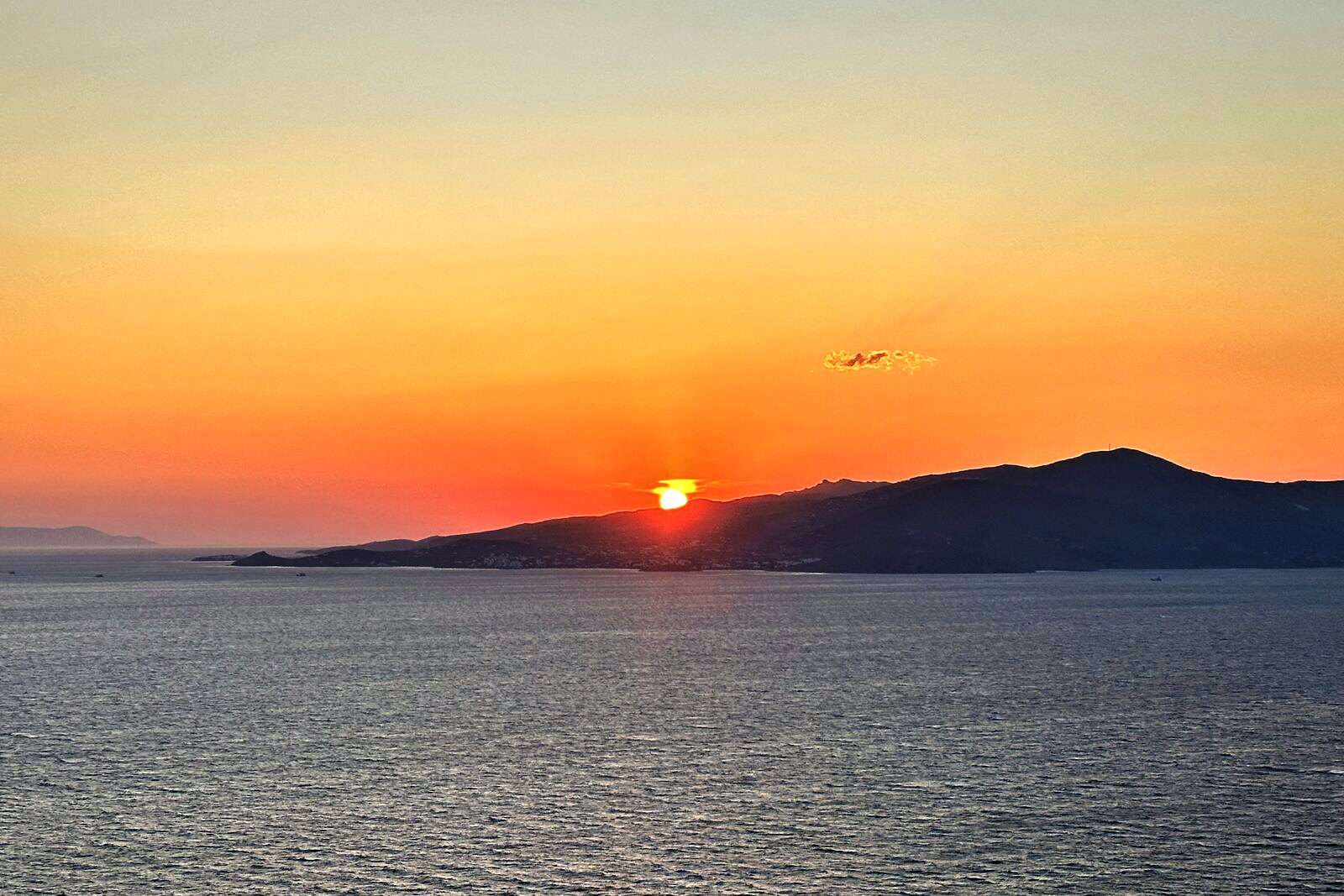
Thyme on the hillside. A harbour café with every chair free. Water clear enough to count the stones at six metres. The Cyclades you picture is mostly a May, June or late-September picture, and the honest answer to when you should go is: not August, unless August is the only month you have. The islands run on a sharp season. From Easter they wake up, by July they are full, by mid-August they are heaving, and by late October most of them have gone back to sleep. Within that arc every month has a different character, a different price and a different sea.
The year at a glance
Sea temperatures are the open-water averages off Naxos, which sit in the middle of the archipelago; Santorini and Milos run a touch warmer, Andros and Tinos a touch cooler.
| Month | Air (day, °C) | Sea (°C) | Crowds | Prices | Wind |
|---|---|---|---|---|---|
| January | 13 – 15 | about 16 | Empty | Low; most hotels shut | Winter southerlies, some rain |
| February | 13 – 15 | about 15 – 16 | Empty | Low | Changeable |
| March | 15 – 17 | about 16 | Empty; Easter prep | Low | Changeable, warming |
| April | 18 – 21 | about 17 | Quiet; busy in Holy Week (from 26 April in 2027) | Low to moderate | Light; the first warm days |
| May | 22 – 25 | about 19 | Quiet after Easter (2 May in 2027) | Moderate | Mostly calm; meltemi begins mid-month |
| June | 26 – 29 | about 22 | Busy at weekends | Rising | Gentle meltemi with calm spells |
| July | 27 – 30 | about 24 | Busy | High | Meltemi settling in, strongest from mid-month |
| August | 27 – 30 | about 25 | Very busy, peaking 10 – 20 August | Highest | Strongest meltemi, force 5 – 8 |
| September | 25 – 27 | about 23 – 24 | Busy early, easing after mid-month | High then falling | Fading meltemi |
| October | 22 – 24 | about 21 – 22 | Quiet | Falling fast | Light; first autumn rain |
| November | 17 – 19 | about 18 – 19 | Empty | Low; many hotels close | Southerlies, rain |
| December | 14 – 16 | about 17 | Empty | Low | Winter |
Spring
April belongs to the Greeks. Orthodox Easter, the islands’ biggest festival, usually falls in April, though in 2027 it comes late, on 2 May, so Holy Week runs from 26 April and the islands fill at the very end of the month. If your dates line up it is the single best reason to come out of season: lamb on the spit, candlelit processions, fireworks over the harbour in Syros, the icon carried from door to door on Folegandros. Outside Easter week the islands are green, flowery and sleepy, the sea is bracing at about 17°C and many beach tavernas have not yet put out their chairs. Bring a jumper for the evenings.
May is the connoisseur’s month, once the Easter weekend (2 May in 2027) has passed. Daytime temperatures sit in the mid-20s, the hills are still green, the wildflowers are at their peak and the sea has crept up to about 19°C, which is swimmable on a hot afternoon and glorious by the end of the month. Hotels are open at shoulder rates, often half the August price, most seasonal ferry routes are running by mid-May, with the last of the summer sailings added in June, and you can walk into any restaurant. The meltemi starts to stir after the middle of the month but rarely bothers anyone.
Summer
June is the best all-round month if you want a proper summer without the crush. The sea reaches about 22°C, the days are long and hot and the islands are busy but not full. Early June is still shoulder season on price; by the end of the month you are paying high season. The meltemi blows some days and not others, which is ideal: enough wind to cool the afternoons, not enough to cancel ferries.
July is the first full-throttle month. Expect high 20s to 30°C and a sea at 24°C, every taverna open, every boat trip running and every beach club in business. The meltemi arrives in earnest from mid-July, so pick your beach by the wind and read our guide to it before you book a north-facing terrace. Book ferries and rooms well ahead.
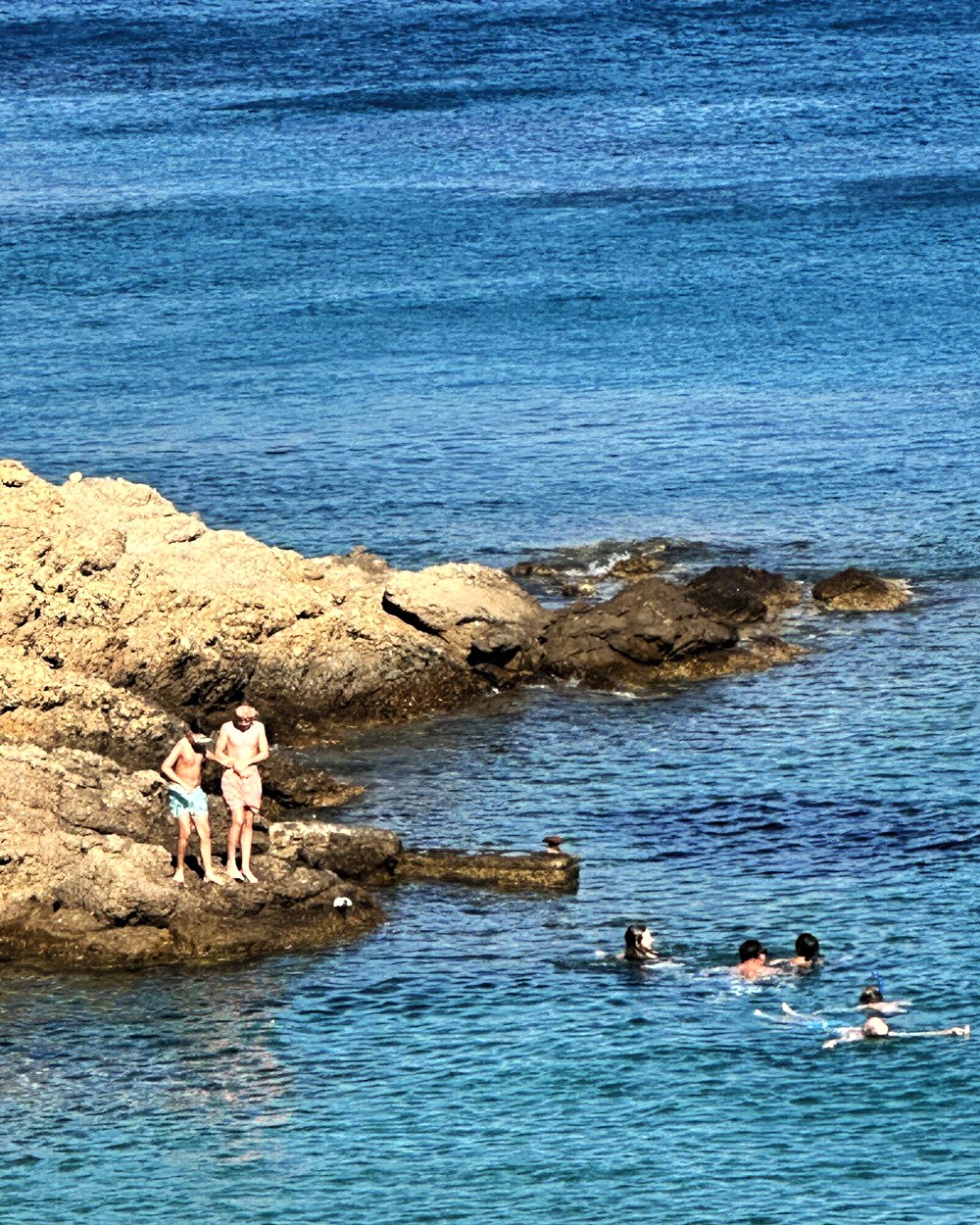
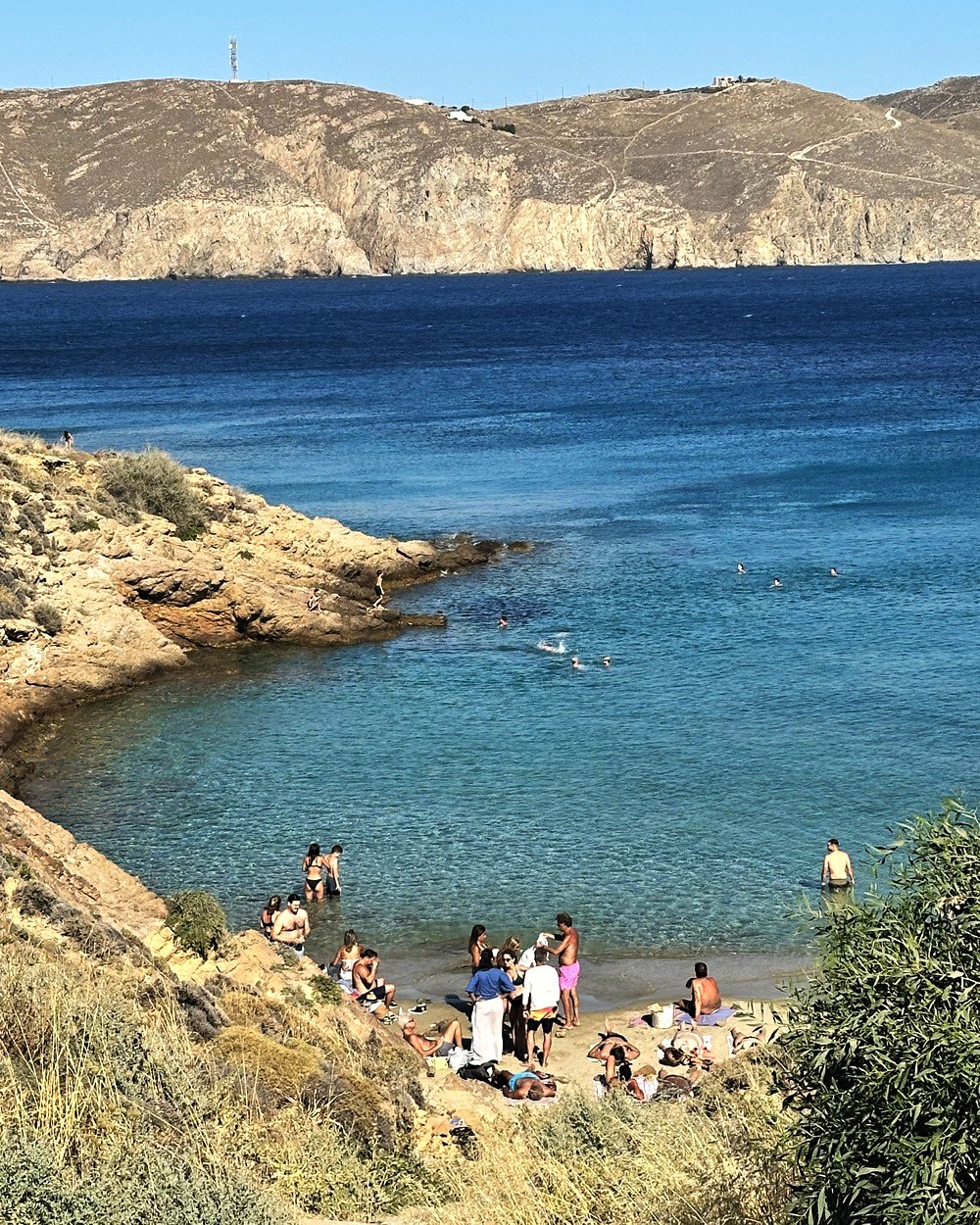
August is the islands at their fullest. The sea is at its warmest, about 25°C, and the nights are warm enough to eat outside until 1am. It is also the month of the strongest meltemi, the highest prices and the biggest crowds, which peak around the Panagia on 15 August when the whole of Greece is on holiday. Santorini, Mykonos and Paros feel it most; Sifnos, Serifos, Tinos and Amorgos absorb the crowds with more grace. If August is your month, book by March, choose a sheltered coast and travel by conventional ferry.
Autumn
September is the month many island regulars would not swap. The sea holds its heat, around 23°C to 24°C, the meltemi fades through the month, the light turns gold and the crowds thin steadily after the first week. Prices fall from mid-month. Everything is still open. The only trade-off is the odd grey day towards the end, and the first chance of a shower.
October is quiet and lovely in the first half, with sea at about 21°C and daytime temperatures in the low 20s. By the middle of the month beach tavernas start stacking chairs and the smaller islands wind down; by the end the ferry timetables thin and some hotels close. Santorini, Mykonos, Paros and Naxos keep going longest. Bring a light jacket and expect a rain shower or two.
Winter
From November to March the Cyclades are for walkers, writers and people who want Greece to themselves. The sea is cool, the ferries are few, the weather swings between brilliant blue days and wet south-westerly gales, and most restaurants outside the main towns are shut. Syros, with its working capital, and Naxos, with its farms and villages, are the islands that function best in winter. Santorini is open, if hushed. Nowhere else is really a holiday destination between December and February, but it is a wonderful place to disappear.
The case for the shoulder
Put simply, you get more for less. A room that costs €350 in August costs around €180 in late May or early October. Tavernas have time to talk to you. Ferries are easier to book and less likely to be cancelled. The sea is warm from June to October, so the only months that genuinely ask you to be brave are April and May. Beaches without sunbeds are empty. And the light, in May and again in late September, is softer and kinder than the white glare of high summer.
If you can choose: the first three weeks of June, or the last three weeks of September. If you have school holidays: July over August, and the first half of July over the second. If you want the full Greek summer at its loudest and warmest: August, eyes open, booked early.
Come when the islands can breathe, and they will breathe for you.
Good to knowTemperatures and sea readings here are long-term averages; a given week can run a few degrees either way. Many hotels and restaurants close from early November to Easter.
CostRooms roughly €100 – €180 in May and October against €250 – €400 for the same room in August; conventional ferry fares are the same year-round, though fast-ferry fares rise in high season
WhereAll islands, Cyclades
You might also like
- The Meltemi: The Wind That Runs the Cyclades
- The Cyclades on a Budget: What a Day Really Costs
- What’s On in the Cyclades 2027
Prices and opening times are approximate and change with the season. If something has changed, let us know.