A wheel turning in a doorway. A kiln cooling in the yard. Marble dust on the floor of a village workshop. The Cyclades have been making things from their own ground for five thousand years, and the best of what you can carry home is still made by hand within sight of the sea: chickpea pots thrown from Sifnos clay, marble fanlights carved in Pyrgos, sandals cut to your foot in Little Venice. These are the ten studios, galleries and shops we go back to, on seven islands, chosen because the people who make the work are the people who sell it.
Atsonios Ceramics: Vathi, Sifnos
The island’s clay, the island’s pots, a family that has never stopped.
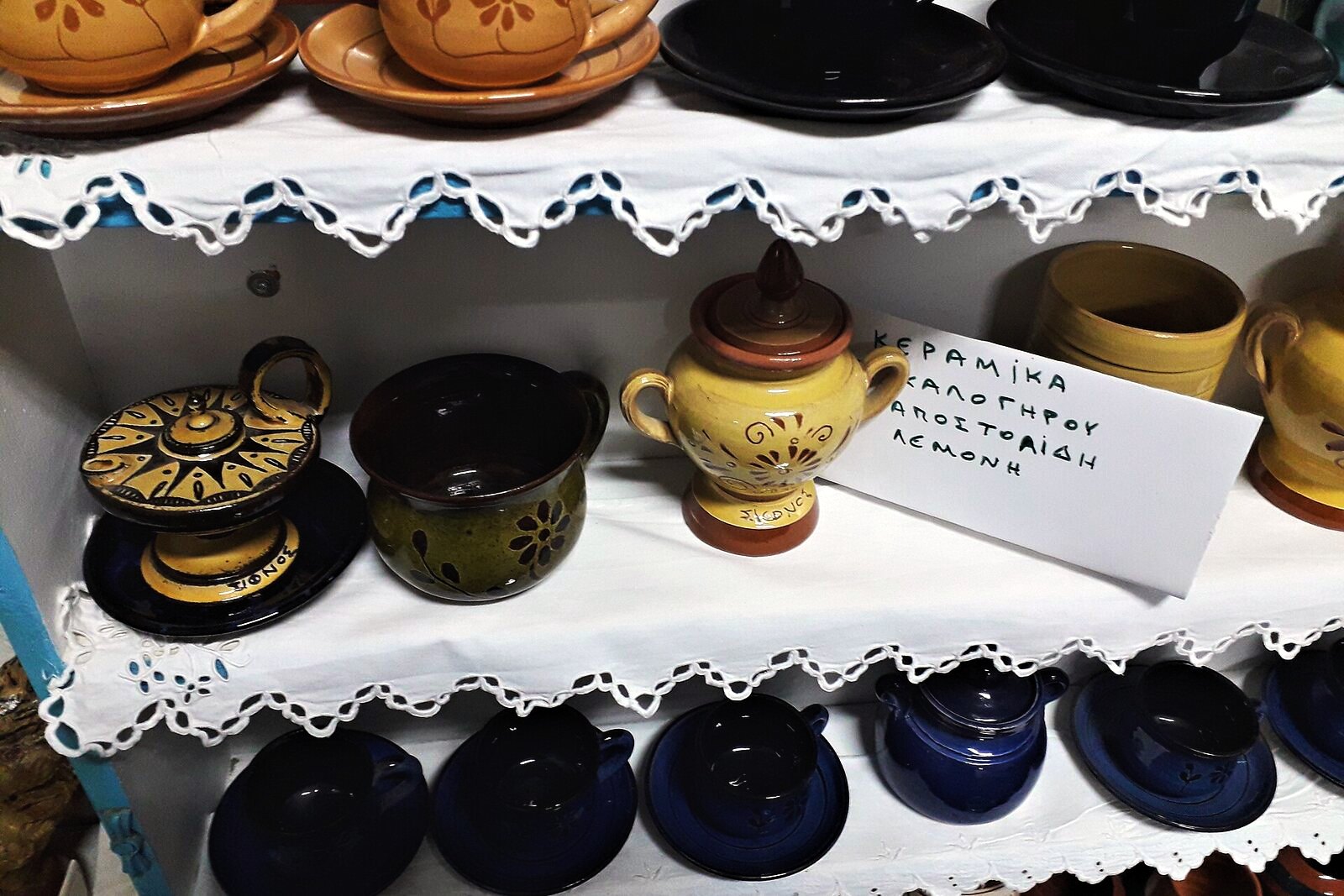
Sifnos has been the potters’ island since antiquity because its clay fires hard and takes heat, which is why the skepastaria, the lidded pot for revithada, the tsikali for stews and the mastelo for Easter lamb were born here. The Atsonios family are among the best-known names in Greek ceramics, and Antonis and Giannis Atsonios work at the quiet end of Vathi, the horseshoe bay on the south-west coast, with the kiln behind the workshop and the finished pots stacked on the terrace. You can watch a tsikali come off the wheel, then choose from plates and jugs glazed in white, green and the island’s traditional brown. The family also runs the Peristeriona shop near Koulouris Square at Kamares port, if you are passing through on ferry day.
Good to knowBuy a skepastaria and the recipe for revithada comes free; wrap it in a towel for the ferry.
WhereVathi, Sifnos
Lemonis Ceramics: Platis Gialos, Sifnos
Pots at the end of the beach, from a family of potters.
Platis Gialos is the island’s longest beach, and at its far end, past the last of the sunbeds, the Lemonis family keep one of the island’s long-established working potteries. Alexandros and Frantzeskos Lemonis, each with his own workshop, make the full traditional range, tsikalia, mastela, the wide-mouthed skepastaria for slow baking, and oil jars, alongside tableware in cleaner, more contemporary glazes that suit a city kitchen. The appeal is that it is a real workshop rather than a showroom: clay drying in the sun, the wheel going in the shade, a dog asleep across the step. Prices are fair and the pieces are made to be used, not displayed.
Good to knowWalk along the beach from the bus stop; the pottery is a few minutes past the last taverna.
WherePlatis Gialos, Sifnos
Yria Studio: Kostos, Paros
Paros’s great pottery, half a century on.
Two young potters set up Yria in 1977 on the road inland from Parikia towards Lefkes, and it has grown into the most important ceramics studio on Paros: a design-led workshop that produces fine handmade pottery for everyday use, bowls, plates, jugs and serving dishes, in matte glazes that look as good on a city table as on a Paros terrace. It is also the island’s craft pilgrimage: a working studio near the village of Kostos where the process is on view, from the first throw to the kiln, and the showroom sells what came out of it last week. Serious cooks and interior designers come here with a car boot to fill.
Good to knowThe studio is about a fifteen-minute drive from Parikia on the Lefkes road; combine it with lunch in Lefkes.
WhereKostos, Paros
Fish & Olive: Chalki, Naxos
Olives on the plates, fish in the jewellery, both in a marble village square.
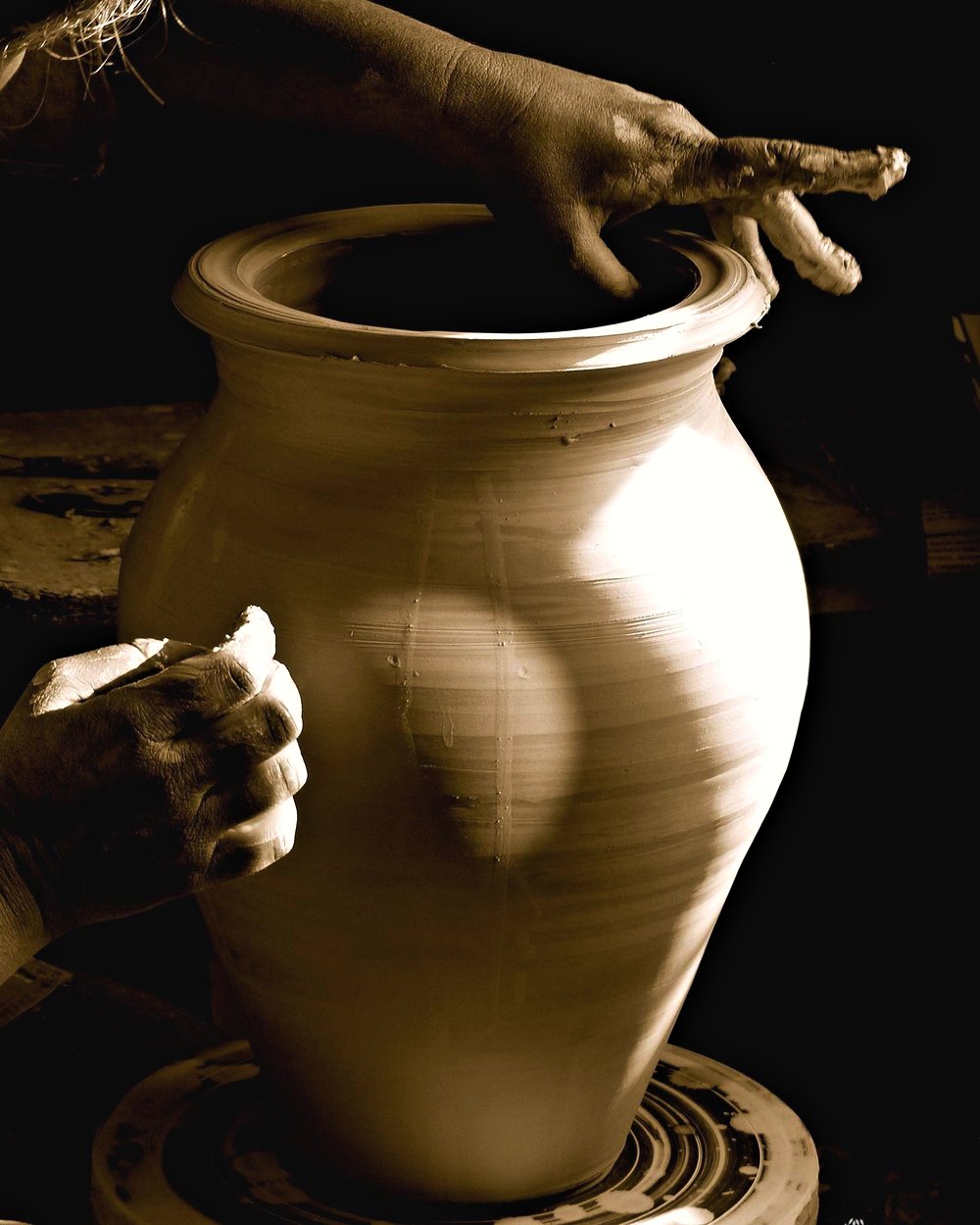
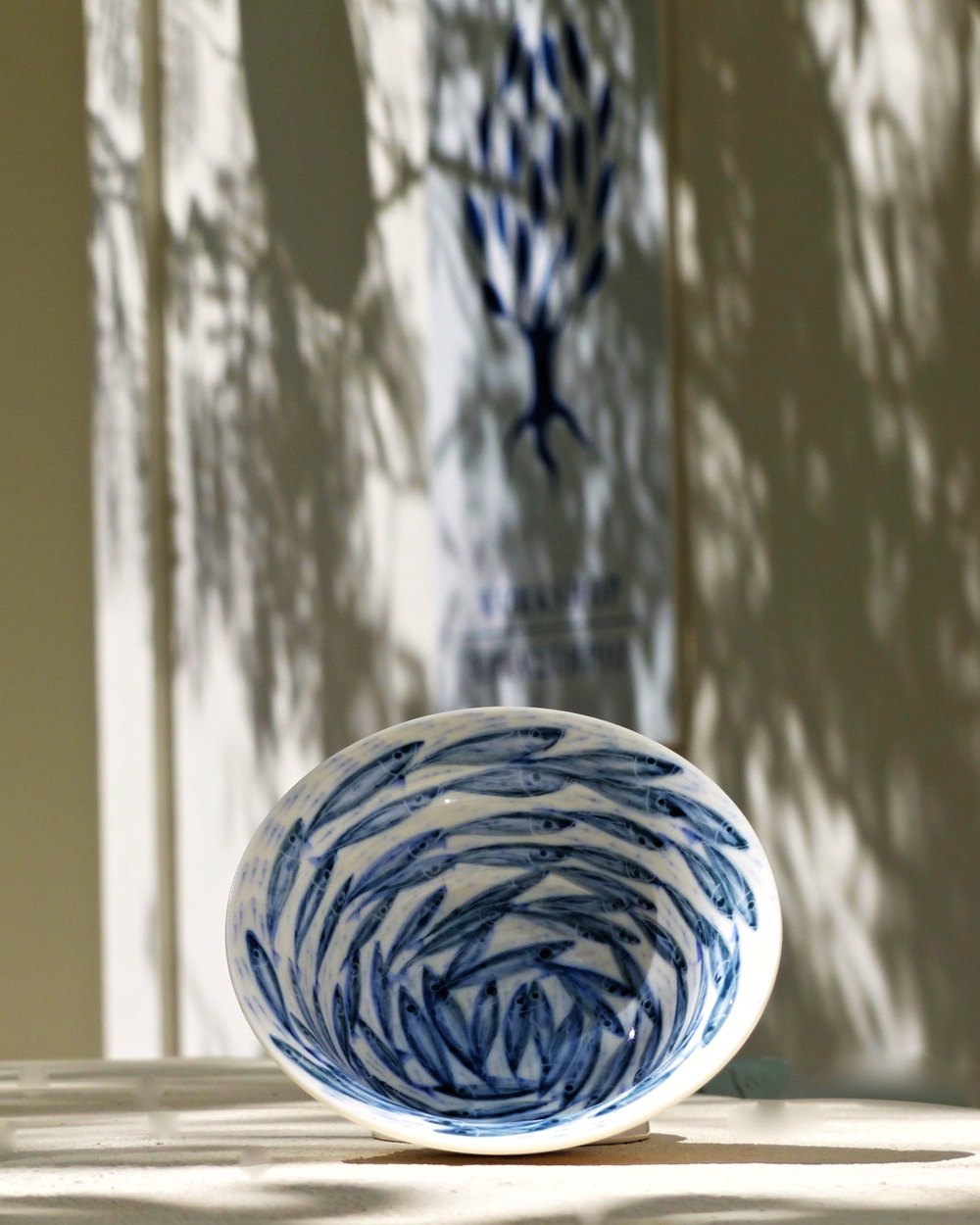
In the square of Chalki, the handsome old capital of the Tragaia valley, the potter Katharina Bolesch and jewellery designer Alexander Reichardt live, work and sell as Fish & Olive. Her stoneware and porcelain are hand-thrown, painted and twice fired, with olive branches, lizards, bees and vines running across them; his silver fish, drawn from a lifetime of diving, hang in the gallery next door with his designs on paper, marble and textiles. Both are collected well beyond Naxos. Walk the Chalki loop afterwards: the Vallindras kitron distillery across the lane, the Byzantine church of Protothronos and a coffee under the plane trees.
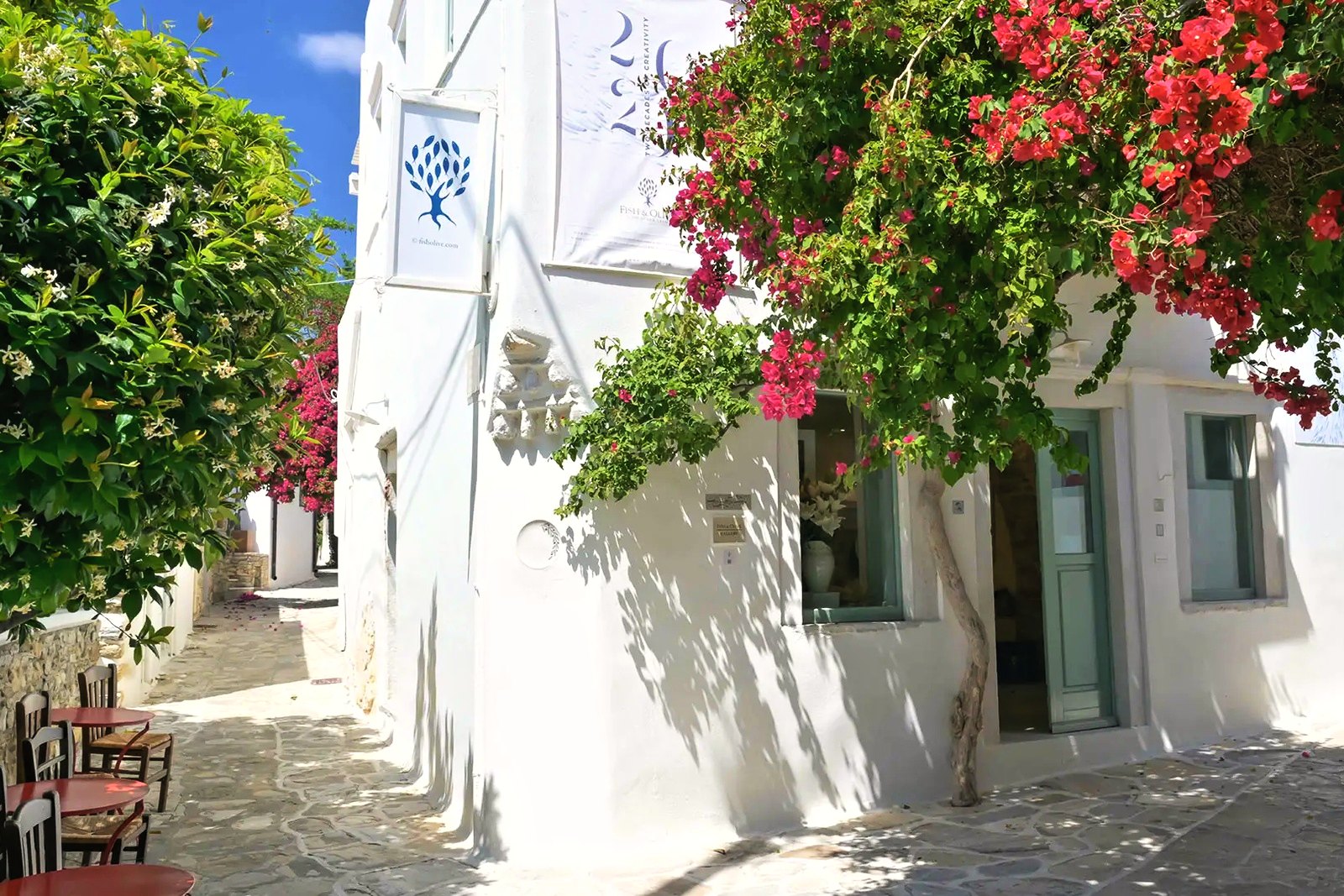
Good to knowOpens for the season at the start of May, daily 10am – 4.30pm; closed in winter.
WherePlatia Chalki, Chalki, Naxos
Rarity Gallery: Mykonos Town
Serious contemporary art behind a whitewashed door on Kalogera Street.
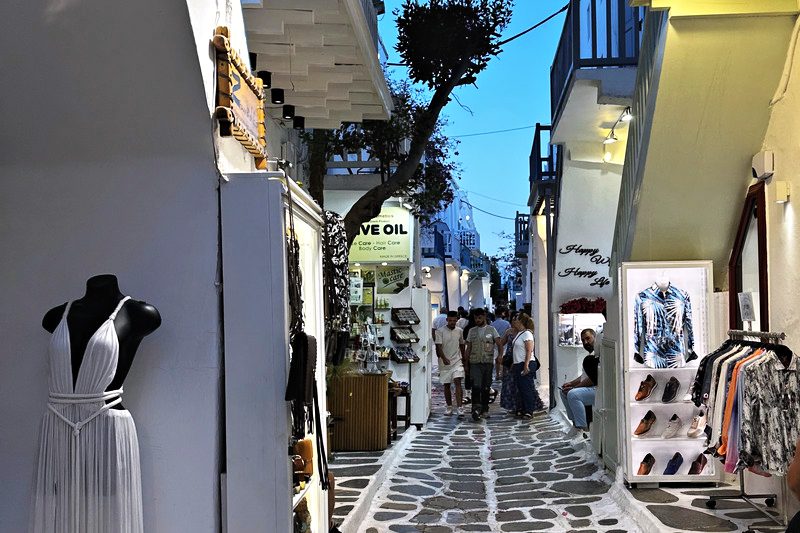
Mykonos is full of galleries selling sunsets; Rarity is the one that matters. Founded in 1994 on Kalogera Street, the lane of boutiques and bougainvillea behind the harbour, it shows international contemporary artists of real standing, among them Julian Opie, Hunt Slonem and Jason Martin, in a sequence of cool white rooms that feel like a private house. The pieces are for collectors and priced accordingly, but the door is open to anyone and the staff are happy to talk about the work. It is the best half-hour of air-conditioned culture in Chora, and a reminder that the island has always drawn artists as well as the yachts.
Good to knowChora’s shops keep late hours in season; early evening, before the lanes fill, is the time to go.
WhereKalogera Street 20 – 22, Mykonos Town, Mykonos
Mykonos Sandals: Little Venice, Mykonos
Leather sandals made by hand in Chora for more than seventy-five years.
Before the boutiques, Mykonos made sandals, and the workshop in Little Venice has been cutting and stitching them for over seventy-five years. The range runs from the plain thong and the classic Greek cross-strap through buckled, lace-up and metallic styles for women, men and children, all in leather, all made on the island, and the shop will help you find the right fit. Prices start at about €50 and most pairs sit under €80, which for a sandal that lasts several summers is the best value in Chora. They ship worldwide, so if the pair you want is not in your size you can have it sent on.
Good to knowTry sandals on in the afternoon when your feet are at their largest; leather gives, but not that much.
CostFrom about €50 a pair
WhereLittle Venice, Mykonos Town, Mykonos
BookSHOP ONLINE
Museum of Marble Crafts and the Pyrgos workshops: Tinos
A marble village, its museum and the sculptors who still work the stone.
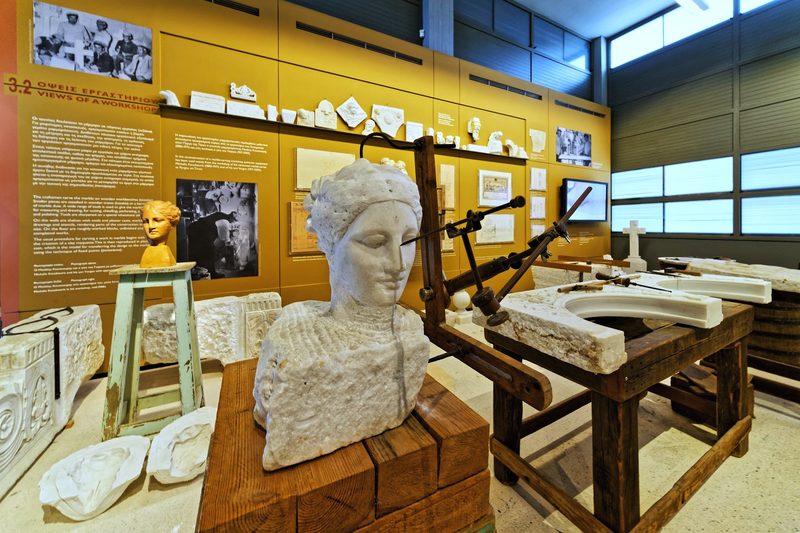
Tinos gave Greece its sculptors, and Pyrgos, the marble village on the north-west of the island, still trains them at its school of fine arts. Start at the Museum of Marble Crafts, run by the Piraeus Bank Cultural Foundation since 2008, where quarry tools, workshop reconstructions and finished fanlights, fountains and gravestones explain the whole craft, and the museum shop sells design objects inspired by the craft, along with the foundation’s books. Then walk back into the village: the lanes are lined with sculptors’ workshops where you can buy a carved doorplate, a mortar or a miniature of the fanlights above every doorway, and the bus shelter, the fountain and the cemetery are all marble too.
Good to knowMuseum open daily except Tuesday, 10am – 6pm from March to mid-October and 10am – 5pm in winter; €8, under-18s free.
CostMuseum €8; workshop pieces from a few euros to several hundred
WherePyrgos, Tinos
Mati Art Gallery: Fira, Santorini
Glass and bronze fish that have been swimming through Fira since 1990.
Yorgos Kypris opened Mati in Fira in 1990 and has spent the decades since making the sea into sculpture: shoals of fish cast in bronze or caught in glass, in series he calls Frozen Fish and Entrapped Fish, along with boats, butterflies, etchings and a line of handmade jewellery. The gallery sits in the lanes of Fira a step from the caldera path, and in 2024 Mati added a second space in Mesaria, in a restored winery building from around 1900, for exhibitions and artist residencies. For a Santorini souvenir that is neither a fridge magnet nor a sunset print, a single bronze fish from here is the answer.
Good to knowFira open April to October, Monday to Friday from 10am until 9pm (10pm in June and September, 11pm in July and August) and weekends 10am – 8pm; Mesaria open May to October, Tuesday to Sunday 11am – 7pm.
WhereFira and Mesaria, Santorini
Atlantis Books: Firostefani, Santorini
The island’s famous bookshop, now at the foot of the caldera cliff path.
Founded in a cave house in Oia in 2004 by a group of friends who thought the island needed a bookshop, Atlantis became one of the most photographed shops in Greece, and it has since moved along the caldera to Firostefani, at the base of the Nomikos Cultural Centre. The stock is the same mix that made it: new fiction and non-fiction in English, French, Italian, Spanish, German, Chinese and Greek, poetry, philosophy, art books, a good Greek-interest shelf, and a case of rare and antiquarian first editions. Buy a novel here and read it on the terrace with the volcano in front of you.
Good to knowHours shift with the season and can be sporadic, from around noon until sunset in winter and longer in summer; check Instagram or call before the walk down.
WhereFirostefani, Santorini
Korres Loukoumia: Ermoupoli, Syros
The sweet that built Syros, sold on the square it built.
Loukoumi, the rose- and mastic-scented jelly dusted in icing sugar, came to Syros with nineteenth-century refugees and never left; the island has made it by hand ever since and it is the thing to carry off the ferry. Korres sells its own handmade loukoumia on Miaouli Square, the marble-paved heart of Ermoupoli under the town hall, with flavours running from rose, mastic and bergamot to pistachio and almond, alongside halvadopita, the island’s other speciality, a disc of soft nougat and almonds pressed between two wafers. Buy a box for home and a smaller one for the ferry; they are made with pure ingredients and taste better than any you have tried.
Good to knowLoukoumi keeps for weeks in its box; halvadopita is best eaten within days.
WhereMiaouli Square, Ermoupoli, Syros
You might also like
- Cyclades Crafts, Island by Island: Who Makes What, and Where to Buy It
- The 10 Best Things to Bring Home from the Cyclades
- Sifnos Hikes and Pottery
- The Best Boutiques in Mykonos
Prices and opening times are approximate and change with the season. If something has changed, let us know.