Thyme on the hillside. Salt on the rocks. Capers growing out of a wall. The Cyclades are dry, windy and short of soil, which is exactly why what they produce tastes of something: cheese from goats that eat wild herbs, wine from vines coiled against the gale, honey from bees with nothing but thyme to work. Most of it never leaves the islands. Here are the ten things we pack, with where to buy them and how to get them home intact.
Naxos graviera and the island’s cheeses
The cheese island, and the wheel that proves it.
Naxos is the largest and most fertile of the Cyclades, and its cows and goats make it the dairy of the Aegean. The one to carry home is graviera Naxou, a protected-origin hard cheese, sweet and nutty with a smooth paste, aged at least three months and better at six. Beside it on the counter you will find arseniko, a sharper, saltier mountain cheese from Apeiranthos and Filoti, and xinomizithra, a sour fresh cheese for salads. Tziblakis, the grocer on Papavasiliou Street in Naxos Town since 1938, cuts to order from wheels stacked to the ceiling and vacuum-packs for travel, and the mountain villages sell direct from the dairies.
Good to knowVacuum-packed hard cheese travels for days without a fridge; check your home country’s rules on dairy before you pack.
WhereTziblakis, Papavasiliou Street, Naxos Town; dairies in Filoti and Apeiranthos, Naxos
Kitron of Naxos
A liqueur from the leaves of a citrus you have never heard of.
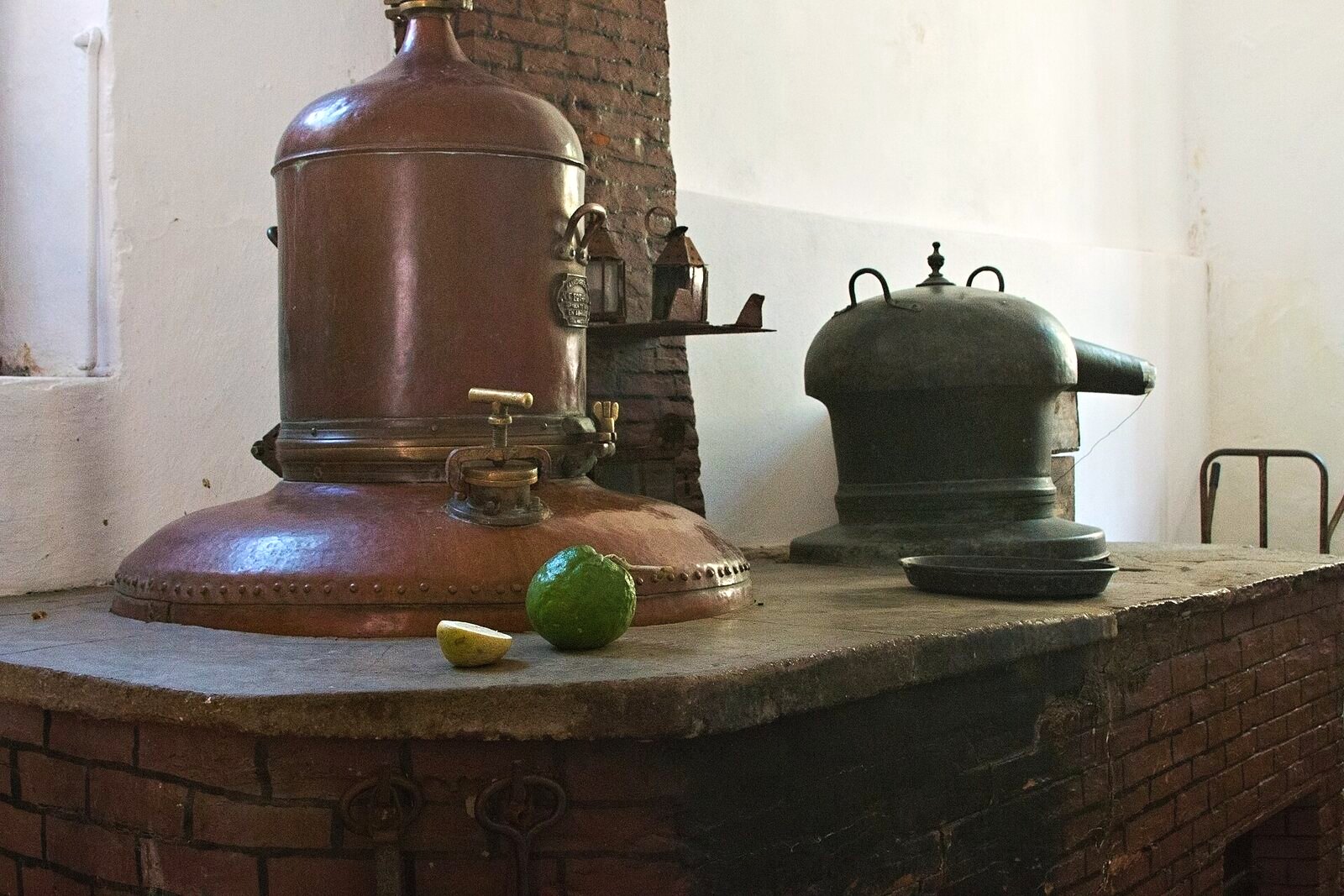
Kitron is made only on Naxos, from the leaves and fruit of the citron, a knobbly ancestor of the lemon that grows in the Tragaia valley and almost nowhere else in Greece. The first distillery opened in Chalki in 1896, and the Vallindras family still make it there in the old building off the square, with a short look at the old copper stills and a small tasting, sometimes free, at the end. It comes in three strengths: green is the sweetest at 30 per cent, clear sits in the middle at 33, and yellow, the driest, at 36. Promponas in Naxos Town, distilling since 1915, is the other name to look for. Drink it cold, after dinner, in small glasses.
Good to knowCitron trees are scarce, so kitron is hard to find once you leave the island; buy it in Chalki or at the port before the ferry.
WhereVallindras Distillery, Chalki; Promponas, Naxos Town, Naxos
Santorini Assyrtiko and Vinsanto
Volcanic white wine, and the amber dessert wine the island is named in.
Santorini’s vines are trained in low baskets, the kouloura, to hide from the wind, and their roots go down through pumice to water that fell centuries ago. The result is Assyrtiko, a bone-dry white with salt and lemon pith and the acidity to age for a decade, and Vinsanto, made from Assyrtiko and Aidani grapes dried in the sun for days and aged for years in barrel until it tastes of apricot, raisin and the sea. Santo Wines, the island’s cooperative at Pyrgos, has the widest range and the best-placed tasting terrace on the caldera, with a wine and deli shop and an online store that ships within Europe, to the UK and the US.
Good to knowVinsanto keeps for years after opening; Assyrtiko is best drunk within three. Both are easier to carry in your checked bag than to find at home.
WhereSanto Wines, Pyrgos, Santorini, and the island’s other wineries
BookSHOP ONLINE
Santorini fava and capers
The yellow split pea that is nothing like a split pea, and the caper that grows out of the cliff.
Fava Santorinis is a protected-origin pulse, the small yellow seed of a vetch that has grown on the island since the Bronze Age, and cooked down with onion and olive oil it is the island’s first course. A kilo bag weighs little and makes a dozen dinners. Next to it buy capers, which grow wild from the caldera walls and are picked in early summer: the buds in brine, the pickled caper leaves for salads, and the island’s tomato paste made from the tiny, intensely sweet Santorini tomatoes. The SantoTaste range at the Santo Wines deli covers the fava and the tomato products, and the deli stocks capers too; village groceries in Pyrgos and Megalochori sell them loose.
Good to knowFava needs a long simmer and a stick blender; serve it with raw onion, capers and a lot of oil.
WhereSanto Wines deli, Pyrgos, and groceries across Santorini
A Sifnos tsikali
The clay pot that makes the chickpea stew, and the reason Sifnos cooks the way it does.
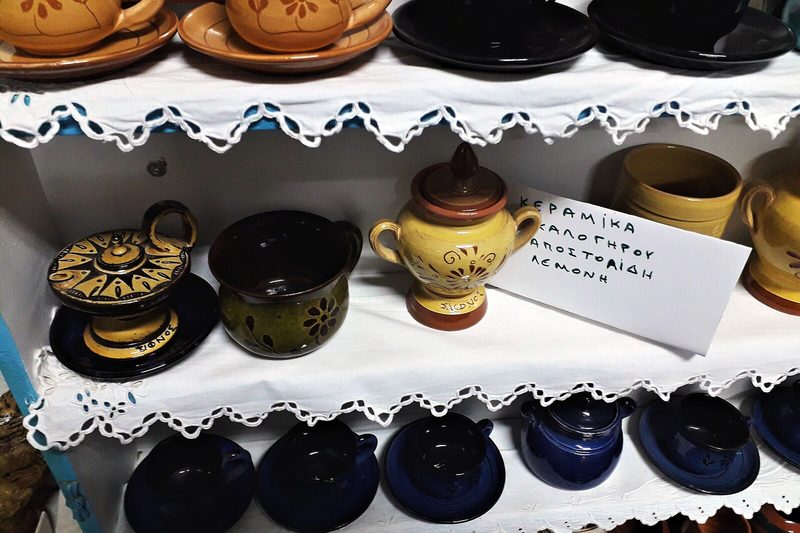
Sifnos clay fires hard and holds heat, which is why the island has been throwing cooking pots for three thousand years and why revithada, chickpeas baked overnight in a wood oven for Sunday lunch, tastes as it does. The chickpea pot is the skepastaria, lidded cousin of the tsikali, the island’s everyday cooking pot: round-bellied, narrow-necked, unglazed outside and glazed within, in sizes from one person to a wedding. Buy it from the potters, Atsonios in Vathi, Lemonis at Platis Gialos or Apostolidis at Kamares, who will also sell you a mastelo for Easter lamb and a plain tsikali for stews. Soak the pot before its first use, never put it on a direct flame, and it will outlast your oven.
Good to knowWrap it in a towel inside your hand luggage; a broken tsikali is the saddest souvenir in the Cyclades.
WhereVathi, Platis Gialos and Kamares, Sifnos
Tinos louza and the cheeses of Tinos
A cured pork loin and a peppery cheese from the pilgrims’ island.
Tinos takes food seriously, and the two things worth a place in your bag are louza and cheese. Louza is pork loin cured with salt, pepper and spices and air-dried in the island wind until it slices thin and dark, somewhere between prosciutto and a very good coppa; Mykonos and Syros make it too. The cheeses are a hard graviera and kopanisti, the soft, beaten, peppery-hot cheese the Cyclades share, which on Tinos is sharp enough to make your eyes water. Delis in Chora sell both vacuum-packed, and in the villages of the interior you will often buy straight from the producer.
Good to knowSeveral of our readers’ home countries do not allow meat or dairy in luggage; if yours is one, eat the louza on the island and bring the honey instead.
WhereDelis in Chora and the villages, Tinos
Syros loukoumia and halvadopita
The sweets that came off the refugee boats and stayed.
Syros has made loukoumi, the soft starch-and-sugar jelly dusted with icing sugar, since refugees brought the recipe in the nineteenth century, and it is the island’s calling card: boxes of rose, mastic, bergamot, pistachio and almond stacked in every shop and sold on the quay as the ferry docks. Halvadopita is the other speciality, a soft nougat of honey and almonds pressed between two round wafers and sold by the disc. Korres on Miaouli Square makes both by hand with pure ingredients, and that is where to buy them. Loukoumi keeps for weeks; halvadopita should be eaten within days, ideally on the ferry.
Good to knowA box of loukoumi weighs more than it looks; buy two small rather than one large if you are flying hand-luggage only.
WhereKorres, Miaouli Square, Ermoupoli, Syros
Mykonos kopanisti
The cheese that bites back.
Behind the beach clubs, Mykonos is still a farming island, and kopanisti is its oldest product: a protected-origin cheese made for more than three centuries by curdling and draining the milk, salting the curd and then beating it by hand, again and again, as it ripens under a weighted cloth and then in earthenware for a month or two. The result is a soft, pale cheese with a fierce peppery heat that comes from the ripening and not from any spice, eaten on bread with tomato as the island’s mezze, mostra. Buy it from a deli in Chora or from the farms around Ano Mera, well wrapped, and keep it cold.
Good to knowIt is strong; a small tub goes a long way, and it will scent everything else in the fridge.
WhereDelis in Mykonos Town and farms near Ano Mera, Mykonos
Paros wine from Moraitis
Four generations, organic vines and a winery by the beach at Naoussa.
Paros has its own protected-origin wines, and Moraitis is the family that has made them since Manolis Moraitis planted his first vines in 1910. The winery stands beside Agioi Anargyroi beach outside Naoussa, run by the fourth generation from organic vineyards across the island, and its whites from the Monemvasia grape, floral and fresh, and reds from Mandilaria, the dark Aegean variety, are the island’s table wines done properly. The old presses and barrels are on show, and tastings are by arrangement. The wines are rarely exported, which makes a bottle or two the Paros souvenir nobody else will have.
Good to knowEmail ahead to visit; the winery is a short walk along the coast from Naoussa harbour.
WhereMoraitis Winery, Naoussa, Paros
Thyme honey and sea salt
Two things the islands make from nothing but wind, rock and sun.
Thyme honey is the taste of the Cyclades in a jar: dark, intense, faintly bitter, made by bees with little to forage but the wild thyme that covers every hillside in June. Sifnos, Kythnos, Kea and Amorgos produce the best, usually sold in unlabelled jars at the village grocery or from a table at a panigiri, and Naxia Gi in Chalki on Naxos stocks honeys from across Greece alongside sixty spices. Sea salt is the other free gift of the islands, scraped from the rock pools in late summer and sold in small bags as coarse flakes. Milos makes a watermelon pie that does not travel; bring its honey instead.
Good to knowHoney counts as a liquid at airport security; put it in checked luggage. Salt is fine anywhere.
WhereVillage groceries across the islands; Naxia Gi, Chalki, Naxos
You might also like
- Cyclades Wine, Island by Island: Where to Taste Beyond Santorini
- Cyclades Crafts, Island by Island: Who Makes What, and Where to Buy It
- The 10 Best Ceramics and Craft Shops in the Cyclades
- The Wineries of Santorini
- The 11 Best Restaurants in Naxos
Prices and opening times are approximate and change with the season. If something has changed, let us know.